Key Takeaways
- Horizon Microtechnologies is expanding into microfluidics using Boston Micro Fabrication's Projection Micro Stereolithography (PμSL) technology
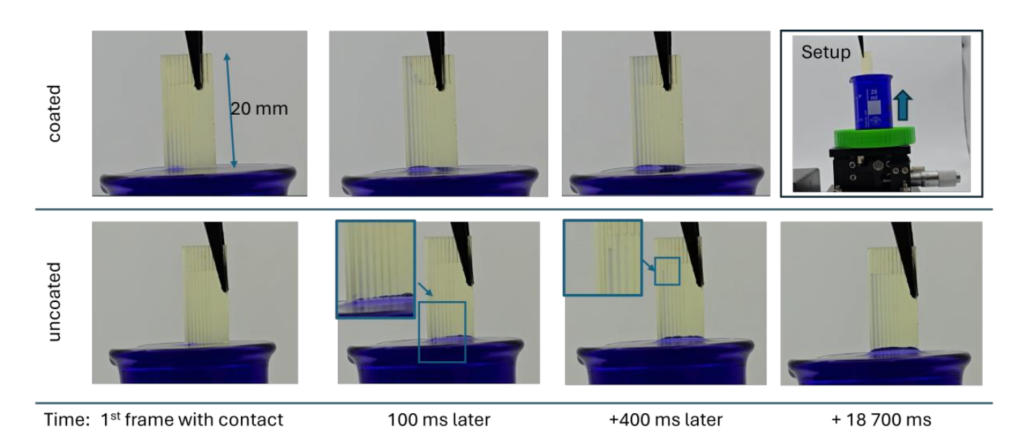
- The company's proprietary coatings and expertise in controlling the dipping process enable higher-performance 3D printed parts
- Horizon's microfluidic devices have the potential to be leak-free with fully three-dimensional channel networks
- The company's technology could simplify the manufacturing process for microfluidic devices, making them more cost-effective
Introduction to Microfluidics
Microfluidics is a field that involves the manipulation of fluids on a micro scale, with applications in fields such as medicine, biology, and chemistry. The development of microfluidic devices has been hindered by the complexity and cost of traditional manufacturing methods. However, with the advent of 3D printing technologies, companies like Horizon Microtechnologies are now able to create microfluidic devices with increased precision and efficiency.
Horizon Microtechnologies' Approach
Horizon Microtechnologies uses Boston Micro Fabrication's PμSL technology to create tiny, accurate parts. The company then enhances these polymer prints with proprietary coatings and expertise in controlling the dipping process. This approach enables the creation of higher-performance 3D printed parts with complex geometries and structures.
Comparison of Microfluidic Manufacturing Methods
| Method | Description | Advantages | Disadvantages |
|---|---|---|---|
| Traditional Manufacturing | Involves multiple parts, processes, and manual assembly | High precision, established methods | Time-consuming, expensive, limited scalability |
| 3D Printing | Enables rapid creation of complex geometries and structures | Fast, cost-effective, increased precision | Limited material options, potential for defects |
| Horizon Microtechnologies' Approach | Combines PμSL technology with proprietary coatings and dipping process expertise | Leak-free devices, fully three-dimensional channel networks, simplified manufacturing process | Limited testing and validation, potential for material limitations |
Potential Applications
Horizon Microtechnologies' microfluidic devices have the potential to be used in a variety of applications, including:
- Electronics packaging
- Space components
- Antennas
- Medical devices
- Biological research
Conclusion
Horizon Microtechnologies' expansion into microfluidics using Boston Micro Fabrication's PμSL technology has the potential to revolutionize the field. The company's proprietary coatings and expertise in controlling the dipping process enable the creation of higher-performance 3D printed parts with complex geometries and structures. With the potential to simplify the manufacturing process for microfluidic devices, Horizon Microtechnologies may be on the verge of a major breakthrough in the field.
Bottom Line
Horizon Microtechnologies' approach to microfluidics has the potential to make microfluidic devices more cost-effective and widely available. With further testing and validation, the company's technology could have a significant impact on fields such as medicine, biology, and chemistry. As the company continues to develop and refine its technology, it will be exciting to see the potential applications and innovations that emerge.


