Key Takeaways
- Holcim, COBOD, and PERI collaborated on a 12-unit social housing project in France, completing it in just one year.
- The project, ViliaSprint², utilized TectorPrint, a binder for mortar, to construct the three-story, 800 m2 building.
- The structure was printed on-site using COBOD's 3D printers, demonstrating the potential for additive manufacturing in dense, efficient construction.
- The project involved multiple partners, including Plurial Novilia, HOBO Architecture, and PERI 3D Construction.
- The use of TectorPrint enabled the creation of a strong and durable structure, with strengths ranging from 15 to 90 MPa.
Introduction to 3D Printed Construction
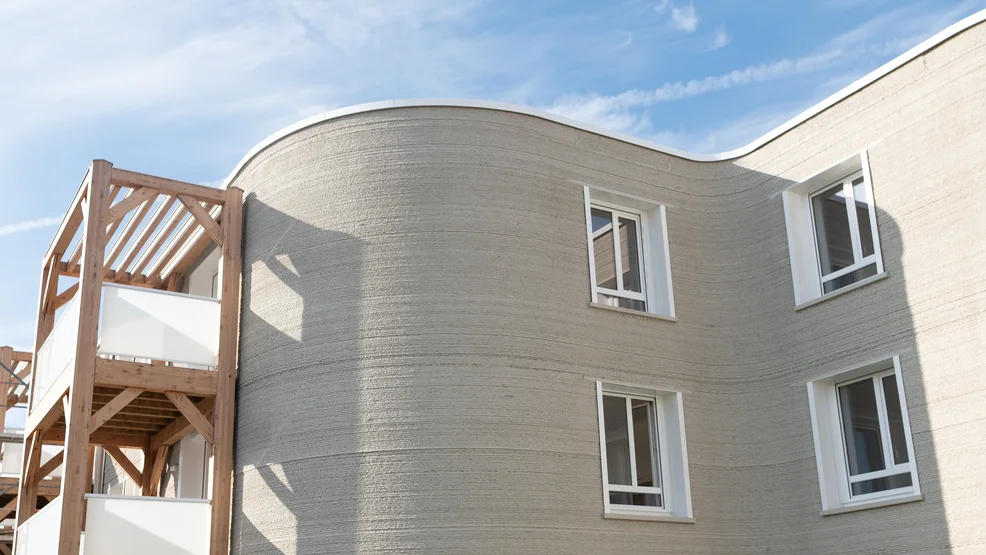
The ViliaSprint² project in Bezannes, France, marks a significant milestone in the application of 3D printing technology in construction. The collaboration between Holcim, COBOD, and PERI resulted in the completion of a 12-unit residential structure in just one year. This achievement demonstrates the potential of additive manufacturing to create dense, efficient, and complex structures.
TectorPrint: A Key Component
TectorPrint, a binder for mortar developed by Holcim, played a crucial role in the construction of ViliaSprint². This innovative material comes in two versions: a ready-to-print version and a mixed version that can be used as micro mortar or concrete. The mixed version has strengths ranging from 15 to 90 MPa, making it an ideal choice for construction projects that require durability and stability.
Comparison of 3D Printing Materials
| Material | Strength (MPa) | Application |
|---|---|---|
| TectorPrint | 15-90 | Construction, mortar, concrete |
| Traditional Concrete | 20-50 | Construction, building foundations |
| 3D Printing Ink | 10-30 | Small-scale 3D printing projects |
The Construction Process
The ViliaSprint² project involved the use of COBOD's 3D printers to print the structure on-site. The printers were able to create the complex geometry of the building, including the walls, floors, and roof. The use of additive manufacturing enabled the construction team to create a customized design that met the specific needs of the project.
Partners and Collaborations
The ViliaSprint² project was a collaborative effort between multiple partners, including:
- Plurial Novilia: A subsidiary of Action Logement, responsible for the construction of the project.
- HOBO Architecture: Provided architectural design and planning services.
- PERI 3D Construction: Contributed to the development of the 3D printing technology used in the project.
- COBOD: Supplied the 3D printers used to print the structure.
Conclusion
The ViliaSprint² project demonstrates the potential of 3D printing technology to transform the construction industry. The use of innovative materials like TectorPrint, combined with the expertise of partners like COBOD and PERI, enabled the creation of a complex and efficient structure. As the construction industry continues to evolve, it is likely that we will see more projects like ViliaSprint², showcasing the benefits of additive manufacturing in construction.
Bottom Line
The ViliaSprint² project is a significant achievement in the field of 3D printed construction, demonstrating the potential for additive manufacturing to create complex and efficient structures. With the use of innovative materials like TectorPrint and the expertise of partners like COBOD and PERI, the construction industry is poised to undergo a significant transformation in the coming years. As the technology continues to evolve, we can expect to see more projects like ViliaSprint², pushing the boundaries of what is possible in construction.


