Key Takeaways
- The military sector is driving growth in the 3D printing industry, with increasing demand for customized and complex products.
- 3D printing companies are pivoting their strategies to meet the unique needs of military applications, including the production of spare parts, prototypes, and end-use products.
- The use of 3D printing in the military offers several benefits, including reduced lead times, increased flexibility, and improved supply chain management.
Introduction to 3D Printing in the Military
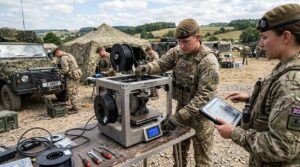
The 3D printing industry is experiencing a significant shift in response to growing demand from the military sector. With the ability to produce complex and customized products quickly and efficiently, 3D printing is becoming an essential tool for military applications. From spare parts and prototypes to end-use products, 3D printing is being used to support a wide range of military needs.
Military Applications of 3D Printing
The use of 3D printing in the military offers several benefits, including:
Reduced Lead Times
3D printing enables the rapid production of spare parts and other critical components, reducing lead times and improving overall efficiency.
Increased Flexibility
3D printing allows for the production of complex geometries and customized products, making it an ideal solution for military applications where standard components may not be suitable.
Improved Supply Chain Management
3D printing can help reduce reliance on traditional supply chains, enabling military organizations to produce products on demand and reducing the risk of stockouts and obsolescence.
Comparison of 3D Printing Technologies
The following table compares some of the most common 3D printing technologies used in military applications:
| Technology | Resolution | Build Speed | Materials |
|---|---|---|---|
| Fused Deposition Modeling (FDM) | 100-500 microns | 100-300 mm/h | Thermoplastics |
| Stereolithography (SLA) | 10-100 microns | 10-100 mm/h | Photopolymers |
| Selective Laser Sintering (SLS) | 50-200 microns | 50-200 mm/h | Thermoplastics, metals |
3D Printing Companies Respond to Military Demand
In response to growing demand from the military sector, several 3D printing companies are pivoting their strategies to meet the unique needs of military applications. This includes investing in new technologies, developing customized products, and establishing partnerships with military organizations. With the global 3D printing market expected to reach $44.5 billion by 2025, growing at a CAGR of 21.8%, the military sector is likely to play an increasingly important role in driving growth and innovation in the industry.
Bottom Line
The growing demand for 3D printing from the military sector is driving a strategic pivot across the industry, with companies investing in new technologies and developing customized products to meet the unique needs of military applications. With its ability to produce complex and customized products quickly and efficiently, 3D printing is likely to play an increasingly important role in supporting military operations and logistics in the years to come.