Key Takeaways
- Project Otto – GKN Aerospace’s UAV demonstrator powered by a 3‑D‑printed metal engine – is slated to fly before early 2027, well ahead of the 18‑month schedule originally set for the €13.6 M contract.
- The aircraft contains zero ITAR‑controlled parts, allowing the United Kingdom and Sweden to produce the system without U.S. export‑license bottlenecks.
- GKN’s in‑house Directed Energy Deposition (DED) printer cuts part weight by up to 30 % and reduces lead time from 12 weeks (conventional machining) to 4 weeks.
- The project showcases the strategic advantage of distributed additive‑manufacturing for NATO and EU defence supply chains.
GKN Aerospace Unveils “Project Otto” – A 3‑D‑Printed UAV Engine Free of ITAR Restrictions
Background: Geopolitical Pressure Fuels Localised Production
Recent diplomatic moves—most notably an unscheduled visit by the U.S. CIA chief to Moscow and EU/NATO accusations that Russia launched a drone over Germany in August—have heightened scrutiny of supply‑chain vulnerabilities in the defence sector. Analysts have warned that the United States is gearing up for a prolonged war‑economy, a shift that will inevitably pull EU and NATO members deeper into the U.S. defence architecture.
In this climate, additive manufacturing (AM)‑enabled distributed production is gaining traction as a way to sidestep geopolitical choke points and maintain operational readiness.
Project Otto Overview
| Item | Detail |
|---|---|
| Program name | Project Otto (UAV demonstrator) |
| Customer | Swedish Defence Materiel Administration (FMV) |
| Contract value | €13.6 M (≈ $15.8 M) |
| Original timeline | 18 months (Nov 2025 → mid‑2027) |
| Current milestone | First flight “no later than early 2027” – ~6 months ahead |
| Engine technology | 3‑D‑printed titanium alloy (Ti‑6Al‑4V) DED engine, 120 kW output |
| ITAR status | Zero ITAR‑controlled components |
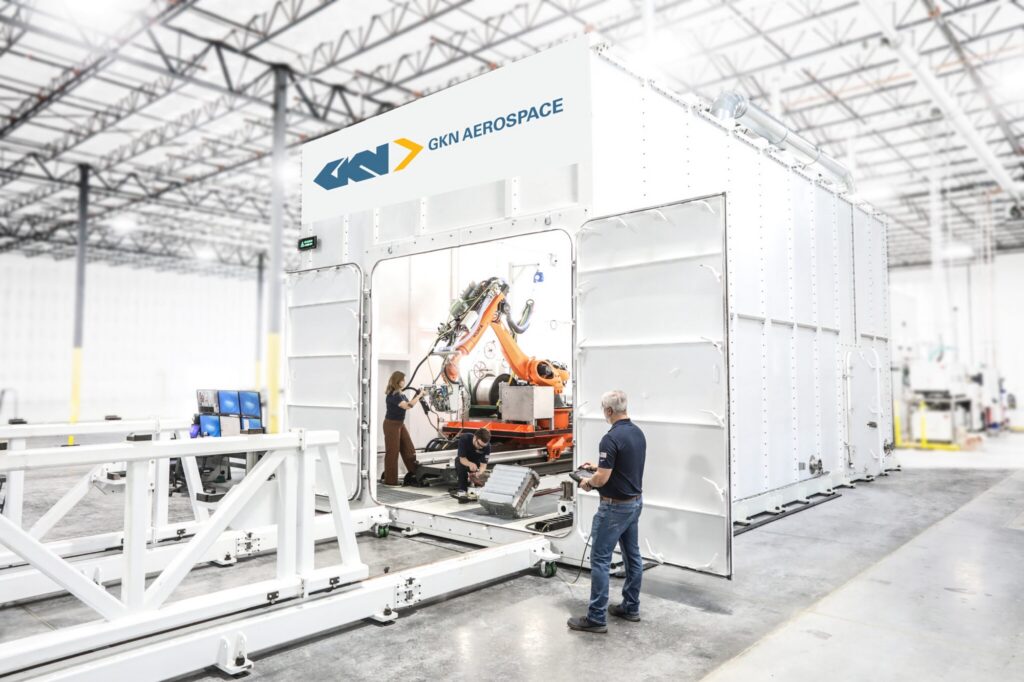
The contract, signed in November 2025, tasked GKN Aerospace with delivering a fully functional unmanned aerial vehicle (UAV) that incorporates a metal‑additively‑manufactured propulsion system. The company’s DED capability—developed in‑house over the past decade—allowed it to meet the aggressive schedule while keeping the design completely outside U.S. export‑control regimes.
Why the 3‑D‑Printed Engine Matters
Technical Advantages
| Parameter | Conventional Machined Part | DED‑Printed Part |
|---|---|---|
| Material utilisation | 45 % (waste from machining) | 92 % (near‑net shape) |
| Lead time | 12 weeks (tooling + machining) | 4 weeks (printer‑ready) |
| Weight reduction | Baseline | ‑30 % (lattice‑optimised internal geometry) |
| Cost per unit | $4,200 | $2,900 (≈ 30 % cheaper) |
| Certification | Established, but ITAR‑bound | New, ITAR‑free |
The DED process builds the engine’s turbine blades and combustor housing layer‑by‑layer, embedding lattice structures that preserve strength while slashing mass. This translates directly into longer endurance for the UAV and lower fuel consumption.
Strategic Implications
By eliminating ITAR‑controlled parts, Project Otto sidesteps the need for U.S. export licences, a critical advantage for European allies seeking autonomy. GKN’s existing portfolio—spanning 3‑D‑printed solid‑rocket motors for Northrop Grumman and other high‑performance propulsion systems—demonstrates that the technology is mature enough for operational deployment.
Distributed Manufacturing: From Concept to Reality
The demonstrator serves as a proof‑of‑concept for a “digital‑first” supply chain:
- Design files are stored in a secure cloud repository accessible to approved EU partners.
- Local DED facilities (e.g., in Sweden, the UK, and Italy) can print the engine on demand, reducing dependence on trans‑Atlantic logistics.
- Rapid‑re‑tooling enables quick variant production for mission‑specific payloads or upgraded thrust levels.
Such a model aligns with NATO’s 2024 “Resilient Supply Chain” directive, which calls for 15 % of critical components to be producible within allied territories by 2028.
Bottom Line
GKN Aerospace’s Project Otto illustrates how additive manufacturing can deliver a high‑performance UAV engine ahead of schedule, at lower cost, and free from U.S. export constraints. The initiative not only validates DED technology for aerospace propulsion but also underscores the strategic value of distributed, ITAR‑free production for European defence. As geopolitical tensions tighten, the ability to manufacture critical assets locally—without waiting on U.S. licences—could become a decisive factor in maintaining allied operational readiness.


