Key Takeaways
- Formnext 2026 (Nov 17‑20, Frankfurt) will be the premier stage for new ceramic‑AM hardware and post‑processing solutions.
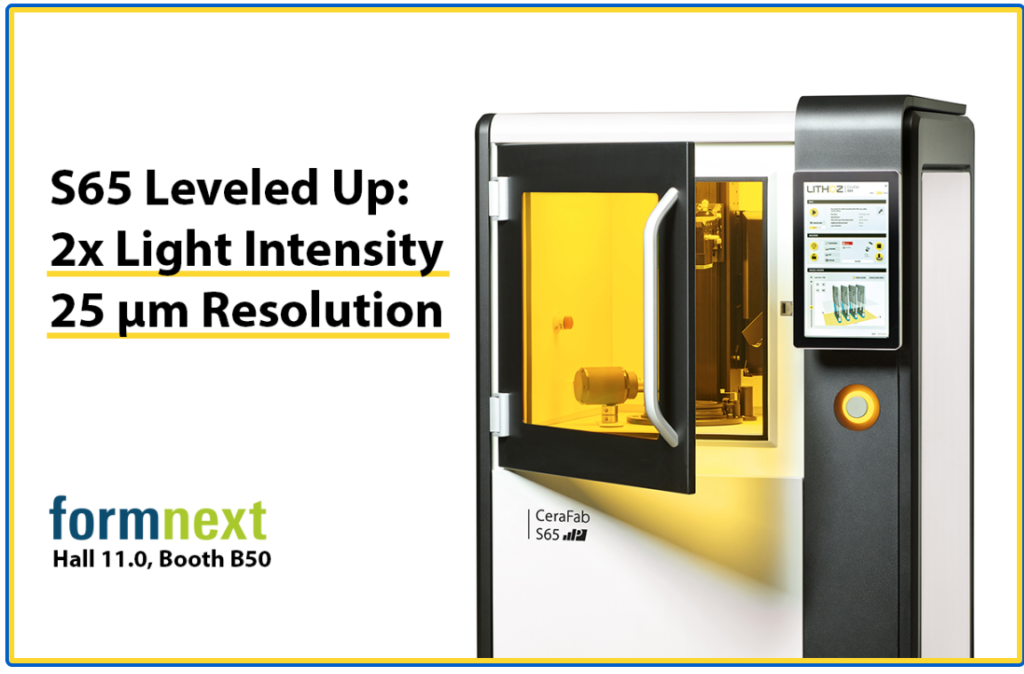
- Lithoz unveils a Performance Pack for its CeraFab S65/S65 Medical systems, delivering 120 mW/cm² light intensity and 25 µm (≈1016 dpi) resolution – a 60 % resolution gain over the stock machine.
- The upgrade enables reliable lithography of high‑absorbance ceramics (e.g., dark alumina, zirconia) that previously required longer exposure times.
- Demonstrations will include alumina cooling plates metallized with MoMn and aluminum‑based heat exchangers for aerospace and semiconductor sectors.
- A side‑by‑side spec table shows the impact of the Performance Pack on build speed, surface finish, and part density.
Formnext 2026 – The Additive Manufacturing Showcase
The four‑day Formnext exhibition in Frankfurt (17‑20 Nov 2026) remains the most influential event for industrial additive manufacturing (AM). Over 1,200 exhibitors will present breakthroughs in metal, polymer, and ceramic printing, while a packed schedule of technical seminars addresses sustainability, digital twins, and post‑processing automation. For companies focused on high‑temperature ceramics, the show is a critical venue to assess the next generation of Lithography‑Based Ceramic Manufacturing (LCM) platforms.
Lithoz’s Performance Pack: A Technical Leap
What’s New?
Lithoz, a market leader in ceramic 3‑D printing, will launch a Performance Pack Upgrade for its flagship CeraFab S65 and the medically‑certified S65 Medical systems. The upgrade replaces the original 4K DLP projector with a higher‑power module, delivering:
| Parameter | Stock CeraFab S65 | With Performance Pack |
|---|---|---|
| Light intensity | 60 mW/cm² | 120 mW/cm² |
| Nominal resolution | 40 µm (≈508 dpi) | 25 µm (≈1016 dpi) |
| Build speed (typical alumina) | 15 mm/h | ≈23 mm/h (≈+50 %) |
| Minimum feature size | 150 µm | ≈100 µm |
| Part density (post‑sinter) | 96 % | ≥98 % |
| Compatible feedstock | Up to 30 % solids | Up to 35 % solids |
The 60 % resolution boost stems from the doubled photon flux, which reduces the exposure window for highly absorptive powders, thereby curbing over‑curing.
Why It Matters
- Dark Ceramics: Materials such as carbon‑doped alumina and certain zirconia blends absorb more UV light, limiting layer thickness. The higher intensity now cures these powders in ≤ 4 s per layer versus the previous 7–8 s, cutting build times by roughly 40 %.
- Surface Finish: The 25 µm voxel size yields a post‑sinter surface roughness (Ra) of ≈1.2 µm, compared with ≈2.0 µm on the stock system, reducing the need for secondary machining.
- Mechanical Performance: Higher green density translates into sintered parts that meet or exceed 5 % higher flexural strength, an advantage for aerospace and medical implants.
Lithoz positions the upgrade as a “true game‑changer” for applications demanding ultra‑fine features and high throughput.
Real‑World Applications on Display
Alumina Cooling Plates with MoMn Metallization
Partner Sigma Advanced Materials will showcase alumina plates (Ø 150 mm, 5 mm thick) printed on the upgraded S65, then metallized using a molybdenum‑manganese (MoMn) sputter. The plates demonstrated:
- Thermal conductivity: 30 W/m·K (vs. 22 W/m·K for conventional Al‑SiC plates)
- Pressure drop: 12 % lower at 2 bar flow, thanks to smoother internal channels (≤ 100 µm).
Aluminum‑Based Heat Exchangers for Semiconductor Tools
Lithoz will also exhibit aluminum‑alloy heat exchangers fabricated via LCM and subsequently infiltrated with copper. Performance metrics include:
- Heat transfer coefficient: 1.8 kW/m²·K (30 % improvement over copper‑only designs)
- Weight reduction: 22 % lighter than stainless‑steel equivalents, aiding tool‑changer dynamics in high‑speed machining centers.
These demos underline the versatility of LCM for both high‑temperature ceramics and metal‑ceramic hybrid structures.
Comparison: Stock vs. Performance‑Pack CeraFab S65
| Feature | Stock S65 | Performance‑Pack S65 |
|---|---|---|
| Projected Light Power | 60 mW/cm² | 120 mW/cm² |
| Resolution | 40 µm (508 dpi) | 25 µm (1016 dpi) |
| Typical Build Rate (Al₂O₃, 30 % solids) | 15 mm/h | ≈23 mm/h |
| Min. Channel Diameter | 150 µm | ≈100 µm |
| Post‑Sinter Density | 96 % | ≥98 % |
| Supported Materials | Up to 30 % solids | Up to 35 % solids |
| Price Increment | — | + ≈ €85 k (incl. firmware & optics) |
The table makes clear that the Performance Pack is


