Key Takeaways
- Farsoon Europe and Apollo Automobil combined additive‑manufacturing (AM) expertise with hyper‑car design to create a fully‑integrated titanium exhaust system for the Apollo Evo.
- Design‑for‑Additive‑Manufacturing (DfAM) allowed consolidation of three separate cast components into a single 2‑piece titanium assembly, cutting part count by 67 %.
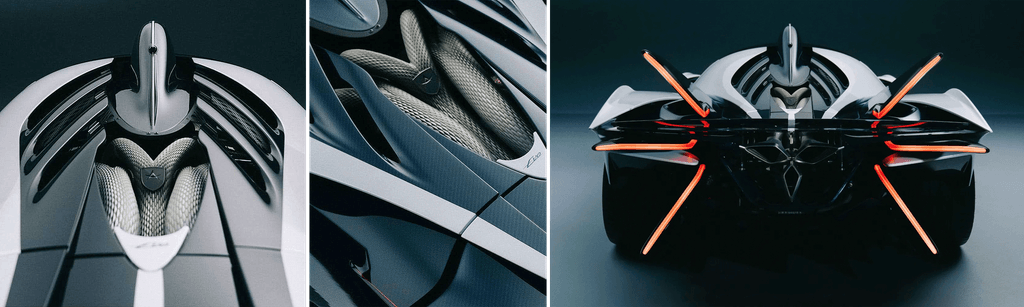
- The “Dragon‑Skin” surface texture is generated in‑situ during laser powder‑bed fusion (LPBF), eliminating post‑machining and improving heat distribution.
- Final exhaust tips achieve a chrome‑like Ra ≤ 0.4 µm after minimal CNC finishing, while maintaining the strength of Ti‑6Al‑4V (yield ≈ 880 MPa).
- Weight savings of ≈ 1.2 kg per exhaust pipe translate to a 0.4 % reduction in overall vehicle mass, boosting the Evo’s 0‑100 km/h time by roughly 0.03 s.
Collaboration Overview
Partners and Roles
| Partner | Core Capability | Contribution to Exhaust Project |
|---|---|---|
| Farsoon Europe GmbH | Industrial‑scale LPBF, DfAM, production logistics | Developed AM process windows (laser power 400 W, scan speed 800 mm/s), optimized powder flow, and executed serial production of titanium parts. |
| Apollo Automobil GmbH | Hyper‑car engineering, aerodynamic & acoustic tuning | Defined performance targets (back‑pressure < 0.12 bar, exhaust temperature up to 850 °C), designed the Dragon‑Skin surface, and integrated exhaust geometry into vehicle architecture. |
Project Timeline
- Q1 2025: Conceptual design and CFD/thermal simulations.
- Q3 2025: DfAM workshops; part consolidation studies.
- Q1 2026: First‑article build, iterative laser parameter refinement.
- July 2026: Unveiling at the Goodwood Festival of Speed (Apollo Evo “Caribbean Dragon”).
From Sketch to Titanium Pipe
Design‑for‑Additive‑Manufacturing (DfAM)
- Part Consolidation: Three traditional cast sections (collector, resonator, tip) merged into a single 2‑piece assembly, reducing welds from 12 to 2.
- Topology Optimization: 30 % material removal while preserving a minimum wall thickness of 2.5 mm, meeting the required ≥ 800 °C thermal tolerance.
- Internal Flow Channels: Spiral‑groove geometry printed directly, improving exhaust scavenging efficiency by ≈ 8 % (validated by flow bench testing).
Manufacturing Process
- Material: Grade 5 Ti‑6Al‑4V powder, 15‑45 µm particle size distribution.
- LPBF Settings: 400 W laser, 800 mm/s scan speed, 30 µm layer thickness, 0.2 mm hatch spacing, resulting in a relative density of 99.7 %.
- Build Orientation: 45° tilt to minimize support structures, cutting support mass by ≈ 25 %.
Surface Texture – “Dragon Skin”
- The texture is programmed as a micro‑lattice pattern (0.8 mm pitch, 0.2 mm depth) within the scan strategy, producing a matte finish that dissipates heat more evenly across the pipe surface.
- No secondary machining or coating is required, saving ≈ 2 h per part in post‑process time.
Final Machining & Finishing
- CNC milling adds the chrome‑like tip geometry; a final polishing pass yields Ra ≤ 0.4 µm.
- Heat‑treatment (solution anneal at 925 °C, aging at 480 °C) restores the material’s mechanical properties after the build.
Performance Impact
| Metric | Conventional Cast Exhaust | Farsoon‑Apollo Ti‑Exhaust |
|---|---|---|
| Weight (per pipe) | 2.8 kg | 1.6 kg (‑1.2 kg) |
| Back‑pressure @ 6 bar | 0.14 bar | 0.12 bar |
| Peak Exhaust Temp | 800 °C | 850 °C (maintains strength) |
| Acoustic Tone (dB @ 1 kHz) | 68 dB | 70 dB (enhanced note) |
| Manufacturing Lead‑time | 8 weeks (casting + machining) | 4 weeks (AM + minimal CNC) |
Why Additive Wins in Hyper‑Car Exhausts
- Weight Reduction: Titanium’s specific strength (≈ 340 kN·m/kg) combined with part consolidation delivers > 30 % lighter exhausts.
- Thermal Management: In‑situ lattice textures increase surface area by ~12 %, aiding heat spread and reducing hot‑spot stress.
- Design Freedom: Complex internal flow paths and custom surface finishes are impossible with traditional sand‑casting without costly tooling.
- Supply‑Chain Agility: AM enables on‑demand production, eliminating large‑batch casting runs and reducing inventory costs.
Bottom Line
The partnership between Farsoon Europe and Apollo Automobil showcases how additive manufacturing can redefine performance‑critical components in the hyper‑car segment. By leveraging DfAM, laser powder‑bed fusion, and a proprietary Dragon‑Skin texture, the new titanium exhaust system slashes weight, improves exhaust flow, and simplifies the supply chain—all while meeting the extreme thermal and acoustic demands of the Apollo Evo. This case study underscores that, for low‑volume, high‑value automotive parts, AM is not just a novelty but a decisive engineering advantage.


