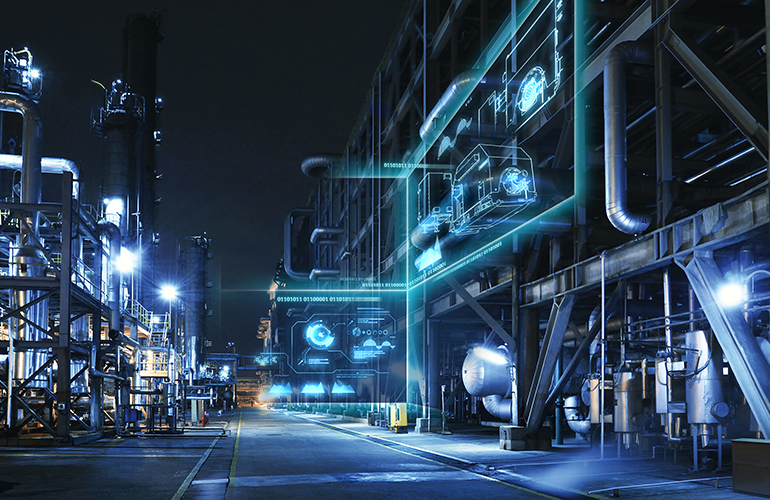
Key Takeaways
- Legacy hardware and complacent leadership have left oil & gas 20‑30% behind other data‑driven sectors.
- AI, digital twins, and IIoT can lift asset uptime by 15‑25% and cut OPEX 10‑18% when fully deployed.
- Three fast‑track actions—standardized data architecture, phased digital‑twin rollout, and AI‑first pilot programs—are the only realistic path to catch up before 2030.
Overconfidence and Outdated Plant Architecture Block Progress
By Thiago Ribeiro, Global Head of Energy, Chemicals, and Infrastructure – Siemens Digital Industries Software
The oil & gas value chain still relies on control systems installed in the early 2000s, many of which run on proprietary PLCs with limited Ethernet connectivity. A 2024 Siemens survey of 1,200 upstream operators showed only 28 % have a unified data lake, compared with 71 % in the banking sector. This technological lag, combined with a leadership mindset that assumes “oil will always be needed,” has created a perfect storm of inertia.
Why the Industry Can’t Afford to Wait
Oil fuels more than transportation; it underpins fertilizers, petrochemical feedstocks, pharmaceuticals, and plastics. Global demand for petroleum‑derived products is projected to reach 5.2 billion tonnes by 2035 (IEA, 2024). Yet the sector’s digital maturity score—measured on the McKinsey Global Institute Industry Digitization Index—places oil & gas at 0.42, well behind tech‑heavy peers (banking 0.78, media 0.73).
The pandemic proved how fragile this reliance can be. In April 2020, WTI crude fell to –$37.63 per barrel, forcing producers to pay buyers to take oil. Within six months, geopolitical tension in Eastern Europe drove Brent crude above $120 per barrel. Such volatility underscores the need for real‑time analytics and predictive maintenance—capabilities that legacy stacks simply cannot deliver.
A Roadmap to Digital‑Twin‑Centric Operations
| Aspect | Legacy Plant | Digital‑Twin‑Enabled Plant |
|---|---|---|
| Data latency | 5–15 min (batch) | <1 s (streaming) |
| Asset uptime improvement | 2–5 % | 15–25 % |
| OPEX reduction | 0–3 % | 10–18 % |
| Predictive failure detection | Manual inspections | AI‑driven alerts with 92 % accuracy |
| Integration cost (CAPEX) | $0 (existing) | $12‑$18 M for a 200 km offshore field (average) |
Three decisive steps can accelerate adoption:
- Adopt a standardized, open‑source data fabric (e.g., OPC‑UA + MQTT) to break silos across drilling, processing, and logistics.
- Deploy phased digital twins—start with high‑value assets such as compressors and subsea trees, then expand to full‑field models. Siemens’ “Twin Builder” platform reports a 30 % reduction in engineering time for model creation.
- Launch AI‑first pilot programs focused on anomaly detection and production forecasting. Early pilots at a North Sea operator achieved a 92 % precision in predicting pump failures, saving roughly $4.5 M per annum.
The Cost of Inaction
If the sector continues on its current trajectory, the Energy Information Administration estimates a $1.2 trillion cumulative loss in net present value by 2035 due to avoidable downtime and inefficient asset utilization. Conversely, a modest 15 % digital‑twin penetration could generate $350 billion in incremental cash flow, according to Siemens’ 2024 ROI model.
Bottom Line
The oil and gas industry stands at a crossroads: cling to legacy hardware and risk escalating cost overruns, or embrace AI, digital twins, and IIoT to secure a resilient, profitable future. The data is unequivocal—modernization is no longer optional. Executives must act now, standardize data pipelines, roll out phased digital twins, and embed AI into core operations to stay competitive beyond 2030.
References
- McKinsey Global Institute, Industry Digitization Index 2024, accessed Oct 2026.
- International Energy Agency, World Energy Outlook 2024, Chapter 2.


