Key Takeaways
- Eplus3D and UCL Rocket are collaborating on a regenerative liquid oxygen (LOX) and isopropyl alcohol (IPA) liquid-cooled rocket engine architecture
- The engine uses IPA as a coolant before igniting it with LOX in the combustion chamber, achieving high efficiency and potential for long burn times
- The cryogenic engine operates at temperatures below -183 degrees, utilizing the temperature difference to insulate the rocket and prevent damage
- UCL Rocket is a university research team pushing the boundaries of rocket engine development with additive manufacturing
Introduction to Regenerative LOX IPA Engine
Eplus3D, a leading provider of 3D printing solutions, has partnered with UCL Rocket, a research team from the University College London, to develop a revolutionary regenerative liquid oxygen (LOX) and isopropyl alcohol (IPA) liquid-cooled rocket engine architecture. This collaboration aims to create a highly efficient and cost-effective engine that can operate for extended periods.
Engine Architecture and Benefits
The engine's architecture is more complex than previous designs, with increased heat fluxes and temperature differences. However, this complexity allows for the use of dense LOX, which enables the engine to carry a significant amount of fuel, resulting in high efficiency and potential for long burn times. The cryogenic engine operates at temperatures below -183 degrees, utilizing the temperature difference between the LOX and the heat created by combustion to insulate the rocket and prevent damage.
Comparison of Engine Architectures
| Engine Architecture | Fuel | Oxidizer | Temperature Range |
|---|---|---|---|
| Regenerative LOX IPA | Isopropyl Alcohol (IPA) | Liquid Oxygen (LOX) | Below -183 degrees |
| N₂O Engine | N₂O | - | - |
| Traditional Rocket Engines | Various | Various | Various |
UCL Rocket's Previous Engine and Achievements
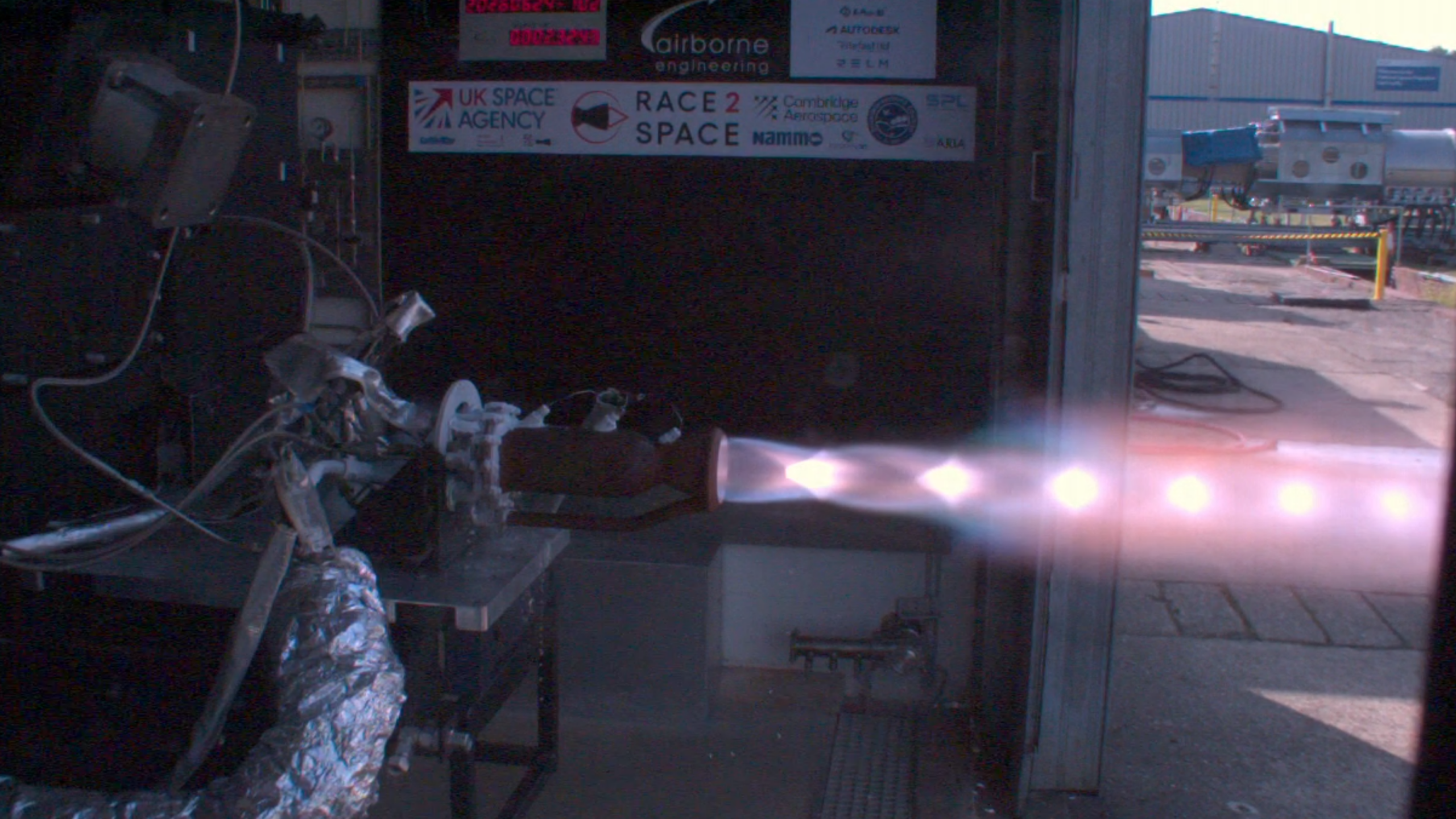
UCL Rocket's previous engine, made from CuCrZr on the EP-M400S 3D printer, underwent a 5 kN hot-fire test for the Race 2 Space competition. This competition, sponsored by the UK's space agency and space companies, aims to increase the number of highly-skilled graduates in STEM subjects and entering the space industry.
Conclusion and Future Prospects
The collaboration between Eplus3D and UCL Rocket has the potential to revolutionize the development of rocket engines. With the use of additive manufacturing and regenerative LOX IPA engine architecture, the team aims to create a highly efficient and cost-effective engine that can operate for extended periods. As the space industry continues to grow, innovations like this will play a crucial role in advancing space exploration and development.
Bottom Line
The partnership between Eplus3D and UCL Rocket is a significant step forward in the development of regenerative LOX IPA liquid-cooled rocket engines. With its potential for high efficiency, long burn times, and cost-effectiveness, this technology has the potential to transform the space industry. As research and development continue, we can expect to see significant advancements in rocket engine technology, paving the way for more efficient and sustainable space exploration.