Key Takeaways
- Researchers at the Technical University of Denmark (DTU) have used 3D printing to create a more efficient hydrogen fuel cell with a 500% increase in power-to-weight ratio.
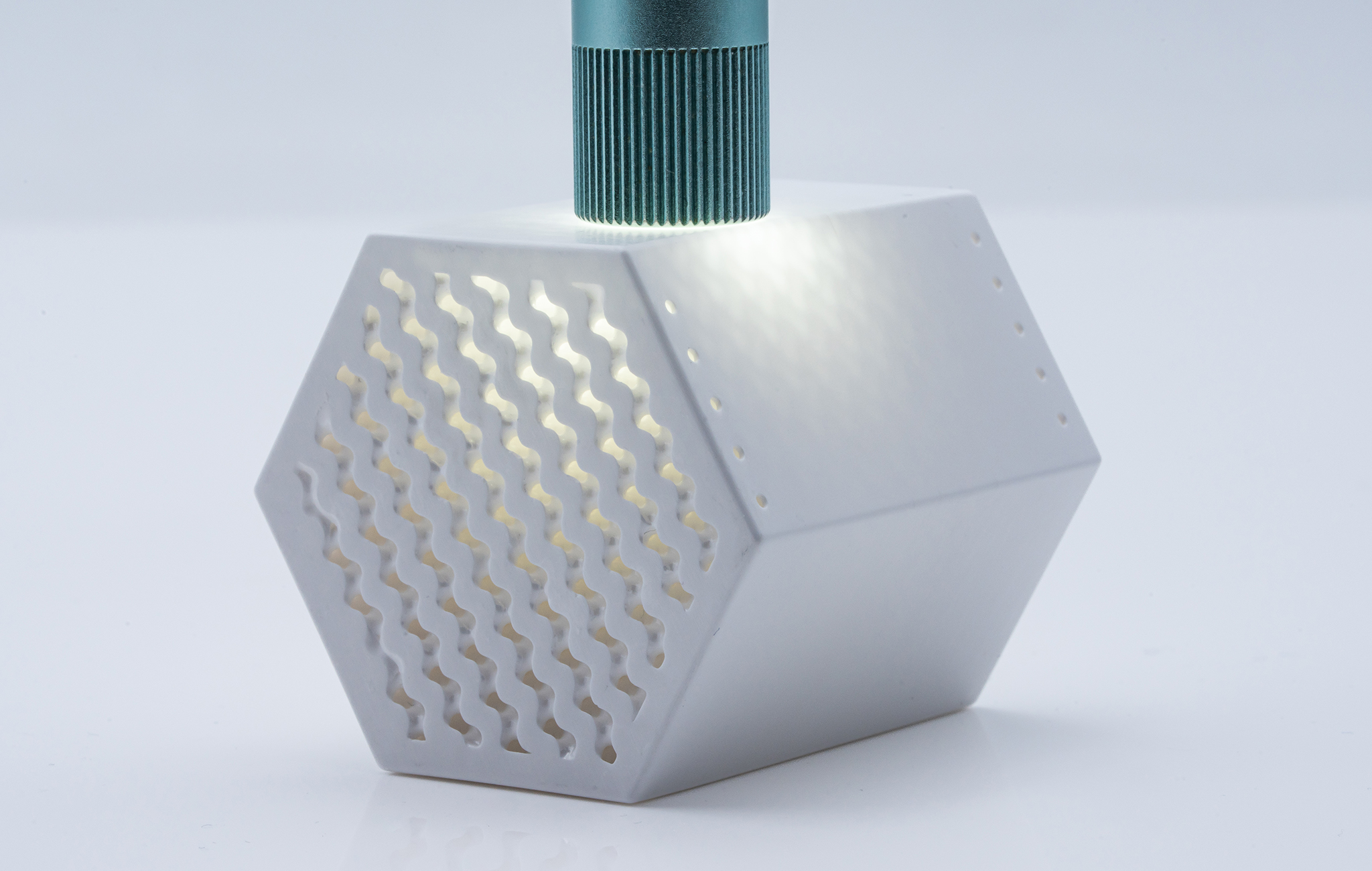
- The fuel cell is made from Lithoz Yttria Fully Stabilized Zirconia (8YSZ) and features a gyroid-shaped design.
- The DTU team used Lithoz's DLP-based doped resin 3D printing technology to create the fuel cell.
- The research project, called "Escape Flatland," aims to scale up production of the monolithic fuel cell for use in home and industrial heating, as well as potential applications in future transport.
Introduction to 3D Printed Fuel Cells
The Technical University of Denmark (DTU) has made a significant breakthrough in the development of hydrogen fuel cells using 3D printing technology. By creating a Solid Oxide Fuel Cell (SOFC) with a gyroid-shaped design, the researchers have achieved a 500% increase in power-to-weight ratio. This innovative design was made possible using Lithoz's DLP-based doped resin 3D printing technology.
The Importance of Materials and Design
The SOFC is made from Lithoz Yttria Fully Stabilized Zirconia (8YSZ), a material that is well-suited for high-temperature applications. The gyroid-shaped design allows for optimal porosity, geometry, and flow, making it ideal for additive manufacturing. The team's use of 3D printing technology has enabled the creation of a complex design that would be difficult or impossible to produce using traditional manufacturing methods.
Comparison of 3D Printing Technologies
| Technology | Material | Resolution | Application |
|---|---|---|---|
| Lithoz DLP-based doped resin | 8YSZ | 10-50 μm | SOFC, aerospace, automotive |
| Stereolithography (SLA) | Ceramic-filled resin | 10-100 μm | Dental, medical, aerospace |
| Selective Laser Sintering (SLS) | Metal, ceramic | 50-200 μm | Aerospace, automotive, industrial |
The "Escape Flatland" Research Project
The research project, led by Professor Vincenzo Esposito, aims to scale up production of the monolithic fuel cell for use in various applications. The team's goal is to demonstrate the potential of 3D printing technology in the development of more efficient and sustainable energy solutions. With its potential applications in home and industrial heating, as well as future transport, this project could be an important milestone for Lithoz and the DTU.
Conclusion
The use of 3D printing technology in the development of hydrogen fuel cells has shown significant promise. The DTU team's creation of a gyroid-shaped SOFC with a 500% increase in power-to-weight ratio is a notable achievement. As the "Escape Flatland" research project continues to advance, it may pave the way for more efficient and sustainable energy solutions in the future.
Bottom Line
The Technical University of Denmark's (DTU) breakthrough in 3D printing technology has the potential to revolutionize the development of hydrogen fuel cells. With its innovative design and use of advanced materials, the DTU team's research project, "Escape Flatland," may lead to more efficient and sustainable energy solutions for a wide range of applications, from home and industrial heating to future transport.


