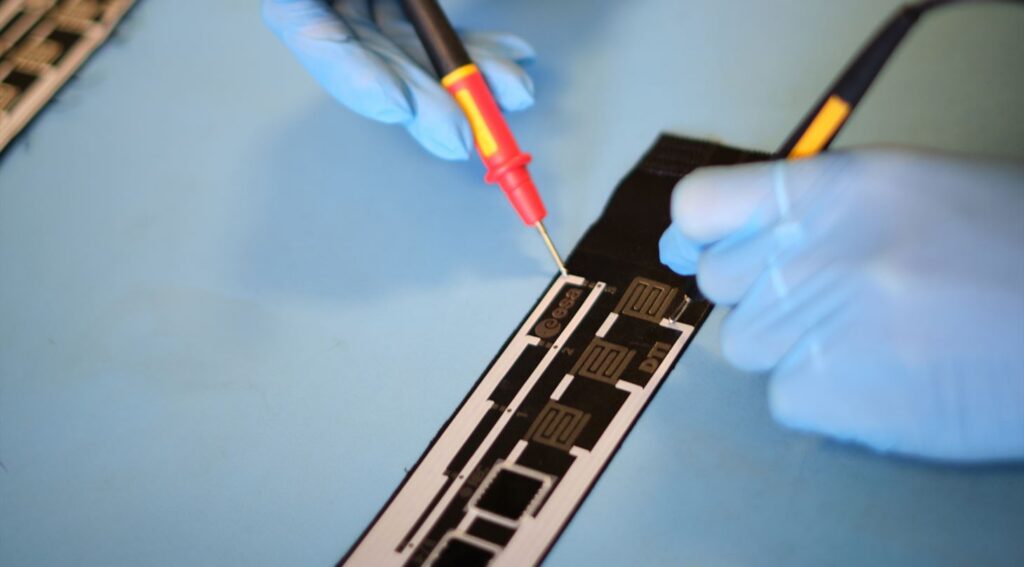
Key Takeaways
- The Danish Technological Institute (DTI) is developing 3D printed electronic "smart skin" for space robots with partners PIAP Space, Redwire Space, and Admatis.
- The smart skin is designed to address thermal management, dust protection, and human-robot interface optimization challenges in space exploration.
- The use of 3D printing enables bespoke design capabilities, enhanced durability, and improved motion control systems.
- The project is funded by the European Space Agency (ESA) and builds on earlier work completed in 2024.
Introduction to 3D Printed Smart Skin for Space Robots
The robotics industry is a promising market for additive manufacturing (AM), with applications in space exploration being a key area of focus. A recent project by the Danish Technological Institute (DTI) and its partners demonstrates the potential of 3D printed electronic "smart skin" for space robots.
Benefits of 3D Printed Smart Skin
The smart skin is designed to solve several challenges faced by robotic systems during space exploration, including:
Thermal Management
The smart skin helps to regulate the robot's temperature, which is crucial in extreme space environments.
Dust Protection
The skin provides a protective layer against dust and debris, which can damage the robot's electronics and mechanisms.
Human-Robot Interface Optimization
The smart skin enables optimized human-robot interface (HRI) scenarios, allowing for more efficient and effective communication between humans and robots.
Partners and Technology
DTI worked with three private sector partners on the project: PIAP Space, Redwire Space, and Admatis. The partners leveraged advanced materials and 3D printing technologies to create the smart skin. The following table compares the partners and their roles in the project:
| Partner | Role | Technology |
|---|---|---|
| PIAP Space | Space robotics expertise | 3D printing, robotics |
| Redwire Space | Space technology expertise | 3D printing, space systems |
| Admatis | Advanced materials expertise | 3D printing, materials science |
| DTI | Project lead, smart skin design | 3D printing, robotics, materials science |
Results and Implications
The use of 3D printing enabled the creation of a bespoke design that optimized the robot's structure and functionality. The smart skin also enhanced the robot's durability and improved its motion control system. The project demonstrates the potential of 3D printing in space exploration and highlights the importance of collaboration between industry partners and research institutions.
Bottom Line
The development of 3D printed electronic smart skin for space robots is a significant advancement in the field of robotics and additive manufacturing. The project demonstrates the potential of 3D printing to address complex challenges in space exploration and highlights the importance of collaboration between industry partners and research institutions. With the European Space Agency's funding and support, this project is poised to make a significant impact on the future of space exploration and robotics.


