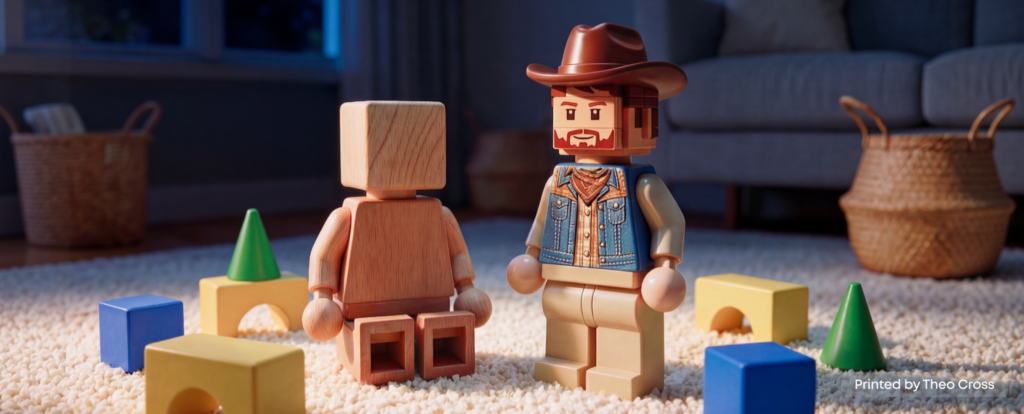
Key Takeaways
- The UV printing and 3D printing industries are converging, with potential for advanced capabilities
- Companies like Anker, Mimaki, Roland DG, and Snapmaker are active in both markets
- Combining UV printing and 3D printing could enable efficient and high-quality coloring of printed parts
- Challenges remain in developing machines that can color complex geometries
Introduction to UV Printing and 3D Printing Convergence
The UV printing industry has experienced significant growth in recent years, with desktop UV printers becoming increasingly popular for household, small business, and enterprise use. These machines can print textures and designs on various objects, such as mugs, making them a lucrative option for solopreneurs and small businesses. Meanwhile, the 3D printing industry has also been advancing, with companies like Rize developing innovative technologies that combine color inkjet with Material Extrusion to produce tough and colorful parts.
The Potential of Combined UV and 3D Printing
Combining UV printing and 3D printing could revolutionize the industry by enabling the efficient and high-quality coloring of printed parts. This could be achieved by either integrating inkjet printing into existing 3D printing machines or developing separate machines for each process. While there are challenges to overcome, such as designing parts with flat surfaces and specific angles to facilitate inkjet printing, the potential benefits are substantial.
Comparison of UV Printing and 3D Printing Technologies
| Technology | Resolution | Printing Speed | Materials |
|---|---|---|---|
| UV Printing | Up to 1000 dpi | Up to 100 mm/s | UV-curable inks |
| 3D Printing (FDM) | Up to 100 microns | Up to 300 mm/s | Various thermoplastics |
| 3D Printing (SLA) | Up to 10 microns | Up to 100 mm/s | Photopolymer resins |
Industry Developments and Players
Companies like Anker, Mimaki, Roland DG, and Snapmaker are already active in both the UV printing and 3D printing markets. These companies are well-positioned to develop advanced UV printing and 3D printing capabilities, potentially leading to innovative solutions for coloring printed parts. For example, Eufymake is a company that has developed a UV printing technology that can print on various objects, including 3D printed parts.
Challenges and Future Directions
While the convergence of UV printing and 3D printing holds great promise, there are challenges to overcome. Designing machines that can color complex geometries and developing materials that are compatible with both UV printing and 3D printing are just a few of the hurdles that need to be addressed. However, with ongoing research and development, it is likely that we will see significant advancements in this area in the coming years.
Bottom Line
The convergence of UV printing and 3D printing has the potential to revolutionize the industry, enabling the efficient and high-quality coloring of printed parts. While challenges remain, companies like Anker, Mimaki, Roland DG, and Snapmaker are well-positioned to develop innovative solutions. As the industry continues to evolve, we can expect to see significant advancements in UV printing and 3D printing technologies, leading to new opportunities for businesses and individuals alike. With the potential for advanced capabilities and increased efficiency, the future of UV printing and 3D printing looks bright.


