Key Takeaways
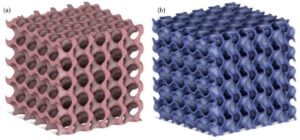
- A novel deep learning framework is developed to co-optimize Laser Powder Bed Fusion (LPBF) settings and titanium gyroid lattice design.
- The framework aims to enhance printability and performance of titanium gyroid lattices.
- LPBF is a popular 3D printing technique used for producing complex metal structures.
- Titanium gyroid lattices have unique properties, including high strength-to-weight ratio and excellent corrosion resistance.
Introduction to LPBF and Gyroid Lattices
Laser Powder Bed Fusion (LPBF) is a widely used 3D printing technique for producing complex metal structures, including titanium gyroid lattices. These lattices have gained significant attention in recent years due to their exceptional properties, such as high strength-to-weight ratio, excellent corrosion resistance, and unique thermal properties. However, printing titanium gyroid lattices using LPBF can be challenging due to the complex interplay between process parameters and material properties.
Deep Learning Framework for Co-Optimization
A recent study demonstrates a deep learning framework that co-optimizes LPBF settings and titanium gyroid lattice design to improve printability and performance. The framework uses a combination of machine learning algorithms and computational models to predict the optimal process parameters and lattice design for a given set of performance requirements. This approach enables the creation of complex titanium gyroid lattices with tailored properties, such as mechanical strength, thermal conductivity, and surface roughness.
Comparison of LPBF Techniques
| Technique | Resolution | Build Speed | Material Limitations |
|---|---|---|---|
| LPBF | 50-100 μm | 10-100 mm/h | Limited to metal powders |
| Selective Laser Sintering (SLS) | 100-200 μm | 100-500 mm/h | Limited to polymer powders |
| Electron Beam Melting (EBM) | 100-200 μm | 10-50 mm/h | Limited to metal powders |
Benefits of Co-Optimization
The co-optimization framework offers several benefits, including:
- Improved printability: The framework predicts the optimal process parameters to minimize defects and improve the overall print quality.
- Enhanced performance: The framework optimizes the lattice design to achieve specific performance requirements, such as mechanical strength or thermal conductivity.
- Reduced trial-and-error: The framework reduces the need for trial-and-error experiments, saving time and resources.
Bottom Line
The development of a deep learning framework for co-optimizing LPBF settings and titanium gyroid lattice design marks a significant advancement in the field of 3D printing. By leveraging machine learning algorithms and computational models, this framework enables the creation of complex titanium gyroid lattices with tailored properties, paving the way for innovative applications in aerospace, biomedical, and energy industries. With its potential to improve printability, performance, and efficiency, this technology is expected to have a profound impact on the future of 3D printing and materials science.