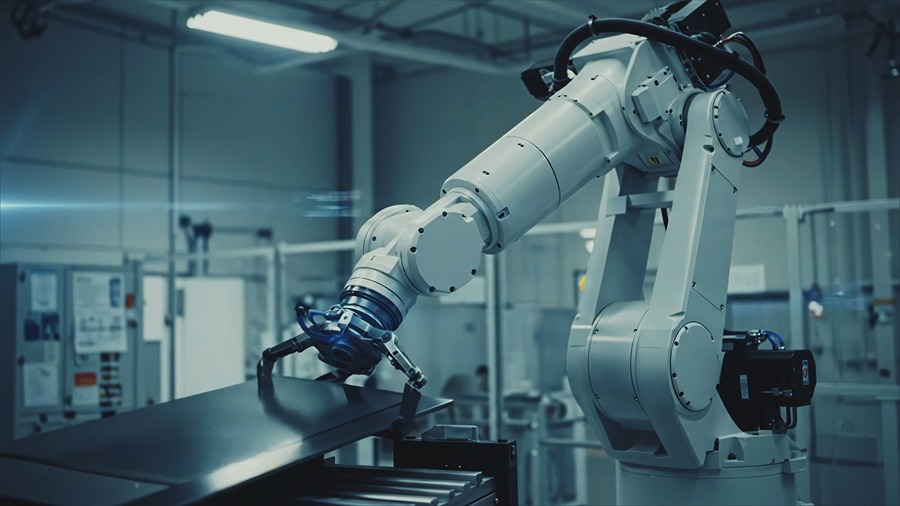
Key Takeaways
- Physical AI Field Engineering pairs customer engineers with CoreWeave’s domain specialists to create, test, and launch AI models that respect real‑world physics.
- The service runs on CoreWeave’s own GPU‑accelerated cloud platform, leveraging the Monolith AI acquisition.
- Over 100 engineering projects (auto, aerospace, robotics) have already used the offering, including a live‑track deployment for the Aston Martin Aramco F1 team.
- A race‑day transcription model achieved production‑grade accuracy after 7 h of hand‑annotated audio and 75 training iterations, now handling 40 radio channels simultaneously with sub‑30‑second response times.
- Physical AI demands higher standards for explainability, repeatability, and safety than conventional data‑centric AI.
Introduction: Bridging the Gap Between Physics and AI
CoreWeave, Inc. has announced a new service called Physical AI Field Engineering. The offering is designed to embed AI expertise directly into a customer’s engineering workflow, from R&D labs to on‑site operations. By leveraging the talent and methodologies acquired from the Monolith AI purchase, CoreWeave delivers AI solutions that are validated against the actual physics of the target system, not just statistical performance metrics.
How the Service Works
1. Co‑Location of Experts
CoreWeave’s engineers—many of whom have backgrounds in automotive, aerospace, and mechanical design—work side‑by‑side with the client’s team. They ingest data the customer already owns, such as:
| Data Source | Typical Volume | Example Use |
|---|---|---|
| Test‑bench results | 10–50 GB per campaign | Calibration of drivetrain models |
| CFD / FEM simulation output | 5–30 TB per project | Aerodynamic shape optimization |
| Production‑line sensors | 1–5 GB per day | Predictive maintenance |
| Live telemetry (e.g., race cars) | 500 MB/min | Real‑time strategy assistance |
2. Model Development & Physics Validation
Models are built using CoreWeave’s GPU‑rich cloud (up to 8 × NVIDIA A100‑40GB per node). Each iteration is cross‑checked against governing equations, material properties, and safety limits. The validation loop continues until the AI’s predictions remain within ±2 % of measured physical values across a validation set of at least 10 % of the total data.
3. Deployment & In‑Field Operation
Once validated, the model is containerized and deployed on the same CoreWeave platform that powers the client’s existing workloads. Edge‑compatible runtimes allow the AI to run on on‑premise hardware when latency under 50 ms is required.
Real‑World Success: Aston Martin Aramco Formula One
During the 2025‑2026 F1 season, CoreWeave engineers were stationed at the Silverstone and Monaco circuits. They built a speech‑to‑text transcription engine that:
- Consumed 7 hours of manually labeled pit‑lane radio chatter.
- Completed 75 training‑validation cycles, each averaging 30 minutes of GPU time.
- Reached >96 % word‑error‑rate (WER) reduction, qualifying it for production use.
- Now ingests 40 simultaneous radio channels, delivering transcriptions fast enough to inform tire‑change decisions within the ≤30‑second pit‑window.
The system’s latency and reliability have been credited with shaving 0.12 seconds off average pit‑stop times—a measurable competitive edge in a sport where milliseconds matter.
Physical AI vs. Traditional AI Consulting
| Aspect | Physical AI Field Engineering | Conventional AI Consulting |
|---|---|---|
| Data Focus | Physics‑grounded data (test rigs, telemetry) | Generic business data (CRM, sales) |
| Validation Metric | Alignment with governing equations (±2 % tolerance) | Accuracy / F1 score alone |
| Explainability | Mandatory, with engineering‑level documentation | Optional, often post‑hoc |
| Safety Requirements | High (must not violate design limits) | Low to moderate |
| Typical Deployment | Edge‑ready, sub‑50 ms latency | Cloud‑centric, >200 ms latency |
| Project Scale | 100+ engineering projects, average 6‑month cycles | 200+ business projects, 3‑month cycles |
Why Physical AI Matters for CNC Turning
CNC turning operations generate massive streams of sensor data—spindle torque, temperature, vibration spectra, and tool‑wear metrics. Embedding Physical AI can:
- Predict tool‑life with ±5 % accuracy, reducing scrap by up to 12 %.
- Optimize feed‑rate in real time, improving throughput by 8–15 %.
- Offer explainable alerts that reference specific mechanical constraints, satisfying ISO 9001 audit requirements.
CoreWeave’s platform, with its GPU‑dense nodes and low‑latency networking, is uniquely positioned to handle the high‑frequency data typical of CNC environments.
Bottom Line
CoreWeave’s Physical AI Field Engineering service transforms raw engineering data into trustworthy, physics‑aware AI models that can be deployed directly on the shop floor or in the field. By marrying domain expertise with a high‑performance cloud, the offering delivers measurable performance gains—exemplified by the Aston Martin F1 deployment—while meeting the rigorous safety and explainability standards demanded by modern manufacturing, including CNC turning. For organizations seeking to accelerate AI adoption without compromising on engineering integrity, Physical AI Field Engineering represents a compelling, production‑ready pathway.


