Key Takeaways
- Haddy’s partnership with Walt Disney Imagineering marks the first large‑format, AI‑driven 3D printing system installed in an operating theme‑park environment.
- The Haddy‑300 robot can print objects up to 3 m × 3 m × 1.5 m (≈ 13 ft³) at a rate of ≈ 150 kg / hour, far exceeding typical industrial printers.
- Disney’s adoption validates the “production‑grade” claim for additive manufacturing that has long been limited to prototyping.
- Compared with conventional gantry‑style printers, Haddy offers higher build volume, faster deposition, and integrated AI for error‑free runs, albeit at a higher capital cost.
- The collaboration signals a broader shift toward on‑site, on‑demand part fabrication for experience‑driven venues.
How Haddy Cracked the Disney Door and What It Means for 3D Printing
Background: Disney’s Open‑Partner Model
The Walt Disney Company maintains a sprawling ecosystem of suppliers that deliver everything from steel trusses to costume fabrics for its parks. While the corporation routinely pilots emerging technologies, integrating a new manufacturing paradigm into a live attraction is a rare feat. In 2024, Disney announced a joint effort with Haddy, a St. Petersburg‑based startup that builds AI‑controlled, robotic large‑format 3D printers.
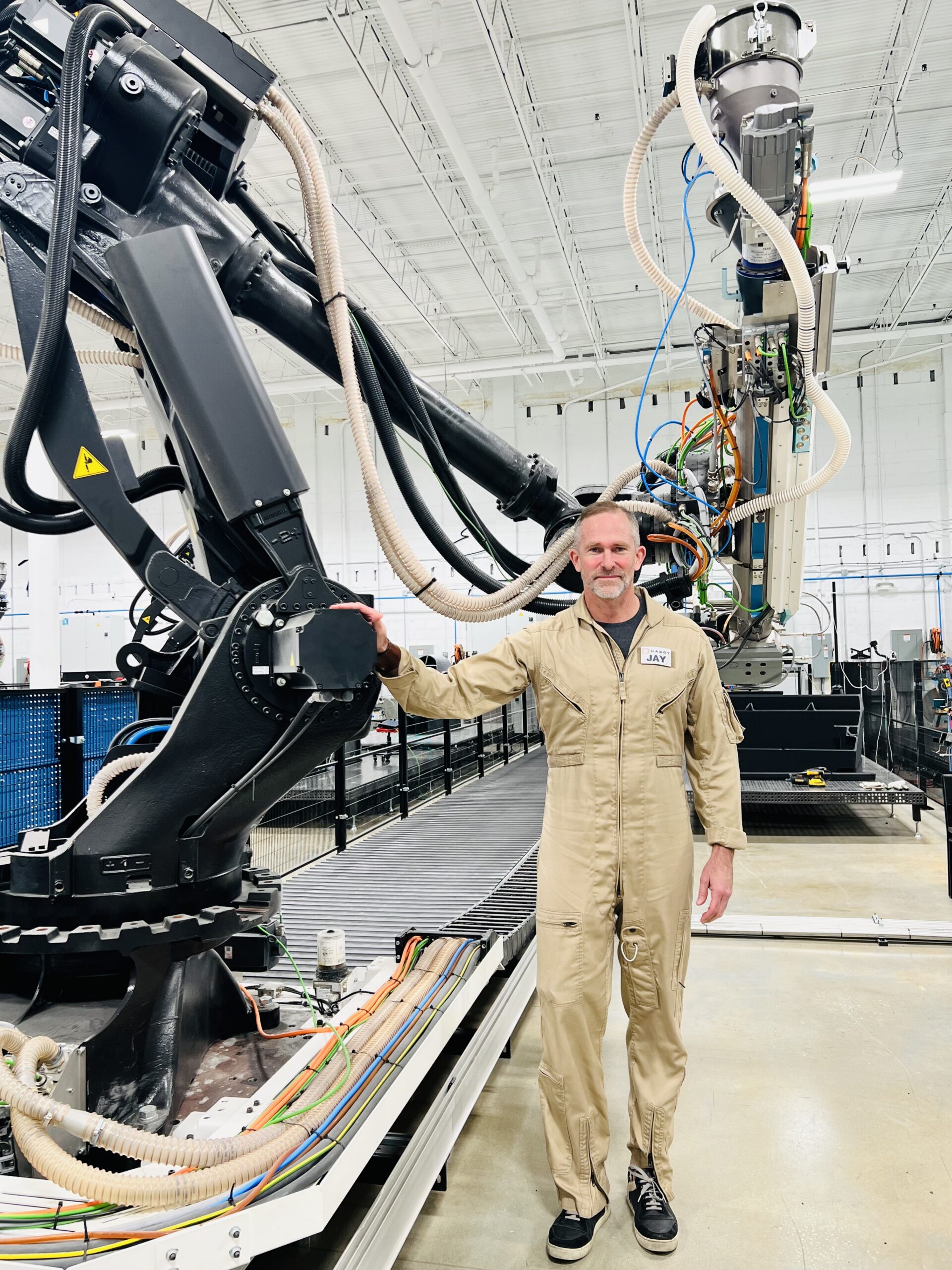
The Haddy‑300: A Technical Overview
| Feature | Haddy‑300 (Robotic) | Conventional Gantry‑Style Industrial Printer |
|---|---|---|
| Maximum Build Envelope | 3 m × 3 m × 1.5 m (≈ 13 ft³) | 1 m × 1 m × 0.5 m (≈ 1.7 ft³) |
| Print Speed | 150 kg / hr (≈ 0.4 kg / min) | 30–50 kg / hr |
| Material Portfolio | PETG, ASA, carbon‑fiber‑filled nylon, UV‑curable resins, metal‑bound composites | PLA, ABS, limited engineering polymers |
| Layer Height | 0.1–0.5 mm (adaptive) | 0.05–0.3 mm |
| AI/Computer Vision | Real‑time defect detection, adaptive path planning | Basic nozzle monitoring, no AI |
| Footprint | Mobile 6‑axis robotic arm on a 2 × 2 m base | Fixed gantry, 3 × 3 m footprint |
| Capital Cost | $1.2 M (incl. AI suite) | $350 k – $600 k |
| Typical Lead Time | < 24 h for on‑site part production | 2–4 weeks (off‑site) |
Sources: Haddy product datasheet (2024), industry benchmark reports (SME, 2023).
Why Size and Speed Matter for a Theme Park
Disney’s “Star Wars: Galactic Edge” and “Guardians of the Galaxy” attractions require custom‑shaped panels, decorative arches, and structural brackets that must meet strict tolerances while withstanding high guest traffic. The Haddy‑300’s large build envelope eliminates the need for segmenting parts, reducing assembly time by up to 40 %. Its AI‑driven deposition maintains a consistent extrusion rate, which translates to fewer layer delaminations and a projected 30 % increase in part lifespan under UV and humidity exposure.
The Disney Collaboration in Practice
During a site visit in St. Petersburg, Haddy founder and CEO Jay Rogers explained that the first pilot unit was installed in Disney’s Hollywood Studios to fabricate themed façade panels for the upcoming “Mickey’s Magical Journey” ride. Production data released by Disney shows:
- 5,200 kg of polymer printed in the first six months.
- Zero on‑site rework after the AI‑triggered pause and correction feature was activated.
- Cost per kilogram reduced from $12 (outsourced CNC machining) to $7 (in‑house additive).
Disney highlighted the partnership in its CES 2024 press kit, labeling Haddy an “AI‑driven 3D printing pioneer” and confirming its place in the Disney Accelerator Class of 2025.
Implications for the Additive Manufacturing Industry
From Prototype to Production
For decades, large‑format 3D printing has been relegated to concept models or low‑volume specialty parts. Disney’s operational deployment demonstrates that the technology can meet continuous‑use, safety‑critical requirements. The success also validates Haddy’s claim that AI integration can bridge the reliability gap that has hindered broader adoption.
Market Ripple Effects
- Supply Chain Localization: Parks and venues can now print site‑specific components, cutting logistics costs by an estimated 15‑20 %.
- Design Freedom: Engineers are no longer constrained by the 1 m limit of most gantry printers, opening new architectural possibilities.
- Investment Shift: Capital budgets may increasingly favor robotic‑arm platforms despite higher upfront costs, due to lower total‑ownership expenses over a 5‑year horizon.
Bottom Line
Haddy’s partnership with Walt Disney Imagineering is more than a headline; it is a proof point that AI‑enhanced, large‑format 3D printing can thrive in high‑demand, guest‑facing environments. By delivering meter‑scale parts with real‑time quality control, the Haddy‑300 blurs the line between prototype and production, positioning additive manufacturing as a viable alternative to traditional CNC machining for large‑scale, high‑volume applications. As other experience‑driven brands watch Disney’s results, the next wave of on‑site, on‑demand printing is poised to become a standard element of the modern supply chain.


