Key Takeaways
- Ceramic 3D printing has various applications in commercial, artistic, and extreme environments
- The Ceramics Expo in Cleveland, Ohio, showcased the crossover between ceramics and additive manufacturing
- Ceramic materials are corrosion- and heat-resistant, making them suitable for use in fuel cells, hypersonics, and space exploration
- Companies like Free Form Fibers and Starlab Space are developing innovative ceramic manufacturing technologies
Introduction to Ceramic 3D Printing
Ceramic 3D printing is a rapidly growing field that combines the benefits of ceramics and additive manufacturing. The recent Ceramics Expo in Cleveland, Ohio, highlighted the potential of ceramic 3D printing in various applications, from commercial and artistic uses to extreme environments like fuel cells and hypersonics.
Presentations and Panel Discussions
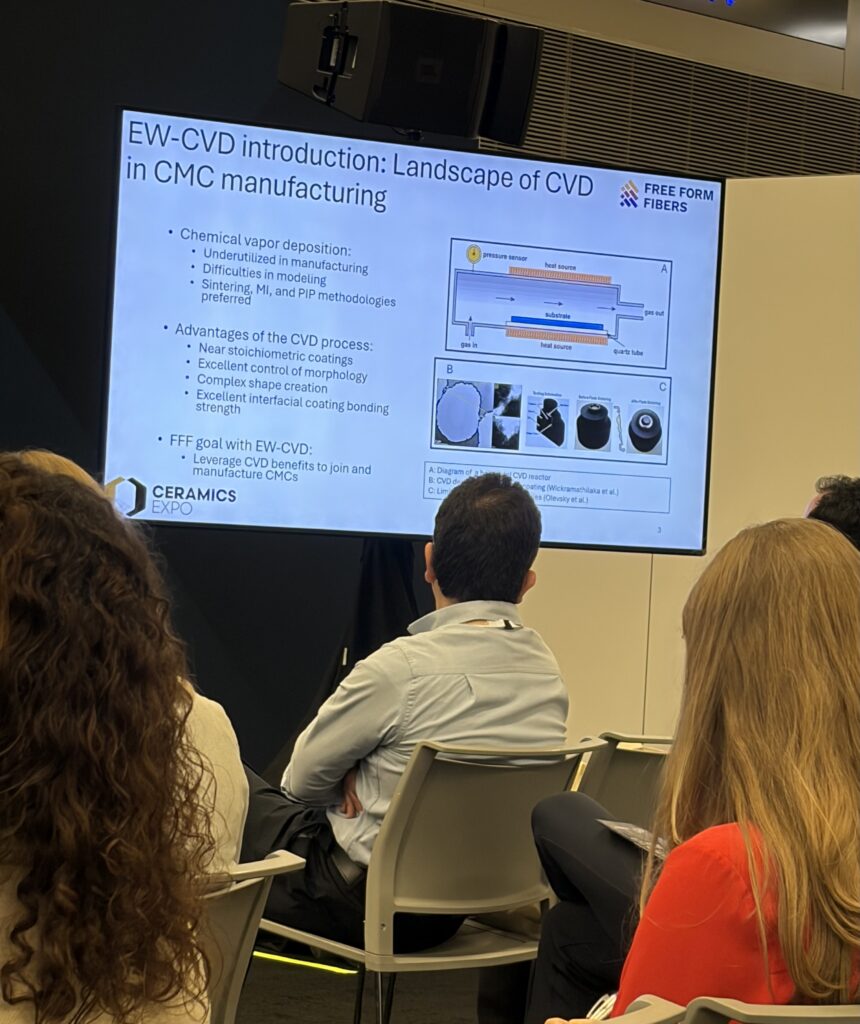
The expo featured a panel discussion on the use of ceramics in extreme environments, moderated by Dave Diegel, Business Development Manager at Sinto Advanced Ceramics USA. The panelists, including Seth Shuster from Free Form Fibers and Jonathan Volk from Starlab Space, shared their experiences and innovations in ceramic manufacturing. Free Form Fibers' chemical vapor deposition (CVD) process, which received government funding for semiconductor production, was one of the notable examples.
Comparison of Ceramic 3D Printing Technologies
| Technology | Company | Application |
|---|---|---|
| Chemical Vapor Deposition (CVD) | Free Form Fibers | Semiconductor production |
| Ceramic Matrix Composites | Free Form Fibers | Extreme environment applications |
| 3D Printing | Starlab Space | Space exploration and manufacturing |
Applications of Ceramic 3D Printing
Ceramic 3D printing has a wide range of applications, including:
- Commercial: producing complex ceramic parts with high precision and accuracy
- Artistic: creating intricate and customized ceramic designs
- Extreme environments: using ceramic materials in fuel cells, hypersonics, and space exploration due to their corrosion- and heat-resistant properties
Bottom Line
The Ceramics Expo demonstrated the growing importance of ceramic 3D printing in various industries. With its unique properties and applications, ceramic 3D printing is poised to revolutionize the way we manufacture and use ceramic materials. As companies like Free Form Fibers and Starlab Space continue to innovate and develop new technologies, we can expect to see significant advancements in the field of ceramic 3D printing. With a projected growth rate of 20% per year, the ceramic 3D printing market is expected to reach $1.5 billion by 2028, making it an exciting and rapidly evolving field to watch.


