Key Takeaways
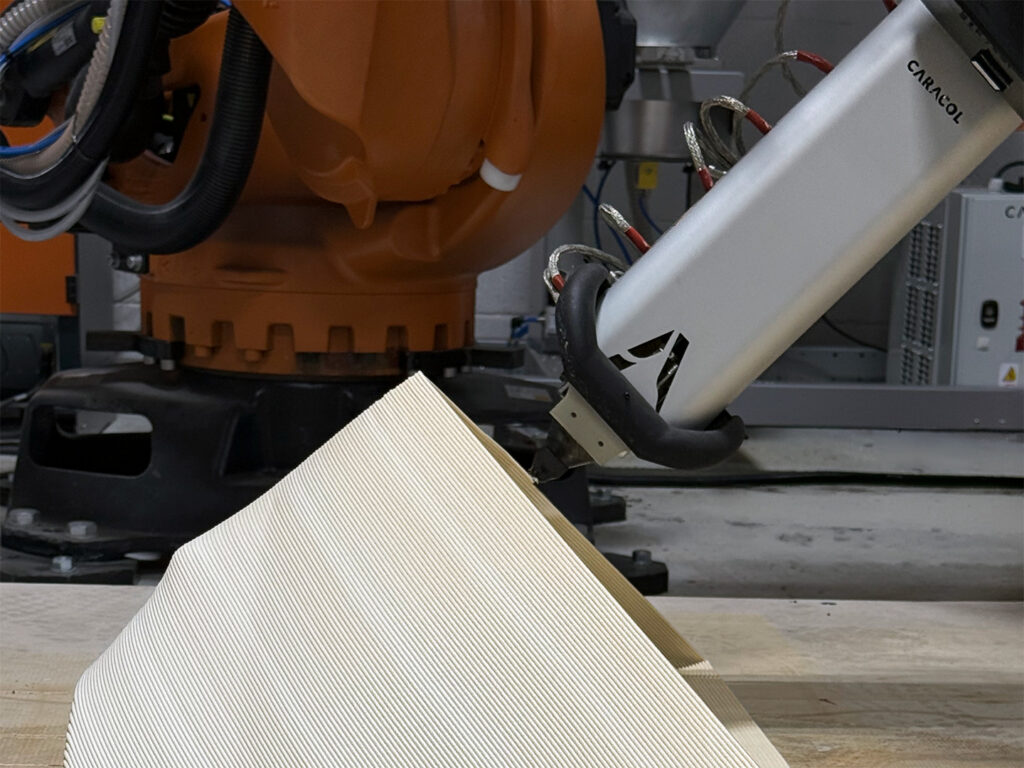
- GADC has acquired Caracol’s Heron 400 large‑format 3‑axis/6‑axis robotic printer for pilot testing in Chicago before a full rollout in Greenland.
- The system can print up to 4 m reach and 10 m X‑axis travel, handling thermoplastic pellets and fiber‑reinforced composites.
- Local production aims to replace costly, long‑haul shipping with digital‑file‑to‑part workflows for Arctic‑grade furniture, marine hardware, and replacement components.
- GADC will create a joint‑venture model, pairing Greenlandic entrepreneurship with on‑site training and ongoing technical support.
- If successful, the facility could serve resource extraction, infrastructure, tourism, and consumer markets across the island.
Introduction: From Chicago to the Arctic
The Greenland Arctic Development Corp. (GADC) has taken a decisive step toward on‑site additive manufacturing by purchasing a Caracol Heron 400 system. While the printer will first be assembled and validated in a Chicago facility, the ultimate goal is to establish a self‑sustaining production hub in Greenland, reducing reliance on overseas supply chains.
What Is the Heron 400?
Core Architecture
- Rail‑mounted robotic arm with a 4 m radial reach.
- Linear travel exceeding 10 m along the X‑axis, enabling true large‑format builds.
- Six‑plus axes allow non‑planar deposition, cutting support material requirements by up to 30 % for complex geometries.
Material Capability
| Material | Form | Typical Tensile Strength |
|---|---|---|
| Thermoplastic pellets (e.g., PA12) | Bulk feed | 45 MPa |
| Fiber‑reinforced composites (CF, GF) | Pellet‑based | 150 MPa (CF) / 80 MPa (GF) |
| High‑temperature polymers (PEEK) | Pellet | 90 MPa |
The system processes pellet‑size feedstock, which is more economical for high‑volume Arctic projects than filament‑based printers.
Production Speed
- Layer rate: 0.8–1.5 mm/s depending on material viscosity.
- Build envelope: up to 10 m × 4 m × 2 m, sufficient for boat hull sections, large‑scale furniture, and even concrete formwork.
Why Greenland Needs a Local 3‑D Printing Hub
Supply‑Chain Constraints
Shipping a finished component from Europe or North America to Nuuk can cost $1,200–$2,500 per cubic meter and add 2–4 weeks of lead time. By sending a 5 MB CAD file instead, the same part can be produced on‑site within 48–72 hours, saving up to 90 % in logistics cost.
Target Applications
- Marine hardware: custom gangways, propeller guards, and hull reinforcements that meet ABS‑A and ISO 9001 standards.
- Vehicle spares: ATV and snowmobile brackets, typically ordered in batches of 5–10.
- Construction modules: insulated panels, modular connectors, and concrete form liners designed for sub‑zero temperatures.
- Tourism‑related fixtures: modular furniture and display units for hotels and research stations.
These are low‑volume, high‑value items where traditional tooling is uneconomical.
Building a Greenlandic Enterprise
GADC’s strategy hinges on local ownership. The plan includes:
- Recruiting a Greenlandic entrepreneur to lead the venture.
- Providing a six‑month technical apprenticeship, covering printer operation, material science, and post‑processing.
- Establishing a joint‑venture between the entrepreneur and GADC, with profit‑sharing based on production output.
Larry G. Swets Jr., Chairman of GADC, emphasizes that “the lasting impact comes from embedding capability, not just delivering equipment.”
Comparison: Heron 400 vs. Conventional CNC Turning
| Feature | Caracol Heron 400 (Additive) | Conventional CNC Turning (Subtractive) |
|---|---|---|
| Build Size | 10 m × 4 m × 2 m | Limited to 2 m × 0.5 m × 0.5 m |
| Material Waste | < 5 % (near‑net‑shape) | 30‑40 % (chip removal) |
| Setup Time | 4–6 h (file upload) | 1–2 days (fixture design) |
| Lead Time for 1 m³ part | 48 h | 7–10 days |
| Energy Consumption | 120 kW (printer) | 250 kW (spindle) |
| Typical Cost per Part | $1,200–$2,000 | $3,500–$5,000 |
The additive approach dramatically reduces material waste and turnaround time, crucial for remote Arctic operations.
Bottom Line
GADC’s acquisition of the Caracol Heron 400 marks a pivotal move toward self‑reliant manufacturing in Greenland. By leveraging a rail‑based, multi‑axis printer capable of handling high‑strength composites, the initiative promises to slash logistics expenses, accelerate delivery of critical components, and nurture a home‑grown high‑tech enterprise. If the pilot in Chicago validates performance expectations, Greenland could soon host a strategic additive‑manufacturing hub that supports its resource, infrastructure, and tourism sectors while delivering skilled jobs to the local community.


