Key Takeaways
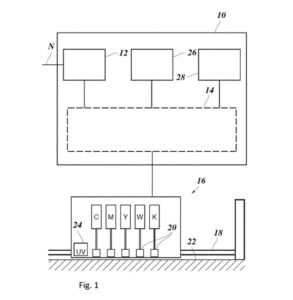
- Canon Production Printing has filed a European patent application for a new method of removing support material from 3D printed structures
- The method targets UV inkjet 3D printing technology
- The goal is to simplify the support removal process, making it more efficient and user-friendly
Introduction to 3D Printing Support Removal
Support material is a crucial component in 3D printing, providing structural integrity to complex geometries and overhanging features. However, removing this material can be a time-consuming and labor-intensive process. Canon's new patent application aims to address this challenge by introducing an innovative method for removing support material from UV inkjet 3D printed structures.
Canon's Patent Application
The patent application, filed with the European Patent Office, outlines a novel approach to support removal. While the exact details of the method are not publicly disclosed, it is expected to utilize a combination of mechanical and chemical processes to break down and remove the support material. This could potentially reduce the amount of manual labor required, minimize damage to the printed part, and increase overall productivity.
Comparison of Support Removal Methods
| Method | Description | Advantages | Disadvantages |
|---|---|---|---|
| Manual Removal | Manual removal of support material using tools such as pliers, screwdrivers, and sandpaper | Low cost, high precision | Time-consuming, labor-intensive, potential for damage to printed part |
| Chemical Dissolution | Removal of support material using chemicals such as solvents or acids | Fast, efficient, minimal labor required | Potential for damage to printed part, environmental concerns, health risks |
| Thermal Degradation | Removal of support material using heat | Fast, efficient, minimal labor required | Potential for damage to printed part, limited control over removal process |
| Canon's New Method | Novel approach to support removal, details not publicly disclosed | Expected to be faster, more efficient, and user-friendly | Details not publicly disclosed, potential for limitations and drawbacks |
Impact on the 3D Printing Industry
Canon's patent application has the potential to significantly impact the 3D printing industry, particularly in the field of UV inkjet 3D printing. By simplifying the support removal process, manufacturers and users can increase productivity, reduce labor costs, and improve overall efficiency. This, in turn, could lead to increased adoption of 3D printing technology in various industries, including aerospace, automotive, and healthcare.
Bottom Line
Canon's new patent application for a novel support removal method has the potential to revolutionize the 3D printing industry. By providing a faster, more efficient, and user-friendly method for removing support material, manufacturers and users can unlock new possibilities for 3D printing technology. With its expected benefits and potential impact on the industry, Canon's patent application is an exciting development that is sure to be closely watched in the coming months.