Key Takeaways
- AI‑driven design tools are moving from proof‑of‑concept to production‑ready, reshaping the front‑end of additive manufacturing.
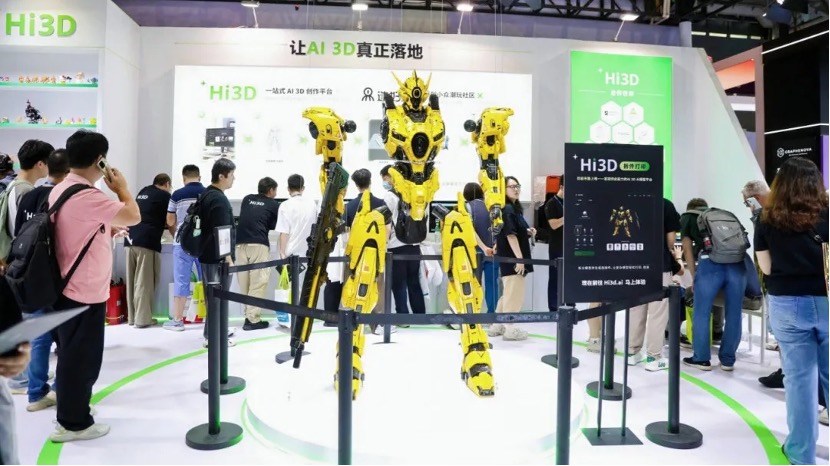
- Six AI‑3D platforms (Meshy, Tripo, Hi3D, DreamTech, Deep‑Mesh, Hyper3D) now offer sub‑minute model generation, multi‑format export, and cloud‑based pricing tiers under $100 / month.
- Additive‑manufacturing firms are targeting AI‑server thermal management, with at least five Chinese vendors showcasing heat‑sink‑optimized metal printers capable of 150 W continuous output.
- Traditional 3‑D printer OEMs were noticeably absent, indicating a market pivot toward software‑centric solutions and niche hardware for high‑performance computing (HPC) environments.
AI 3D Design Has Crossed the Proof‑of‑Concept Threshold
The AI track at Formnext Asia Shenzhen 2026 featured a tightly‑curated lineup of start‑ups that are now delivering end‑to‑end design automation. Unlike earlier demos that merely produced a static mesh, today’s tools can ingest a textual prompt and output a printable STL in under 45 seconds.
| Platform | Avg. Generation Time* | Supported Export Formats | Cloud Pricing (USD) | Notable Integration |
|---|---|---|---|---|
| Meshy AI | 38 s | STL, OBJ, GLB | $49 / mo (Basic) | Fusion 360 plug‑in |
| Tripo AI | 42 s | STL, FBX, PLY | $69 / mo (Pro) | Unity & Unreal pipelines |
| Hi3D | 35 s | STL, OBJ | $59 / mo (Standard) | Siemens NX API |
| DreamTech | 48 s | STL, 3MF | $39 / mo (Starter) | SolidWorks macro |
| Deep‑Mesh | 30 s | STL, OBJ, GLB | $79 / mo (Enterprise) | Autodesk Forge |
| Hyper3D | 33 s | STL, PLY | $55 / mo (Business) | On‑premise Docker image |
*Measured on a NVIDIA RTX 4090 GPU with a 32 GB VRAM configuration.
The real strategic question is no longer “Can AI create a model?” but “How much manual CAD work remains before a part reaches the printer?” Early adopters report a 40‑60 % reduction in concept‑to‑print cycle time, which could shift the competitive advantage from hardware manufacturers to software ecosystems that own the design entry point.
Additive Manufacturing Meets AI‑Server Thermal Management
A second theme that emerged was the convergence of metal‑laser printing with high‑density AI compute. Companies such as Xihe Additive, Han’s Prowave, Baochenxin, Meiguang Quick Print, Nanfang Additive, Zhongzhi Laser, and Youyan Additive displayed printers specifically engineered for continuous‑wave laser operation while maintaining a ≤ 45 °C hotspot on adjacent server racks.
Key hardware specs observed on the floor:
- Laser Power: 150 W–300 W continuous wave, up to 500 W pulsed for aerospace alloys.
- Build Volume: 250 × 250 × 350 mm (standard) with modular extension to 500 mm height.
- Cooling Architecture: Integrated liquid‑cooling loops with copper‑graphite heat exchangers; real‑time thermal telemetry fed to AI‑driven server management software.
- Print Speed: Up to 120 mm³ / s for AlSi10Mg, a 25 % improvement over legacy systems.
These machines are positioned for data‑center manufacturers that co‑locate AI inference clusters with in‑situ metal part production—think edge‑AI accelerators that need custom heat‑sink brackets printed on‑demand.
The Decline of Traditional 3‑D Printer OEM Presence
Notably, several legacy brands that dominated previous Formnext editions (e.g., Stratasys, EOS, 3D Systems) had minimal or no booth space. Their absence underscores a market transition:
- Software‑first value chains – AI‑generated geometry and cloud‑based slicing are becoming the primary differentiators.
- Niche hardware for HPC – Manufacturers are targeting a smaller, higher‑margin segment that requires thermal‑aware metal printers rather than high‑volume polymer farms.
- Ecosystem lock‑in – Companies that bundle AI design tools with proprietary hardware can capture the entire workflow, from concept to finished part.
Bottom Line
Formnext Asia Shenzhen 2026 revealed that AI is no longer a peripheral curiosity for additive manufacturing; it is redefining the design front‑end and driving specialized hardware for AI‑server environments. Six AI‑3D platforms now deliver sub‑minute, multi‑format models at subscription prices below $100 / month, while Chinese metal‑laser vendors are shipping thermally optimized printers capable of 150 W continuous output and 120 mm³ / s build rates. The disappearance of traditional OEMs signals that the future of 3‑D printing will be dictated by software ecosystems that own the concept‑to‑print pipeline and by hardware that can coexist with high‑performance computing. Companies that align with these trends will likely dominate the next wave of additive manufacturing growth.


