Key Takeaways
- Sendzimir-type cold rolling mills require high-precision bearings to achieve significant reductions in strip thickness
- Multi-row cylindrical roller bearings with thick outer rings are used as backing bearings in these mills
- The quality of backing rollers is ensured by using high-purity steels, precise machining operations, and advanced measurement methods
- Reconditioning of backing bearings can significantly extend their service life, resulting in substantial economic savings
Introduction to Sendzimir-Type Cold Rolling Mills
Sendzimir-type cold rolling mills are designed to achieve significant reductions in strip thickness at high speeds and under heavy pressure. To meet the extremely tight tolerances required for the processed material, the backing bearings must operate with exceptionally high precision. These bearings are subject to extremely high loads and abrasive wear, which can affect the quality of the rolled product.
Characteristics of Backing Bearings
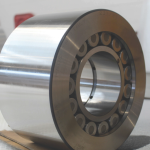
The backing bearings used in Sendzimir-type cold rolling mills are multi-row cylindrical roller bearings with thick outer rings and various design configurations. They are manufactured with tight tolerances and feature a rotational accuracy exceeding P4. The use of high-purity steels, precise machining operations, and advanced measurement methods ensures the high quality of the backing rollers.
Comparison of Bearing Characteristics
| Characteristic | Description | Value |
|---|---|---|
| Outer ring thickness | Thick outer rings for heavy loads | Up to 50 mm |
| Rotational accuracy | Exceeding P4 for high precision | ≤ 2 μm |
| Material | High-purity steels for durability | AISI 52100 |
| Design configuration | Various configurations for different applications | Customizable |
Reconditioning of Backing Bearings
The reconditioning of backing bearings is a well-tested process that enables the restoration of bearings to "as-new" condition. This process can significantly extend the service life of each bearing, resulting in substantial economic savings. Reconditioning allows for considerable cost reductions and helps maintain consistent production profitability.
Bottom Line
In conclusion, Sendzimir-type cold rolling mills require high-precision bearings to achieve significant reductions in strip thickness. The use of multi-row cylindrical roller bearings with thick outer rings and the implementation of reconditioning processes can ensure the high quality of the rolled product and extend the service life of the bearings. By understanding the characteristics and requirements of these bearings, manufacturers can optimize their production processes and maintain consistent profitability. With the ability to achieve rotational accuracy exceeding P4 and outer ring thicknesses of up to 50 mm, these bearings are capable of withstanding extremely high loads and abrasive wear, making them a crucial component in the production of high-quality rolled products.


