Key Takeaways
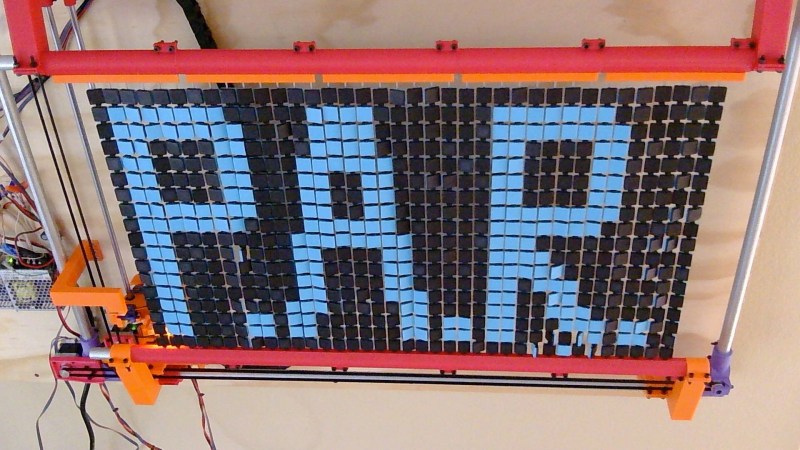
- Her piksel aktüatörü yerine CNC-sürümlü bir takım kafası kullanan yeni bir flip-disc ekranı (PAR olarak adlandırılıyor).
- Panel, bir tarafı siyah, diğer tarafı mavi olan 37 × 18 = 666 kare diskten oluşur.
- Konumlandırma, renk sensörü ve LIDAR mesafe ölçer ile sağlanır; ±0.1 mm doğruluk verir.
- Yenileme hızı ortalama 1 çerçeve ≈ 12 saniye (≈ 55 ms/disc) – manyetik sistemlerden daha yavaş ama mekanik olarak basit.
- Kullanıcılar web arayüzü üzerinden özel grafikler yükleyebilir; CNC kontrolcüsü bitmap'i bir dizi çevirme komutuna dönüştürür.
Introduction: Rethinking Flip-Disc Actuation
Geleneksel flip-disc (veya “flap-board”) ekranlar, her bir disk için arkasında bir elektromanyetik bobin ya da piezo aktüatör bulundurur. Bu mimari milisaniyenin altında anahtarlama sağlar, ancak binlerce sürücü sayısı maliyeti, kablolama karmaşıklığını ve enerji tüketimini artırır.
Mühendis Zimm, radikal bir yaklaşım öneriyor: piksel başına donanımı tek bir CNC freze kafası ile değiştirerek her diski sırayla fiziksel olarak çevirmek. Bu konsept, bir kalemi kağıt üzerinde hareket ettiren bir çiziciye benzer, ancak burada kalem bir diski iterek karşı yüzünü ortaya çıkarır.
How PAR Works
Mechanical Layout
- Panel boyutu: 370 mm × 180 mm (≈ 1.2 ft × 0.6 ft).
- Disk sayısı: 37 sütun × 18 satır = 666 disk, her biri 10 mm × 10 mm × 2 mm kalınlığında.
- Aktüatör: Standart 3-eksen CNC router (NEMA-23 step motorlar, 2 µm mikro-adım).
Sensing & Control
| Sensor | Role | Spec |
|---|---|---|
| Color sensor (TCS34725) | Diskin mevcut yüzünü (siyah vs. mavi) algılar | 16-bit RGB, ±0.5 % doğruluk |
| LIDAR (VL53L0X) | Disk yüksekliğini ölçerek çevirme derinliğini belirler | 4 cm menzil, 1 mm çözünürlük |
| Controller | Bitmap'ten G-code üretir | Raspberry Pi 4, 4 GB RAM, 1 GHz CPU |
CNC kafası bir raster tarama deseni izler. Her koordinatta renk sensörü disk yönelimini doğrular. Disk hedef bitmap ile eşleşmiyorsa, kafası LIDAR temasını algılayana kadar aşağı iner, ardından diski ≈ 1.2 mm iterek çevirir. İşlem, tüm çerçeve oluşturulana kadar tekrarlanır.
Performance
- Ortalama çevirme süresi: disk başına 55 ms (sensör okuması dahil).
- Tam-çerçeve yenileme: 666 disk için ~12 s.
- Güç tüketimi: CNC motorları için 12 V × 2 A (≈ 24 W); sensörler için ihmal edilebilir.
Yenileme hızı, 30 fps’ye ulaşabilen manyetik flip-disc'lerden çok daha yavaş olsa da sistem, 666 ayrı bobini ortadan kaldırarak bileşen sayısını %99’dan fazla azaltır.
Comparison: CNC-Driven vs. Magnetic Flip-Disc
| Feature | CNC-Driven (PAR) | Magnetic Flip-Disc |
|---|---|---|
| Actuators | Tek CNC kafası (1 motor seti) | Disk başına bir bobin (≈ 666 bobin) |
| Refresh Rate | 0.08 fps (≈ 12 s per frame) | 30 fps (typical) |
| Power Consumption | ~24 W total | 150–300 W (depends on coil count) |
| Cost (Bill of Materials) | ≈ $350 (CNC kit + sensors) | ≈ $2,500 (coils, drivers, wiring) |
| Reliability | Düşük hareketli parça aşınması (çelik-plastik) | Zamanla yüksek bobin arıza oranı |
| Scalability | Panel boyutu kolayca genişletilebilir (sadece daha uzun hareket) | Maliyet ve kablolama üssel artar |
User Interaction
PAR web portalı (https://par.zimmzimm.com/upload) herkesin PNG veya SVG dosyalarını sürükleyip bırakmasına olanak tanır. Sunucu görüntüyü 37 × 18 ikili matrise rasterleştirir, ardından G-code’u CNC kontrolcüsüne Wi-Fi üzerinden gönderir. Kullanıcılar ayrıca bir dizi çerçeve yükleyerek basit animasyonlar programlayabilir; kontrolcü bunları otomatik olarak kuyruğa alır.
Applications & Limitations
- Sanat enstalasyonları where slow, deliberate updates are acceptable.
- Eğitim demoları CNC hassasiyeti, sensör entegrasyonu ve düşük maliyetli ekran teknolojisini göstermek için.
- Prototip tabelaları, enerji kıtlığı olan ortamlarda.
Sınırlamalar arasında mütevazı yenileme hızı, duyulabilir motor gürültüsü ve disk hizalanmasını önlemek için sabit, düz bir yüzey ihtiyacı yer alır.
Bottom Line
Zimm’in PAR flip-disc ekranı, tek bir CNC makinesinin binlerce ayrı aktüatörü yerini alabileceğini gösteriyor; hızdan vazgeçerek donanım karmaşıklığı, enerji tüketimi ve maliyette dramatik azalma sağlıyor. Yüksek hızlı manyetik panolarla rekabet edemese de, mevcut CNC teknolojisini kullanarak yüz dolu bir görsel gösterge üretme konusundaki zarif yaklaşımı, düşük bütçeli projeler, eğitimciler ve makerlar için “yavaş ve istikrarlı”nın da etkileyici bir görsel etki yaratabileceğini kanıtlıyor.


