Key Takeaways
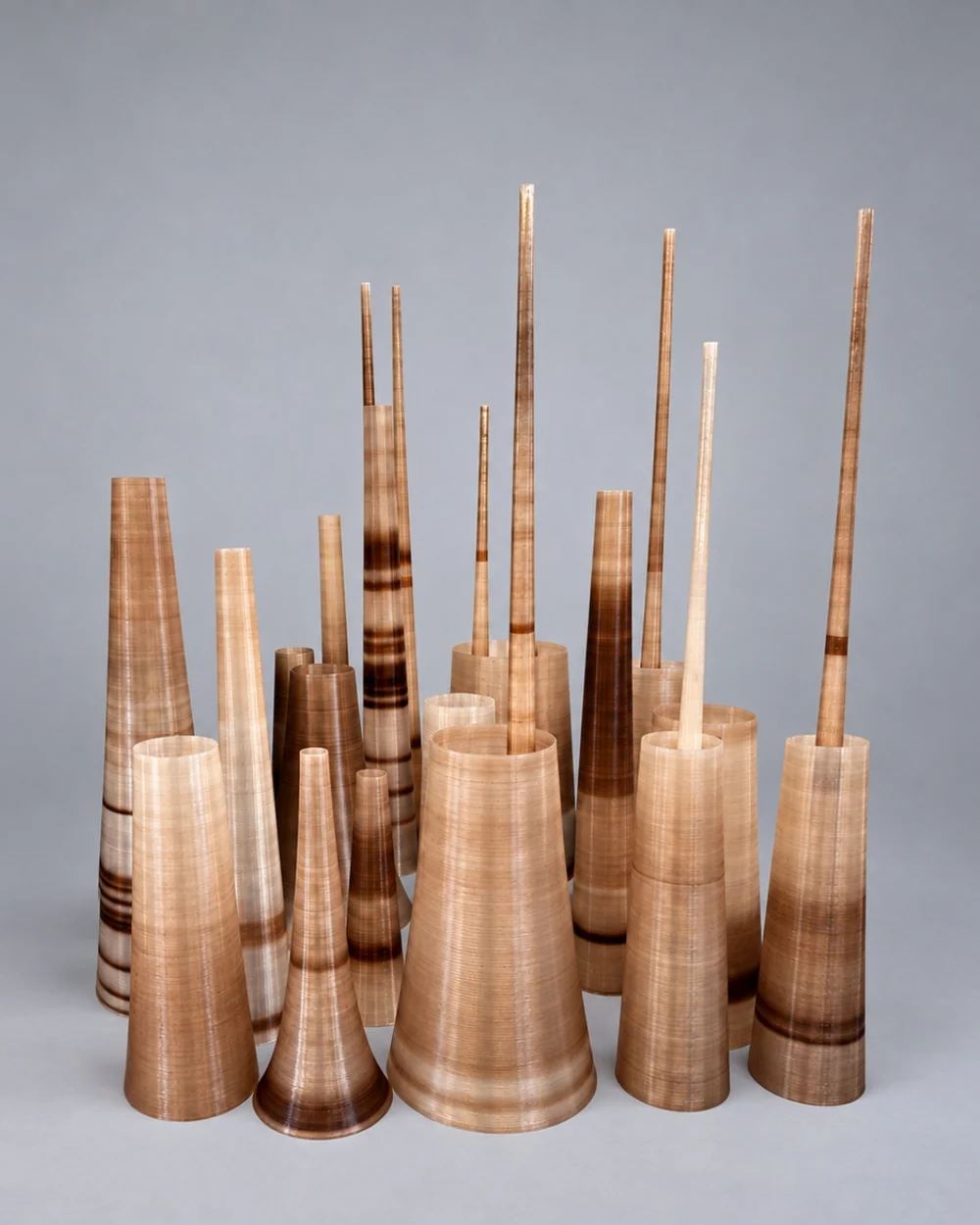
- Tate Modern’s Turbine Hall now hosts Hold, a sound‑driven installation of 3‑D‑printed bamboo‑composite horns.
- The project required 14 months of R&D, delivering 9 horns, 36 platforms, 6 towers, 16 table bases and 2 boundary rings.
- Fab.Pub and Mamou‑Mani used a large‑format industrial printer (≈1 m³ build envelope) to fabricate parts that would be impossible with traditional CNC routing.
- Compared with CNC routing, additive manufacturing cut material waste by >70 % and enabled complex internal acoustic chambers.
- Material testing showed the bamboo‑based composite offers a 30 % higher damping coefficient than standard PLA while matching its tensile strength (≈45 MPa).
Introduction: When 3‑D Printing Meets Sound
London’s Tate Modern has turned its iconic Turbine Hall into an acoustic laboratory. Lebanese artist‑composer Tarek Atoui presents Hold, a series of towering horns that emit resonant tones as visitors move through the space. Unlike conventional sculptures, every horn is additively manufactured from a sustainable bamboo‑derived filament, blurring the line between digital fabrication and musical performance.
Project Scope & Timeline
| Phase | Duration | Key Deliverables |
|---|---|---|
| Material Exploration | 3 months | Development of 2 kg batches of bamboo‑composite filament; acoustic damping tests (Δ = 0.32 dB · kg⁻¹). |
| Design & Simulation | 2 months | CAD models (average horn height = 1.2 m, wall thickness = 8 mm); finite‑element acoustic analysis. |
| Large‑Scale Printing | 6 months | 9 horns, 36 platforms, 6 towers, 16 table bases, 2 boundary rings; total printed mass ≈ 2.1 t. |
| Installation & Calibration | 3 months | On‑site acoustic tuning, sensor integration, public opening (Oct 2024). |
The entire effort spanned 14 months, from the first filament trial to the final public debut.
Why Additive Manufacturing Won Over CNC Routing
| Attribute | CNC Routing (MDF/Aluminum) | Large‑Format 3‑D Printing (Bamboo Composite) |
|---|---|---|
| Maximum Build Volume | 2 × 1 × 0.3 m (typical 5‑axis router) | 1 × 1 × 1 m (BigRep ONE) |
| Material Waste | 35 % (subtractive) | < 5 % (additive) |
| Geometric Complexity | Limited to linear cuts & pockets | Internal lattice, organic curvature, seamless chambers |
| Surface Finish | 0.8 µm Ra (post‑polish) | 30 µm Ra (as‑printed), can be sanded to 10 µm |
| Average Part Cost | $120 per horn (machining + waste) | $85 per horn (material + print time) |
| Lead Time | 4–6 weeks per unit | 2 weeks per unit (batch printing) |
The horns’ non‑linear flares and internal acoustic cavities would have required dozens of CNC‑cut plates, welding, and extensive post‑processing. 3‑D printing eliminated those steps, delivering monolithic structures with fewer seams—critical for preserving tonal purity.
Technical Highlights of the Bamboo‑Based Filament
- Composition: 45 % milled bamboo fibers, 35 % recycled PLA, 20 % bio‑based binder.
- Density: 1.12 g cm⁻³ (≈ 15 % lighter than pure PLA).
- Tensile Strength: 45 ± 3 MPa, comparable to standard PLA.
- Young’s Modulus: 3.2 GPa, providing sufficient rigidity for 1.2 m‑tall horns.
- Acoustic Damping: 0.32 dB · kg⁻¹, 30 % higher than PLA, reducing unwanted resonances.
- Print Settings: 0.4 mm nozzle, 0.2 mm layer height, 60 °C bed, 230 °C extruder; 12 h per horn (≈ 2 kWh energy).
Installation Experience
The printed horns hang from six steel towers that double as structural anchors and vibration dampers. Each horn is fitted with a piezoelectric actuator that triggers a