Key Takeaways
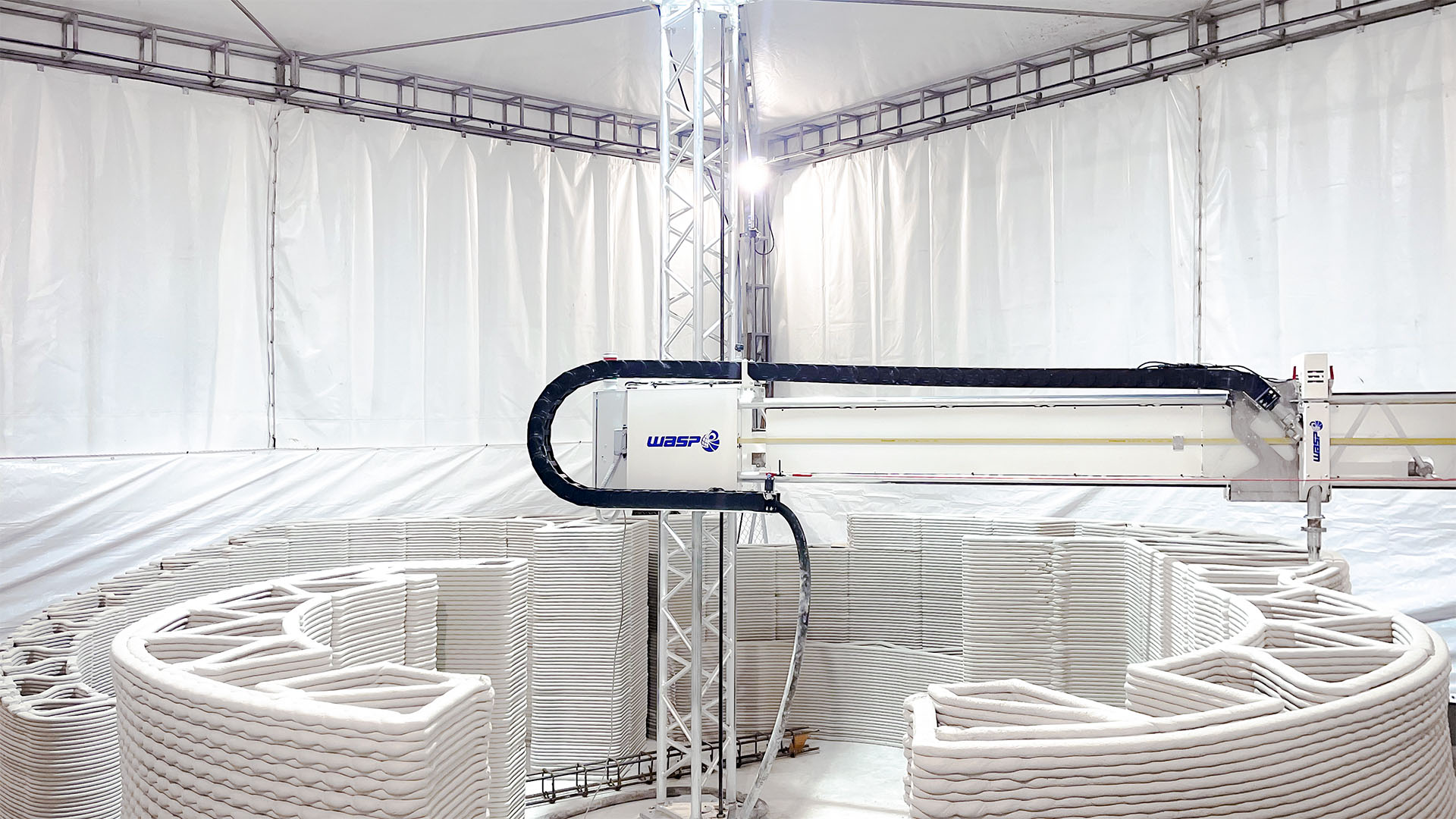
- A 3D printed airport services structure, named Ol Casél, was built at Milan Bergamo Airport in 19 days
- The building was developed by EDILCO in collaboration with WASP, using the Crane WASP 3D printer
- The Crane WASP has a build volume of 8,200 mm by 3,200 mm and can print up to 200 mm/s
- The 3D printed walls incorporated oclusions and areas to easily integrate wiring and other components
Introduction to 3D Printed Construction
The use of 3D printing in construction is becoming increasingly popular, and a recent project at Milan Bergamo Airport demonstrates the potential of this technology. A new airport services structure, named Ol Casél, was built using 3D printing, providing a rest and relaxation area for customs staff. The building was developed by EDILCO in collaboration with WASP, a company specializing in 3D printing technology.
The 3D Printing Process
The 3D printing process took seven days to complete, using the Crane WASP 3D printer. This massive machine has a build volume of 8,200 mm by 3,200 mm and can print up to 200 mm/s. The Crane WASP weighs over 700 kilos and stands over five meters in height, making it an impressive piece of equipment. The printer is equipped with a pumping system and a twin screw extruder, allowing for efficient and high-quality printing.
Comparison of 3D Printing Technologies
| Technology | Build Volume | Print Speed | Weight |
|---|---|---|---|
| Crane WASP | 8,200 mm x 3,200 mm | up to 200 mm/s | over 700 kg |
| Traditional Construction | variable | variable | variable |
Benefits of 3D Printed Construction
The use of 3D printing in construction offers several benefits, including increased speed and efficiency. The Ol Casél building was completed in just 19 days, including the addition of doors, windows, and a roof. The 3D printed walls also incorporated oclusions and areas to easily integrate wiring and other components, making the construction process even more efficient.
Bottom Line
The successful completion of the Ol Casél building at Milan Bergamo Airport demonstrates the potential of 3D printing in construction. With its ability to print large structures quickly and efficiently, the Crane WASP 3D printer is an exciting development in the field. As the technology continues to evolve, we can expect to see more innovative applications of 3D printing in construction, leading to faster, more efficient, and more sustainable building practices.


