Önemli Çıkarımlar
- Modern yurt dışı 3-boyutlu baskı hizmetleri, 4-7 gün içinde parçalar teslim edebiliyor ve yerel teslim süreleriyle rekabet ediyor.
- Uluslararası sağlayıcılar, benzer üretimler için ABD eşdeğerlerinden %30-%50 daha az ücret alıyor.
- Gerçek zamanlı teklif alma, ISO-9001 sertifikasyonu ve ekspres hava kargo, çoğu eski gecikmeyi ortadan kaldırdı.
- Mühendisler artık maliyet, malzeme ve geometriyi önce değerlendiriyor—hız artık yerel atölyeler için belirleyici bir avantaj değil.
Sınır Ötesi 3D Baskının Yeni Gerçekliği
Yıllarca hâkim kural “yerel = hızlı, yurt dışı = ucuz” idi. Mühendisler acil prototipleri yakın bir servis bürosuna gönderir, gecikme riskinden kaçınmak için %20-%40 fiyat primini kabul ederdi. Bu düşünce üç pratik darboğaza dayanıyordu:
- Manuel teklif – E-posta tabanlı fiyat istekleri saatler hatta günler sürebilirdi.
- Şeffaf olmayan üretim kuyrukları – Yurt dışı tesisler genellikle toplu takvimlerle çalışır, mühendisler gerçek-zaman kapasitesini göremezdi.
- Öngörülemeyen lojistik – Standart deniz taşımacılığı veya düşük maliyetli hava taşımacılığı 10-14 gün belirsizlik ekler, izleme ise yalnızca “taşınmakta” durumu ile sınırlıydı.
Bugün, bu engeller dijital platformlar, standart kalite sistemleri ve özel lojistik yolları sayesinde büyük ölçüde ortadan kalktı.
Dijital Platformlar Teklif Süresini Nasıl Kısalttı
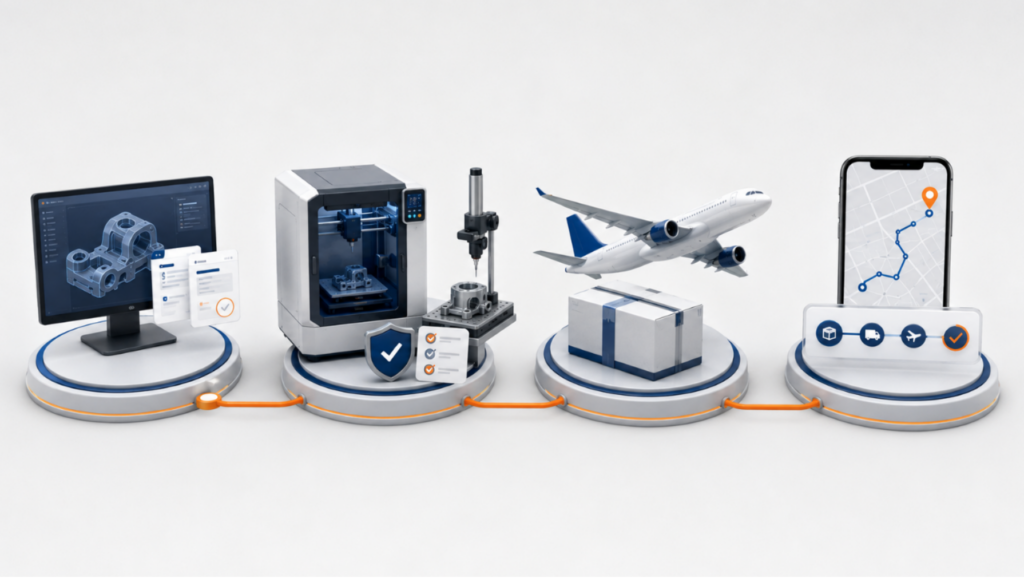
Önde gelen sınır ötesi sağlayıcılar artık anlık-teklif motorları barındırıyor; bir STL ya da 3MF dosyasını alıyor, malzeme kullanımını hesaplıyor ve 5–10 saniye içinde fiyatı döndürüyor. Aynı motor, üretim süresi, sonrası işleme seçenekleri ve nakliye maliyetini de tahmin ederek mühendislerin birden fazla tedarikçiyi ilk tıklamadan yan yana karşılaştırmasını sağlıyor.
Kalite Güvencesi Küresel Hale Geldi
ISO-9001 ve ISO-13485 sertifikaları, bir zamanlar Avrupa dışındaki tesislerde nadir iken, şimdi büyük Asya ve Doğu-Avrupa tesislerinde yaygın. Belgelenmiş süreç kontrolleri, kalibreli makineler (±0.02 mm boyutsal tolerans) ve yerinde metroloji laboratuvarları, yurt dışı atölyelere yerel firmaların yıllardır sunduğu izlenebilirliği sağlıyor.
Lojistik: “Ne Zaman Varacak?”tan “Şu An Nerede?”ye
DHL Express ve UPS Air gibi taşıyıcılarla yapılan ekspres hava kargo anlaşmaları, üretim tamamlandıktan 3-4 gün içinde kapı-kapıya teslimatı garanti ediyor. Entegre izleme API’leri, sipariş portalına gerçek-zaman durum güncellemeleri akıtıyor, böylece tedarik yöneticileri her parçanın yüklemeden teslimata kadar tam konumunu görebiliyor.
Yerel vs. Uluslararası: Hızlı Bir Karşılaştırma
| Metric | Typical Domestic Service | Typical Overseas Service (2024) |
|---|---|---|
| Lead time (build + shipping) | 5–9 days (incl. ground freight) | 4–7 days (express air) |
| Unit cost (per cm³) | $0.12 – $0.18 | $0.07 – $0.13 |
| Quote turnaround | 30 min – 4 h (email/phone) | 5–10 s (online engine) |
| Quality certifications | ISO-9001 (90 % of shops) | ISO-9001/ISO-13485 (80 % of top 50) |
| Order visibility | Email updates, limited tracking | API-driven real-time GPS tracking |
| Typical material range | PLA, ABS, PETG, Nylon | Same + advanced alloys (Ti-6Al-4V, Inconel) |
Data compiled from the 2024 Global Additive Manufacturing Survey (n = 1,200 firms).
Mühendisler İlk Olarak Uluslararası’yı Seçtiğinde
Maliyet ve hız birleştiği için karar matrisi artık şu şekilde:
| Decision Factor | Local Advantage | International Advantage |
|---|---|---|
| Ultra-low-volume tooling | Immediate face-to-face support | Same lead time, 35 % lower cost |
| Regulated medical parts | Familiar regulatory pathway | ISO-13485 compliance, validated traceability |
| Complex geometries (support-free) | Proven machine fleet | Access to larger build envelopes (up to 500 mm × 500 mm × 500 mm) |
| Last-minute design changes | Same-day build possible (if capacity exists) | Real-time re-quote, same 4-7 day total turnaround |
“Yalnızca hız” argümanı yerel atölyeler için temelde yok oldu. Çoğu durumda kalan tek ayırt edici unsur kişisel ilişki—artık video görüşmeleri, sanal turlar ve paylaşılan dijital ikizlerle desteklenebilen bir faktör.
Sonuç
Sınır ötesi 3D baskı, maliyet-tasarruflu bir yan fikirden temel tedarik seçeneği haline geldi; yerel hıza eşdeğer ya da daha fazlasını sunarken %30-%50 daha düşük birim maliyet sağlıyor. Anlık teklif, ISO-sertifikalı kalite ve güvenilir ekspres lojistik sayesinde mühendisler, pazara çıkış süresinden ödün vermeden acil prototipleri, fikstürleri ve düşük hacimli üretimleri yurt dışı sağlayıcılara güvenle verebiliyor. Eski takas—hız için yerel, fiyat için yurt dışı—kayboldu; modern takas artık maliyet ve ilişki arasında, günümüzün hızlı yenilik döngüleri için çok daha stratejik bir değerlendirme.


