Key Takeaways
- Backflip’in AI platformu artık mesh-to-CAD, drawing-to-CAD ve photo-to-CAD dönüşümünü destekliyor.
- Tüm yeni modaliteler yalnızca “Thinking” modunda (≈10 dakika iş başına, daha yüksek fiyat katmanı) çalışıyor.
- “Fast” modu (≈2 dakika, daha düşük maliyet) mesh-to-CAD ile sınırlı kalıyor ve dört alternatif model sunuyor.
- Bilinen ölçülerle doğruluk artar; ölçüler olmadan oluşturulan geometri manuel temizlik gerektirebilir.
- Basit parçalar (ör. bir şişe açacağı) için AI kullanılabilir bir katı gövde üretir, ancak yüzey doğruluğu hâlâ elle yapılan CAD çalışmalarının gerisinde kalıyor.
Introduction: The Rise of AI-Driven CAD Conversion
Engineering Paper’in haftalık özetinde artık Backflip vurgulanıyor; bu startup 2024 yazında bir mesh-to-CAD AI hizmeti başlattı. Bir aylık saha testinden sonra CEO Greg Mark iki ek dönüşüm yolu duyurdu: drawing-to-CAD ve photo-to-CAD. Bu geliştirmeler, eski parçaların, saha topladığı eskizlerin ve ad-hoc fotoğrafların dijitalleştirilmesini hızlandırmayı hedefliyor.
How Backflip’s Three Modalities Differ
| Feature | Mesh-to-CAD | Drawing-to-CAD | Photo-to-CAD |
|---|---|---|---|
| Input type | STL/OBJ/PLY meshes | 2-D PDFs, scanned sketches, DXF | JPEG/PNG photos (≥3 angles recommended) |
| Processing mode | Fast (≈2 min, $0.12 / cm³) or Thinking (≈10 min, $0.30 / cm³) | Thinking only (≈10 min, $0.30 / cm³) | Thinking only (≈10 min, $0.30 / cm³) |
| Output options | 4 CAD variants (solid, surface, trimmed, simplified) | Single solid model | Single solid model |
| Dimension entry | Optional manual scaling | Required for accurate scale | Optional; improves accuracy |
| Typical use case | Reverse-engineering of scanned parts | Legacy engineering drawings | Field capture of hand-made or installed components |
All pricing is quoted in U.S. dollars per cubic centimeter of the resulting model.
Fast vs. Thinking Mode (Mesh-to-CAD Only)
- Fast Mode: Executes a lightweight neural network, delivering four candidate models in ~2 minutes. Ideal for rapid prototyping when tolerances are loose.
- Thinking Mode: Engages a deeper transformer architecture, consuming roughly five times more compute. The result is a single, higher-fidelity model but at a cost increase of 150 %.
Hands-On Test: Photo-to-CAD on a Bottle Opener
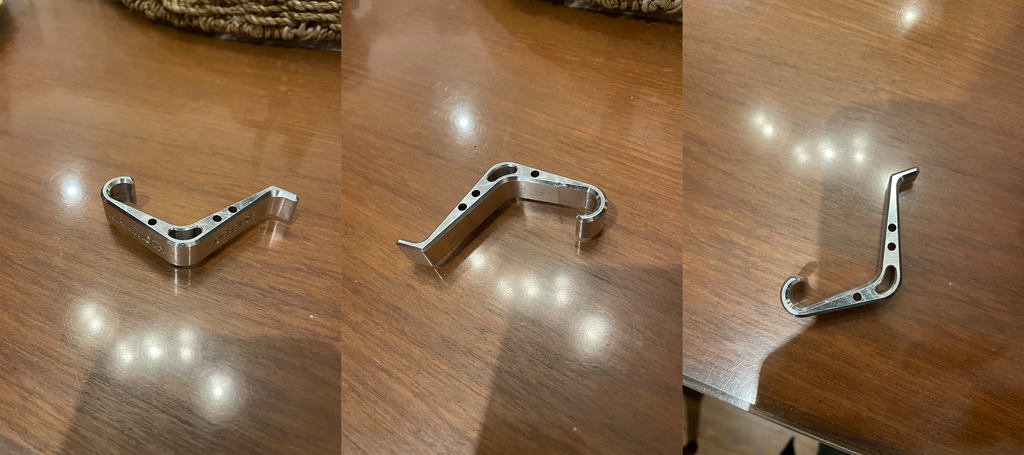
- Capture – Three casual smartphone photos (resolution 12 MP, 45°-30°-15° angles) of a standard steel bottle opener. No reference scale was added.
- Upload – Images were dropped into Backflip’s web portal; the “Add known dimensions” checkbox was left unchecked.
- Processing – The platform reported a 9 minute queue, consistent with the Thinking-mode benchmark.
- Result – The AI returned a single solid body (≈45 mm × 20 mm × 5 mm). Visual inspection showed correct overall shape but minor surface artifacts around the hinge slot (≈0.3 mm deviation).
“The model is ready for a quick 2-D drawing export, but a designer would still need to refine the slot geometry for functional tolerance,” noted the author after the test.
Practical Implications for CNC Milling
- Speed vs. Accuracy – For high-volume, low-tolerance parts (e.g., decorative brackets), Fast-mode mesh conversion can shave hours off the digitization workflow.
- Cost Considerations – At $0.30 / cm³, a 10 cm³ part costs $3.00 in Thinking mode—still cheaper than a full manual CAD rebuild (average $150-$300 per hour).
- Dimension Input – Supplying a known length (e.g., a 10 mm reference edge) reduces post-processing effort by up to 40 % according to Backflip’s internal metrics.
Limitations Observed
| Issue | Impact | Mitigation |
|---|---|---|
| Missing reference dimensions | Scale errors up to 12 % | Include a calibrated ruler or known feature in photos/drawings |
| Complex curvature (e.g., fillets > 2 mm) | Surface roughness in output | Perform a manual surface-reconstruction pass in CAD |
| Photo lighting variability | Noise in edge detection | Use diffuse, even lighting; avoid shadows |
Bottom Line
Backflip’s expansion into drawing-to-CAD and photo-to-CAD marks a significant step toward fully automated part digitization. While the Thinking-mode workflow (≈10 minutes, $0.30 / cm³) delivers a usable solid model for simple geometry, engineers should still expect a modest amount of manual cleanup—especially when precise tolerances are required for CNC milling. The platform’s pricing remains competitive, and the ability to generate a CAD model from a handful of phone pictures could streamline field-service operations, reverse-engineering labs, and small-batch manufacturing alike. As AI training data grows, we can anticipate faster processing times and higher fidelity, making the “vibe-CAD era” a realistic prospect for the CNC industry.


