Key Takeaways
- TE Connectivity is committing > $60 million to a new R&D‑manufacturing campus in Henriette, NY.
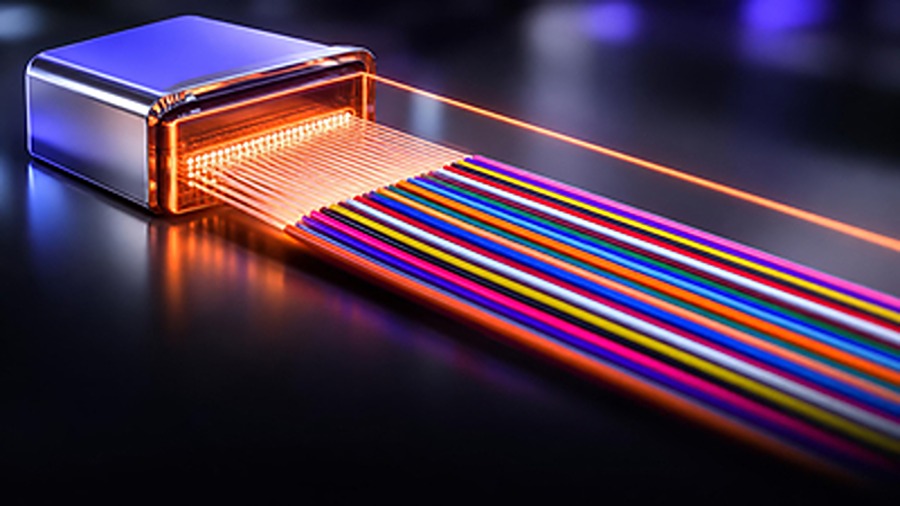
- The 135,000 sq ft plant will focus on high‑density fiber‑array units acquired from RAM Photonics.
- Targeted launch: spring 2027; full production ramp‑up planned through 2031.
- The site will create 800+ jobs in engineering, manufacturing, and management, reinforcing Rochester’s status as a fiber‑optics hub.
- The technology aims to cut power per fiber link by 30‑40 % and boost port density to ≥ 1.6 Tb/s per rack for hyperscale AI data centers.
TE Connectivity’s $60 M Fiber‑Optics Expansion
Why the Investment Matters
TE Connectivity plc announced a $60 million capital infusion to build a state‑of‑the‑art research, development, and production facility in New York State. The plant is designed to accelerate the rollout of next‑generation fiber‑optic modules that cater to hyperscale AI data‑center operators and large‑scale cloud providers.
Facility Specs
| Attribute | Detail |
|---|---|
| Location | Henrietta, NY (Rochester metro) |
| Building size | 135,000 sq ft (≈ 12,540 m²) |
| Investment | > $60 M (incl. equipment, tooling, and start‑up costs) |
| Staffing plan | 800 + employees (engineering, manufacturing, management) |
| Timeline | Opening → Spring 2027; production scaling → 2031 |
The site will house clean‑room labs, high‑precision CNC milling stations for optical component fabrication, and automated assembly lines capable of handling high‑density fiber array units (HDFAs).
The Technology Edge
TE’s newly acquired high‑density fiber array units from RAM Photonics are engineered for co‑packaged optics (CPO)—the architecture that places optical transceivers directly next to silicon photonics chips. Key performance metrics include:
- Port density: Up to 1.6 Tb/s per rack unit, a 45 % increase over conventional 400 Gb/s modules.
- Power efficiency: 30‑40 % lower watts per bit, reducing cooling loads in dense AI clusters.
- Form factor: Compact 0.5 U footprint, enabling tighter server‑rack layouts.
These specs directly address the three bottlenecks that limit AI‑centric data centers: performance, density, and scalability of fiber attachment.
Impact on the Rochester Fiber‑Optics Ecosystem
Rochester has long been dubbed the “Fiber‑Optics Capital of the World,” home to legacy players like Corning and Lumentum. TE’s injection of capital and talent is expected to:
- Strengthen the regional supply chain for precision CNC‑machined optical components.
- Spur collaborative research with local universities (e.g., Rochester Institute of Technology) on photonic integration.
- Generate high‑skill manufacturing jobs, supporting the local economy and maintaining the area’s global leadership in photonics.
Comparison: TE’s HDFA vs. Conventional Fiber Modules
| Feature | TE HDFA (RAM Photonics) | Conventional 400 Gb/s Module |
|---|---|---|
| Port density | 1.6 Tb/s per rack unit | 400 Gb/s per rack unit |
| Power per bit | ~0.12 W/Gb | ~0.20 W/Gb |
| Form factor | 0.5 U | 1 U |
| Scalability | Designed for CPO, seamless ASIC integration | Requires separate optical transceiver cards |
| Target market | AI hyperscale, cloud hyperscalers | General enterprise data centers |
Outlook for AI‑Driven Data Centers
As AI model sizes continue to double roughly every 12‑18 months, data‑center operators are forced to re‑architect their optical interconnects. TE’s HDFA solution, combined with the high‑throughput CNC‑milled assemblies produced at the new plant, offers a clear pathway to lower total‑cost‑of‑ownership (TCO) while meeting the exascale bandwidth demands projected for the early 2030s.
Bottom Line
TE Connectivity’s $60 M investment in a 135,000‑sq‑ft Rochester facility marks a strategic push to dominate the high‑density fiber‑optic market that underpins next‑generation AI and cloud infrastructure. By leveraging RAM Photonics’ HDFA technology, the plant will deliver 30‑40 % power savings, four‑fold port density gains, and create 800+ skilled jobs. The move not only reinforces Rochester’s fiber‑optics heritage but also positions TE as a pivotal supplier for the hyperscale data‑center ecosystem heading into the 2030s.
For additional details, visit te.com.


