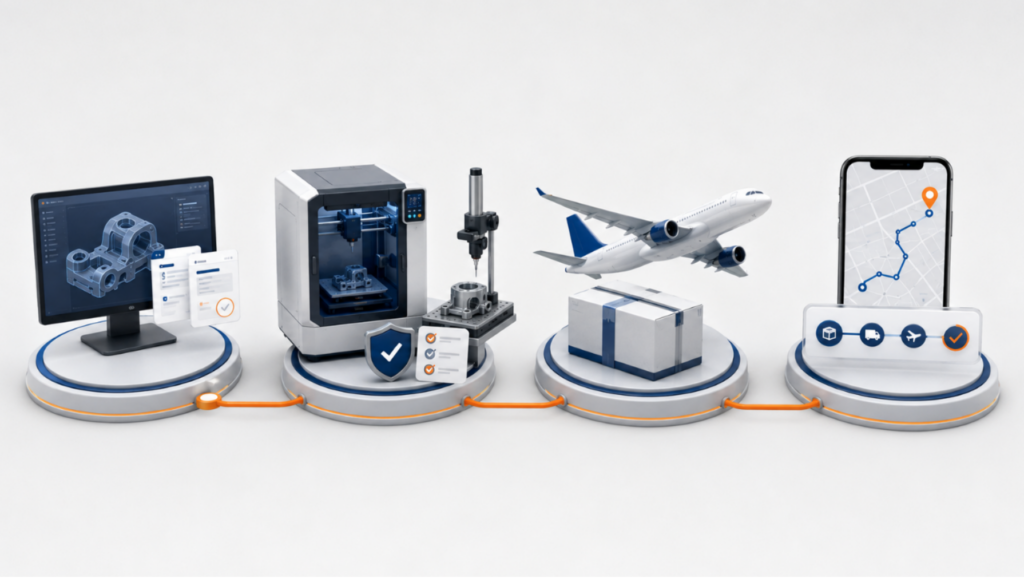
Wichtige Erkenntnisse
- Moderne ausländische 3-D-Druck-Dienstleistungen können Teile in 4-7 Tagen liefern und erreichen damit in-ländische Lieferzeiten.
- Internationale Anbieter berechnen typischerweise 30-50 % weniger als US-Entsprechungen für vergleichbare Aufträge.
- Echtzeit-Angebote, ISO-9001-Zertifizierung und Express-Luftfracht haben die meisten Altlast-Verzögerungen eliminiert.
- Ingenieure bewerten jetzt zuerst Kosten, Material und Geometrie — Geschwindigkeit ist kein entscheidender Vorteil mehr für lokale Werkstätten.
Die neue Realität des grenzüberschreitenden 3D-Drucks
Jahrelang galt die Faustregel „lokal = schnell, overseas = günstig“. Ingenieure schickten eilige Prototypen an ein nahegelegenes Service-Büro und akzeptierten einen Preisaufschlag von 20-40 %, um das Risiko einer verspäteten Lieferung zu vermeiden. Diese Einstellung beruhte auf drei praktischen Engpässen:
- Manuelle Angebotserstellung – Preis-Anfragen per E-Mail konnten Stunden bis Tage dauern.
- Intransparente Produktionswarteschlangen – Ausländische Werke arbeiteten häufig nach Batch-Plänen, sodass Ingenieure keine Echtzeit-Kapazitätsinformationen hatten.
- Unvorhersehbare Logistik – Standard-Seefracht oder günstige Luftfracht fügten 10-14 Tage Unsicherheit hinzu, und das Tracking beschränkte sich auf den Status „in-Transit“.
Heute wurden diese Hürden weitgehend durch digitale Plattformen, standardisierte Qualitätssysteme und dedizierte Logistikwege beseitigt.
Wie digitale Plattformen Angebotszeiten verkürzt haben
Führende grenzüberschreitende Anbieter betreiben jetzt Instant-Quote-Engines, die eine STL- oder 3MF-Datei einlesen, den Materialverbrauch berechnen und innerhalb von 5–10 Sekunden einen Preis zurückgeben. dieselbe Engine prognostiziert auch die Bauzeit, Nachbearbeitungsoptionen und Versandkosten, sodass Ingenieure mehrere Lieferanten nebeneinander vergleichen können, bevor sie den ersten Klick setzen.
Qualitätssicherung ist global geworden
ISO-9001- und ISO-13485-Zertifizierungen, einst selten außerhalb Europas, sind heute in großen asiatischen und osteuropäischen Anlagen üblich. Dokumentierte Prozesskontrollen, kalibrierte Maschinen (±0,02 mm Maßtoleranz) und vor Ort vorhandene Metrolabore geben ausländischen Werkstätten dieselbe Rückverfolgbarkeit, die in-ländische Unternehmen seit Jahren bieten.
Logistik: Von „Wann kommt es“ zu „Wo ist es jetzt“
Express-Luftfracht-Vereinbarungen mit Dienstleistern wie DHL Express und UPS Air garantieren Tür-zu-Tür-Lieferung in 3-4 Tagen nach Abschluss des Auftrags. Integrierte Tracking-APIs speisen Echtzeit-Statusupdates in das Bestellportal ein, sodass Beschaffungs-Manager den genauen Standort jedes Teils vom Upload bis zum Erhalt sehen können.
In-land vs. International: Ein schneller Vergleich
| Kennzahl | Typischer In-land-Service | Typischer Overseas-Service (2024) |
|---|---|---|
| Durchlaufzeit (Bau + Versand) | 5–9 Tage (inkl. Landfracht) | 4–7 Tage (Express-Luft) |
| Stückkosten (pro cm³) | $0,12 – $0,18 | $0,07 – $0,13 |
| Angebotsdauer | 30 min – 4 h (E-Mail/Telefon) | 5–10 s (Online-Engine) |
| Qualitätszertifizierungen | ISO-9001 (90 % der Betriebe) | ISO-9001/ISO-13485 (80 % der Top 50) |
| Bestell-Transparenz | E-Mail-Updates, begrenztes Tracking | API-basiertes Echtzeit-GPS-Tracking |
| Typische Materialpalette | PLA, ABS, PETG, Nylon | Gleiches + fortgeschrittene Legierungen (Ti-6Al-4V, Inconel) |
Daten zusammengestellt aus der Global Additive Manufacturing Survey 2024 (n = 1.200 Unternehmen).
Wenn Ingenieure zuerst international wählen
Da Kosten und Geschwindigkeit konvergiert sind, sieht die Entscheidungsmatrix jetzt so aus:
| Entscheidungsfaktor | Lokaler Vorteil | Internationaler Vorteil |
|---|---|---|
| Ultra-niedrig-Volumen-Werkzeuge | Sofortiger persönlicher Support | Gleiche Durchlaufzeit, 35 % geringere Kosten |
| Regulierte Medizin-Teile | Bekannter Regulierungsweg | ISO-13485-Konformität, validierte Rückverfolgbarkeit |
| Komplexe Geometrien (support-frei) | Bewährte Maschinenflotte | Zugang zu größeren Bauvolumen (bis 500 mm × 500 mm × 500 mm) |
| Last-Minute-Designänderungen | Same-Day-Build möglich (bei Kapazität) | Echtzeit-Neukalkulation, gleiche Gesamtdauer von 4-7 Tagen |
Das „nur-Geschwindigkeit“-Argument für lokale Werkstätten ist im Wesentlichen verschwunden. In vielen Fällen bleibt nur noch der persönliche Kontakt als Unterscheidungsmerkmal — ein Faktor, der jetzt durch Video-Calls, virtuelle Rundgänge und geteilte digitale Zwillinge ergänzt werden kann.
Fazit
Grenzüberschreitender 3D-Druck hat sich von einer kostensparenden Nebenoption zu einer zentralen Beschaffungsstrategie entwickelt, die in-ländische Geschwindigkeit erreicht und häufig übertrifft, während sie 30-50 % niedrigere Stückkosten liefert. Mit Instant-Angeboten, ISO-zertifizierter Qualität und zuverlässiger Express-Logistik können Ingenieure dringende Prototypen, Vorrichtungen und Niedrig-Volumen-Produktionsläufe an ausländische Anbieter vergeben, ohne die Markteinführungszeit zu opfern. Der alte Kompromiss — lokal für Geschwindigkeit, overseas für Preis — ist weg; der moderne Kompromiss ist nun Kosten versus Beziehung, ein deutlich strategischeres Kriterium für die heutigen schnellen Innovationszyklen.


