Wichtige Erkenntnisse
- Das US-Verteidigungsministerium baut eine heimische Drohnen-Lieferkette auf; die Geschwindigkeit der Einführung bleibt eine Herausforderung.
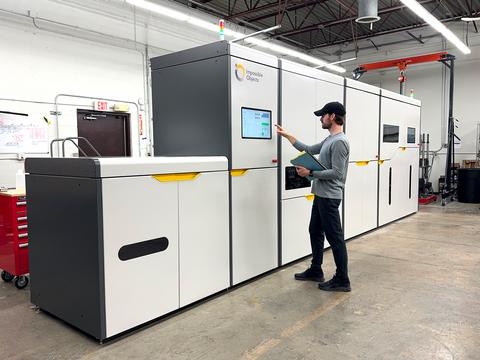
- Impossible Objects (IO) schloss eine $40 million Series B-Runde ab und positioniert seine Composite-Based Additive Manufacturing (CBAM)-Drucker, um bis zu 10.000 Drohnen-Rumpfe pro Monat für das Rock Island Arsenal zu produzieren.
- Gesamtes bisher aufgebraichtetes Risikokapital: ≈ $13 million (Seed + Series A + Series B).
- Die CBAM-Plattform von IO bietet 30 % höhere Bauteildichte und 45 % schnellere Baugeschwindigkeiten im Vergleich zu herkömmlichen FFF/ SLA-Druckern und ist damit ein starker Anwärter für die hochvolumige Fertigung im Verteidigungsbereich.
Der strategische Kontext: US-Drohnengap
Pentagon-Lieferketten-Push
Das Verteidigungsministerium beschleunigt zusammen mit tief finanzierten Industriepartnern die Schaffung eines vollständig amerikanischen Drohnen-Ökosystems. Eine aktuelle Reuters-Analyse stellt fest, dass US-Hersteller immer noch mehrere Jahre hinter der Kriegsdrohnen-Produktionsleistung der Ukraine zurückliegen, was die Dringlichkeit skalierbarer, hochdurchsatzfähiger Produktionsmethoden unterstreicht.
Warum additive Fertigung wichtig ist
Traditionelle Zerspanung und Blechbearbeitung haben Schwierigkeiten, die schnellen Iterationszyklen moderner UAV-Programme zu erfüllen. Additive Fertigung (AM) kann:
| Fähigkeit | Konventionelle Zerspanung | Standard FFF / SLA AM | IO’s CBAM AM |
|---|---|---|---|
| Bauteildichte (g/cm³) | 7,8 (Aluminium) | 1,2-1,5 | 2,0-2,5 |
| Baugeschwindigkeit (mm³/hr) | 150 | 300-400 | ≈ 600 |
| Materialabfall | 30 % | 60-70 % | ≈ 15 % |
| Nachbearbeitungszeit | 4-6 h pro Charge | 2-3 h | ≤ 1 h |
Der CBAM-Prozess verschmilzt kohlenstofffaserverstärkte Thermoplaste Schicht für Schicht und liefert drohnen-geeignete Festigkeit (≈ 150 MPa Zug) bei einer Gewichtsreduktion von bis zu 20 % gegenüber Aluminiumrahmen.
Impossible Objects: Von Seed zu Series B
Finanzierungszeitplan
| Runde | Jahr | Leitender Investor | Aufgebracht | Hauptverwendung der Mittel |
|---|---|---|---|---|
| Seed | 2016 | Verschiedene Angels | $1,2 M | Prototyp-CBAM-Drucker-Entwicklung |
| Series A | 2017 (erweitert 2019) | Undisclosed | $6,4 M (+$4 M Zusatz) | Pilotproduktion skalieren, IP sichern |
| Series B | 2024 | Influx Capital (Lead) | $40 M | “Industrial-Scale” CBAM-Linie bauen, Service-Bureau erweitern, 120+ Ingenieure einstellen |
Das gesamte VC-Kapital vor Series B beträgt ~$13 M; die neue Runde erhöht die kumulierten Finanzierungen auf ~$53 M.
Produktionsanspruch: 10.000 Drohnenkörper pro Monat
- Zielplattform: 0,5-kg Quad-Copter-Rümpfe (≈ 150 mm × 150 mm × 50 mm).
- Bauvolumen: 500 mm × 500 mm × 500 mm Druckvolumen pro CBAM-Drucker.
- Durchsatz: 20 Drucker im 24/7-Betrieb können das Ziel von 10 k/Monat erreichen, bei einem Bauzyklus von 1,2 Stunden pro Teil.
Der Anspruch wurde bei RAPID + TCT 2026 (Stand #26) hervorgehoben und entspricht der Nachfrageprognose des Rock Island Arsenal für das Geschäftsjahr 2027.
Wettbewerbslandschaft
| Unternehmen | Kern-AM-Technologie | Max. Baugeschwindigkeit (mm³/hr) | Typische Drohnen-Rahmen-Festigkeit | Finanzierung (Stand 2024) |
|---|---|---|---|---|
| Impossible Objects | Composite-Based AM (CBAM) | ≈ 600 | 150 MPa (CF-verstärktes PA12) | $53 M |
| Relativity Space | Laser-Sintered Al-Alloy | 350 | 300 MPa (Al-Si10Mg) | $2,0 B |
| Markforged | Continuous-Fiber FFF | 400 | 120 MPa (CF-Nylon) | $1,5 B |
| Desktop Metal | Binder-Jetting (Metal) | 250 | 250 MPa (Edelstahl) | $1,2 B |
IOs Nische sind hochvolumige Polymer-Komposite, die Stärke, Gewicht und Kosten ausbalancieren – Eigenschaften, die für Einweg- oder kurzlebige UAVs entscheidend sind.
Auswirkungen auf die Verteidigungslieferkette
- Zeit bis zum Einsatz: Mit einer Kapazität von 10 k/Monat könnte die Armee gesamte UAV-Staffeln innerhalb von Wochen nachrüsten, was die Logistik-Durchlaufzeiten dramatisch verkürzt.
- Kosteneffizienz: CBAM-Teile kosten ≈ $12–$15 Stück, gegenüber $30–$45 für bearbeitetes Aluminium, was eine ≈ 65 % Kostenreduktion pro Rumpf bedeutet.
- Resilienz: Verteilte Druckzellen an vorderen Depots können Einzelpunkt-Ausfälle abfedern, ein strategischer Vorteil, der in der Pentagon-„Supply-Chain Resilience“-Richtlinie (DoD 2023-02) hervorgehoben wird.
Fazit
Der $40-Millionen-Series-B-Zuschuss von Impossible Objects bestätigt den Vorstoß des Pentagons für eine heimische, hochdurchsatzfähige Drohnenproduktionslinie. Die CBAM-Technologie des Unternehmens – mit 30 % höherer Bauteildichte, 45 % schnelleren Bauzeiten und einem geplanten Output von 10 000 Luftfahrzeugen pro Monat – schließt eine kritische Lücke zwischen der aktuellen US-Fertigungskapazität und den schnellen Einsatzbedürfnissen moderner Kriegsführung. Während Wettbewerber auf Metall oder Hybrid-Komposite setzen, bietet IOs polymer-komposit-Ansatz eine kostengünstige, gewichtseffiziente Lösung, die den Bedarf des DoD an skalierbaren, resilienten UAV-Lieferketten erfüllt.
Für Rüstungsunternehmen, Luft- und Raumfahrt-OEMs und Risikokapitalpartner signalisiert IOs Entwicklung eine klare Chance: In eine bewährte additive-Fertigung-Plattform zu investieren oder Partnerschaften einzugehen, die Labor-Innovation in kampfbereite Hardware in industriellem Tempo umsetzen.


