Key Takeaways
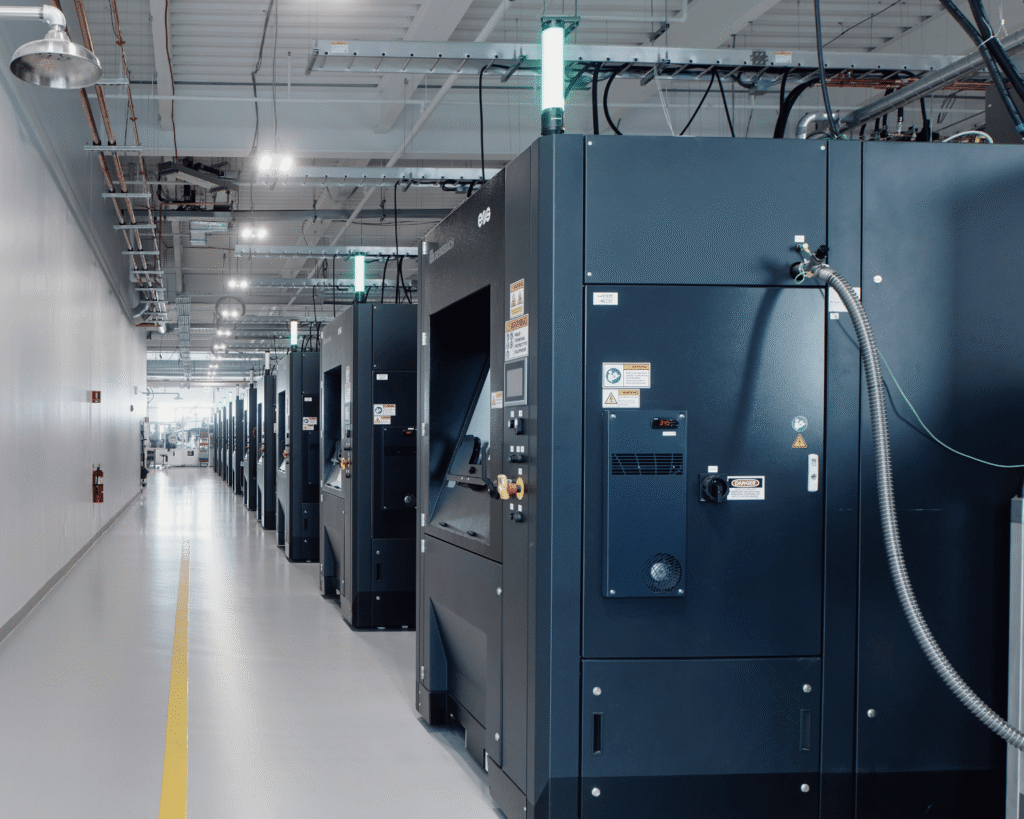
- VulcanForms is purchasing 200 EOS M4 ONYX laser‑powder‑bed fusion (LPBF) systems, boosting its total fleet in Devens, MA to 235 units.
- The M4 ONYX offers a 450 × 450 × 400 mm build envelope, six high‑power lasers, and a certified AlSi10Mg material library.
- The deal follows VulcanForms’ recent $500 M funding round and is expected to double its annual part‑output by 2025.
- EOS, once struggling with a $30 M annual loss, has turned the M4 ONYX into its flagship metal printer, with >300 units reportedly on order industry‑wide.
- The expansion supports U.S. reshoring goals, improves production economics, and positions VulcanForms as one of the largest metal‑additive manufacturers in North America.
Introduction
VulcanForms, the Massachusetts‑based metal‑additive manufacturing (AM) specialist, announced a landmark acquisition of 200 EOS M4 ONYX laser‑powder‑bed fusion (LPBF) printers. The new machines will join the 35 M4 ONYX units already operating at the company’s Devens campus, pushing the total to 235 printers—a scale rarely seen outside aerospace‑grade foundries.
The purchase follows a $500 million capital raise that the firm disclosed earlier this year. CEO Kevin Kassekert emphasized that the investment “integrates technology, production expertise and quality into a single manufacturing system,” underscoring the strategic intent to deliver high‑performance metal components at “consistent quality and competitive economics.”
Why the EOS M4 ONYX Matters
| Specification | EOS M4 ONYX | Typical Competing LPBF System (e.g., Concept Laser M2) |
|---|---|---|
| Build volume | 450 × 450 × 400 mm | 300 × 300 × 350 mm |
| Laser count | 6 × 4 kW fiber lasers | 1 × 4 kW fiber laser |
| Material certification | 30+ alloys (AlSi10Mg, 316L, Ti‑6Al‑4V) | 15–20 alloys |
| Production rate* | Up to 1.2 kg h⁻¹ per laser | 0.5 kg h⁻¹ per laser |
| Process reliability | ≥ 99.5 % first‑pass yield (EOS claim) | 96–98 % typical |
| Footprint | 4.5 × 3.2 m | 3.5 × 2.8 m |
*Production rate is a theoretical maximum based on EOS data sheets; real‑world rates vary with part geometry and post‑processing.
The M4 ONYX’s six‑laser architecture enables simultaneous multi‑zone heating, reducing thermal gradients and warpage—critical for large aerospace and defense parts. Its 450 mm cubic envelope also opens doors for low‑volume, high‑complexity tooling that previously required CNC machining.
Strategic Context
From In‑House to Hybrid Production
VulcanForms originally engineered its own LPBF machines to meet niche aerospace tolerances. The recent procurement signals a shift to a hybrid fleet: proprietary printers for R&D and EOS M4 ONYX units for high‑throughput, volume‑driven orders. This dual‑track approach balances innovation speed with economies of scale.
Market Momentum for EOS
EOS endured a $30 M annual loss in 2022, primarily due to stalled projects such as Laser Pro Fusion. The introduction of the black‑boxed M4 ONYX in 2023 reversed that trend. Industry reports indicate >300 M4 ONYX units are on order globally, including a $50 M contract from Beehive Industries for 50 printers—one of the largest single orders in EOS history.
Reshoring and Economic Impact
The expanded Devens facility will create an estimated 400 additional skilled jobs by 2025, supporting U.S. reshoring initiatives championed by the Department of Commerce. With an anticipated doubling of annual part output (from ~6 M to >12 M parts), VulcanForms aims to deliver metal components at $45–$55 per kilogram, a price point competitive with traditional CNC machining for low‑volume runs.
Outlook for Metal Additive Manufacturing
The scale of VulcanForms’ order illustrates a broader industry shift: manufacturers are moving from prototyping‑only LPBF to full‑scale production. As laser power, build size, and material certification improve, metal AM is poised to capture 15–20 % of the low‑volume metal‑part market by 2030, according to a 2024 Wohlers Report.
Bottom Line
VulcanForms’ acquisition of 200 EOS M4 ONYX printers marks a decisive step toward mass‑scale metal additive manufacturing in the United States. By leveraging the M4 ONYX’s large build volume, six‑laser throughput, and extensive material portfolio, the company is positioned to double its output, support reshoring, and compete head‑to‑head with traditional CNC and forging processes. For EOS, the order validates the M4 ONYX as a market‑turning product that has helped the company rebound from previous financial setbacks and secure a leadership role in industrial metal AM.


