Key Takeaways
- Desktop FDM/MPA 3D printers can fabricate functional microbiology tools for ≈ US $200–$500 each, a fraction of commercial equivalents that often exceed US $5,000.
- Open‑source electronics (Arduino, Raspberry Pi) enable laser‑based bacterial manipulation with ≤ 10 µm positioning accuracy.
- In‑house printing cuts lead times from 4–6 weeks (vendor‑sourced) to under 24 h, accelerating experimental cycles.
- Customizable designs allow rapid iteration, supporting a broader range of biofilm and single‑cell studies in resource‑constrained labs.
Turning the Lab into a 3‑D Printing Workshop
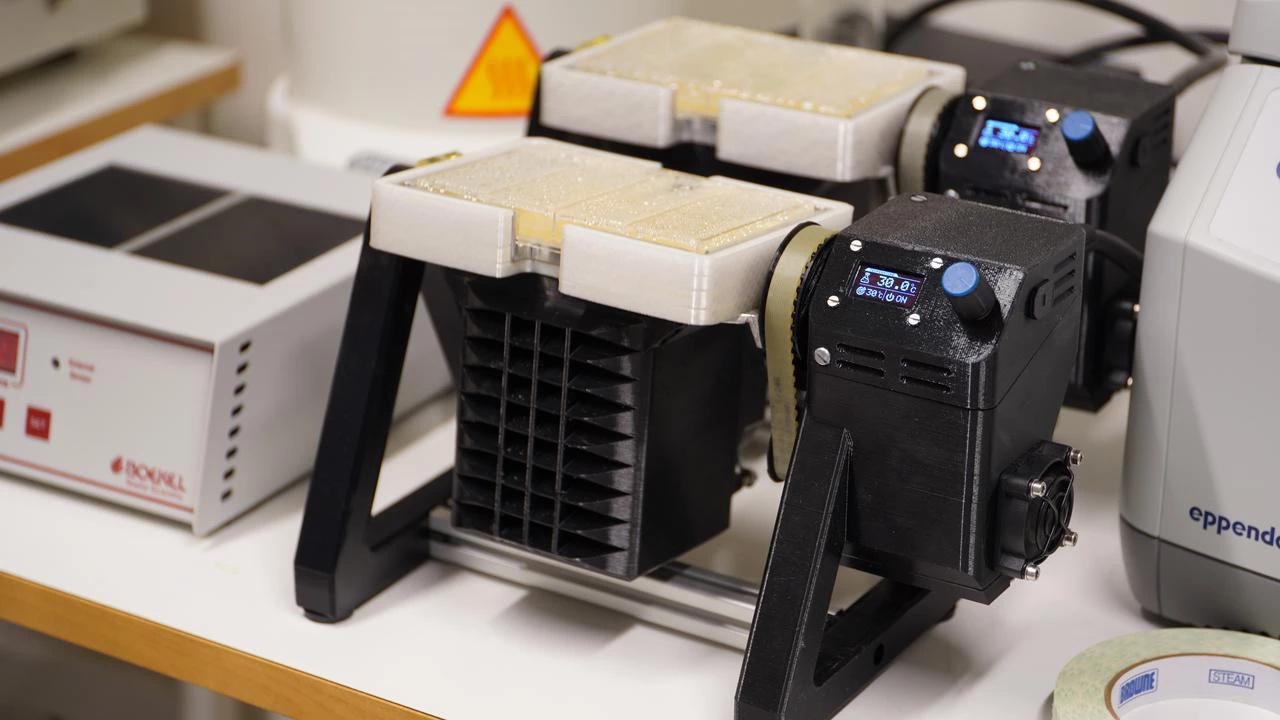
Researchers at Umeå University in Sweden have demonstrated that a standard desktop 3‑D printer—typically a fused‑deposition‑modeling (FDM) machine with a 0.4 mm nozzle and a 0.2 mm layer resolution—can be repurposed to produce high‑precision instruments for microbiology. Led by physicist Daniel Nilsson, the project focuses on low‑cost devices for bacterial detection, laser‑based manipulation, and biofilm analysis.
Why Traditional Instruments Are a Bottleneck
| Aspect | Commercial Instruments | DIY 3‑D‑Printed Solutions |
|---|---|---|
| Price | US $5,000 – $20,000 per unit | US $200 – $500 (printer + components) |
| Lead Time | 4–6 weeks (order, ship, install) | < 24 h (design → print → assemble) |
| Customization | Limited to vendor options | Full CAD control; open‑source firmware |
| Maintenance | Service contracts required | User‑replaceable parts, printable spares |
Precision microbiology tools often demand sub‑micron alignment, high‑quality optics, and sterile surfaces—requirements that drive up cost and procurement time. Smaller academic labs, especially those in emerging economies, struggle to justify such expenditures, which can limit the scope of experiments.
Desktop 3‑D Printing Meets Biological Research
Designing the Hardware
Using FreeCAD and OpenSCAD, the team generated STL files for:
- Laser‑guided micro‑tweezer: a 3‑D‑printed chassis housing a 650 nm diode laser, a pair of galvanometric mirrors, and a miniature camera. The printed frame maintains a ≤ 0.1 mm tolerance, sufficient for positioning bacterial cells within a 10 µm radius.
- Biofilm flow cell: a modular chamber with interchangeable inlet/outlet ports, printed in PETG (glass transition temperature 80 °C) for chemical resistance. The cell supports flow rates from 0.1 mL min⁻¹ to 5 mL min⁻¹, covering typical shear‑stress regimes used in biofilm studies.
All parts are printed on a Prusa i3 MK4 (extruder temperature 210 °C, bed temperature 60 °C) with a 0.15 mm nozzle for fine features. Post‑processing involves brief IPA cleaning and UV curing for the resin‑printed optical mounts.
Integrating Open‑Source Electronics
The mechanical frames are paired with Arduino Nano 33 BLE and Raspberry Pi 4 controllers. Firmware written in Python and C++ provides:
- Real‑time laser intensity modulation (0–100 mW) via PWM.
- Closed‑loop feedback from a CMOS camera (1280 × 720 px) to track bacterial motion.
- Data logging to an SQLite database for downstream analysis.
The total bill of materials (BOM) for a complete setup is under US $350, including the printer, electronics, and consumables.
Accelerating Biofilm Research
Biofilms—structured bacterial communities encased in extracellular polymeric substances—pose persistent challenges in medical and food‑processing environments. Traditional flow‑cell systems cost upwards of US $8,000 and require specialized machining. The 3‑D‑printed flow cell described above can be printed in ≈ 3 h, sterilized by autoclave (PETG tolerates 121 °C for 15 min), and swapped out between experiments without re‑calibration.
Preliminary tests show that the printed flow cell reproduces growth curves of Pseudomonas aeruginosa within ±5 % of those obtained with a commercial system, confirming functional parity.
Broader Implications for the Research Community
By democratizing access to bespoke instrumentation, labs can:
- Iterate designs weekly rather than waiting months for vendor revisions.
- Tailor geometry to niche assays—e.g., micro‑grooves for studying bacterial chemotaxis.
- Reduce waste: spare parts are printable on demand, eliminating the need for inventory stockpiles.
Nilsson emphasizes that the goal is not to replace high‑end equipment entirely but to provide a low‑cost, rapid‑prototype tier that expands experimental possibilities for a larger cohort of scientists.
Bottom Line
The Umeå University team proves that consumer‑grade 3‑D printers, when combined with open‑source electronics, can produce reliable, customizable tools for bacterial and biofilm research at a fraction of the cost and time of conventional instruments. This approach empowers smaller laboratories to conduct cutting‑edge microbiology, fostering faster innovation and broader participation in the life‑science ecosystem.


