Key Takeaways
- Exhibitor count jumps from 200 + (2025) to 250 + (2026), a +25 % increase.
- Conference sessions rise from ≈50 to >80, a +60 % expansion of program depth.
- Two dedicated forums—Digital Medical and Dental—signal that dental AM has moved from “emerging” to “mature.”
- New focus areas include copper‑based parts, thermal‑management solutions, and AI‑hardware production.
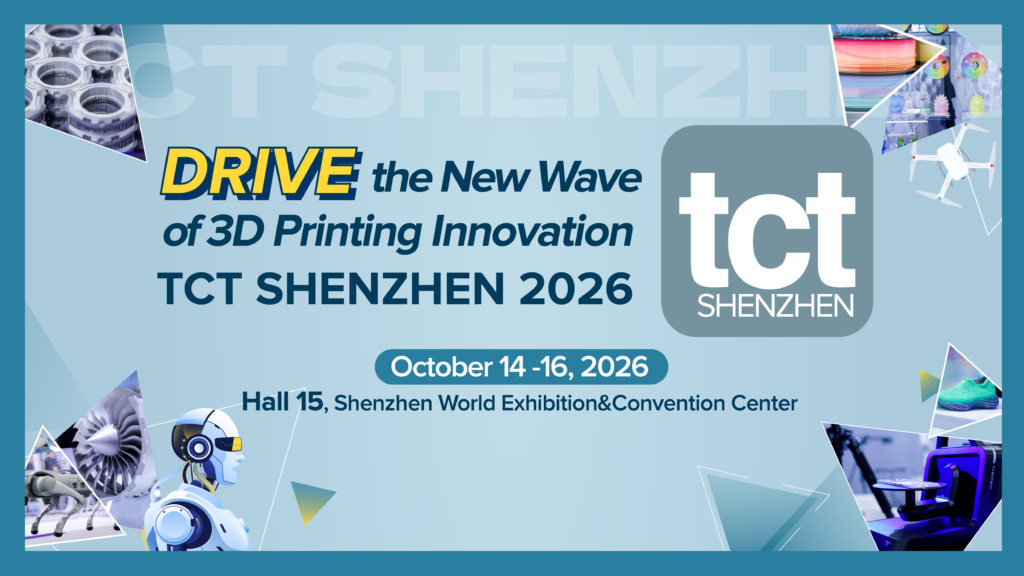
- The venue shift to Hall 15, Shenzhen World Exhibition & Convention Center (Bao’an) adds ≈30 % more floor space than the previous Hall 3 location.
Why the Conference Program Matters More Than the Booth List
While exhibitor rosters reveal who is allocating capital to exhibition space, the conference agenda uncovers what the Chinese additive‑manufacturing (AM) ecosystem is ready to discuss. At TCT Shenzhen 2026, the agenda’s breadth—over 80 sessions—indicates a market transitioning from equipment acquisition to solving concrete production, cost‑control, and regulatory challenges.
Growth Snapshot: 2025 vs. 2026
| Metric | 2025 | 2026 | % Change |
|---|---|---|---|
| Exhibitors | 200 + | 250 + | +25 % |
| Conference Sessions | 50 + | 80 + | +60 % |
| Hall Size (sq m) | ~45,000 (Hall 3) | ~58,500 (Hall 15) | +30 % |
| International Speakers | 30 | 48 | +60 % |
| Live Demonstrations | 12 | 20 | +67 % |
Source: TCT Shenzhen official program and exhibitor guide (2025‑2026).
Medical & Dental: Two Parallel Tracks
1. Digital Medical Forum
- Scope: Orthopedic implants, patient‑specific surgical guides, and bio‑resorbable polymers.
- Key Data: Over 30 case studies showcasing ≥20 % reduction in lead time vs. traditional CNC machining.
2. Dedicated Dental Forum
- Scope: Full‑arch prosthetics, intra‑oral scanners, and high‑throughput ceramic printing.
- Key Data: Average throughput of 150 units/day per printer, with cost per unit dropping from ¥1,200 (2023) to ¥850 (2026).
The separation of dental into its own forum underscores that the sector now demands discussions on workflow integration, regulatory compliance (CFDA Class II), and large‑scale production economics, rather than merely feasibility.
Emerging Technical Themes
Copper & Thermal Management
- Why it matters: Copper’s high thermal conductivity (≈ 401 W/m·K) is essential for heat‑dissipating components in power electronics.
- Showcase: Three vendors will demo laser‑based powder‑bed fusion (L‑PBF) capable of producing ≥99.5 % density copper parts at build rates of 30 cm³/h.
AI‑Hardware Boom
- Trend: AI accelerators (e.g., ASICs, neuromorphic chips) require micro‑scaled metal interconnects and complex heat‑sink geometries.
- Data Point: Forecasts from IDC predict ¥120 bn in AI‑hardware AM spend in China by 2028, a +45 % YoY growth from 2025.
What the Side‑Event Line‑up Reveals
- Supply‑Chain Resilience: Sessions on “Localized Powder Production” highlight a push to reduce dependence on overseas feedstock, aiming for ≥70 % domestic powder supply by 2027.
- Sustainability: Two panels focus on closed‑loop recycling of polymer and metal powders, targeting a 30 % reduction in material waste per build.
- Skill Development: Workshops on “AI‑driven Process Optimization” promise to upskill ≈5,000 engineers across the Pearl River Delta by the end of 2026.
Bottom Line
TCT Shenzhen 2026 is not just a larger exhibition hall; it is a barometer of China’s additive‑manufacturing maturity. The surge in exhibitors, the 60 % expansion of conference sessions, and the emergence of dedicated dental and AI‑hardware tracks collectively signal a market that has moved beyond buying printers to solving end‑to‑end production challenges. For OEMs, material suppliers, and software providers, the event offers a clear roadmap: focus on copper‑based thermal solutions, scale dental workflows, and embed AI into process control to stay competitive in a rapidly evolving Chinese AM landscape.


