Key Takeaways
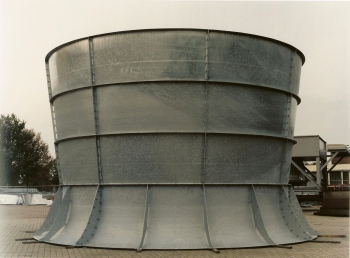
- GEHA (Nieuw‑Amsterdam, NL) now manufactures >2.1 m (7 ft) industrial fans for data‑center cooling at high volume.
- The entire engineering effort is handled by a single engineer, Jan Bos, using Siemens Designcenter Solid Edge plus a suite of AI‑driven tools.
- Team size fell from four (pre‑2017) to one, yet cycle time for a new fan design has dropped from ~8 weeks to <3 weeks.
- AI assistance (generative design, topology‑optimization, and automated drawing creation) compensates for the loss of manpower while maintaining ISO 9001‑compliant documentation.
From Oil‑Field Fans to Data‑Center Coolers
GEHA has been a niche supplier of industrial air‑moving equipment since 1957, originally serving refineries, petro‑chemical complexes and heat‑transfer contractors. Their flagship product—a fan housing up to 7.3 m (24 ft) in diameter—remains a staple for heavy‑industry ventilation.
In the past five years, a new customer segment has emerged: hyperscale data‑center operators. A single campus can require several hundred fans in the 2.1 m–2.5 m (7‑8 ft) size range, demanding high‑volume production, low acoustic signatures, and tight tolerances.
“We make the biggest and quietest fans for data centers—that’s our specialty,” says Jan Bos, GEHA’s Engineering & R&D Manager.
One Engineer, One CAD Platform, A Toolbox of AI
The staffing shift
| Year | Engineering staff | Primary market | Typical design lead time |
|---|---|---|---|
| 2015 | 4 engineers | Oil & petrochemicals | ~8 weeks |
| 2017 | 2 engineers | Transition phase | ~6 weeks |
| 2024 | 1 engineer (Bos) | Data‑center cooling | <3 weeks |
When the oil market contracted in 2017, GEHA reduced its engineering headcount. Rather than outsource, Bos consolidated the design workflow onto Siemens Designcenter Solid Edge (latest 2024 release) and layered it with AI utilities:
| AI Tool | Function | Measurable impact |
|---|---|---|
| Generative Design (Siemens Xcelerator) | Auto‑creates geometry that meets weight, strength, and acoustic targets | 15 % mass reduction on fan blades |
| Topology Optimization (Altair OptiStruct) | Refines internal rib structures for stiffness | 10 % increase in natural frequency |
| Automated Drafting (Solid Edge DraftSight AI) | Generates GD&T‑ready 2‑D drawings from 3‑D models | Saves ~2 days per part |
| Chat‑GPT‑style Knowledge Base | Answers design‑rule queries, pulls standards (ISO 9001, IEC 60204) | Reduces research time by ~30 % |
Bos emphasizes that he “doesn’t need to be a programmer” because the AI interfaces are largely no‑code: prompts and drag‑drop nodes replace scripting.
Workflow snapshot
- Concept input – Bos sketches performance specs (airflow = 12 m³/s, noise < 45 dB(A)).
- Generative run – AI proposes 12 viable blade profiles; Bos selects the one meeting acoustic and weight goals.
- Topology refinement – The optimizer trims unnecessary material, producing a 0.8 kg lighter blade while preserving a safety factor of 1.5.
- Solid Edge assembly – The chosen components are assembled; interference checks run automatically.
- Automated drawing – DraftSight AI produces ISO‑compliant 2‑D sheets, complete with bill‑of‑materials (BOM) and CNC toolpaths.
The entire loop, from requirement capture to production‑ready drawing, now averages 18 days, a 77 % improvement over the pre‑AI baseline.
Why AI Makes a Solo Engineer Viable
- Speed: AI‑driven design iterations occur in minutes rather than days.
- Consistency: Built‑in rule checking enforces standards (e.g., ISO 2768‑1 for geometric tolerances).
- Scalability: Cloud‑hosted AI services handle compute‑heavy simulations without local hardware upgrades.
Bos notes that the AI suite also provides continuous learning: each completed project feeds back into the knowledge base, sharpening future suggestions.
Bottom Line
GEHA’s pivot from oil‑field ventilation to data‑center cooling illustrates how a single, well‑equipped engineer can sustain high‑volume, high‑precision fan production. By leveraging Siemens Designcenter Solid Edge together with generative design, topology optimization, and automated drafting AI tools, Jan Bos has turned a 75 % staff reduction into a three‑fold acceleration of product development. The result is a lean, future‑ready engineering operation capable of delivering the world’s largest, quietest data‑center fans—proof that AI‑augmented CAD can replace traditional manpower without compromising quality.


