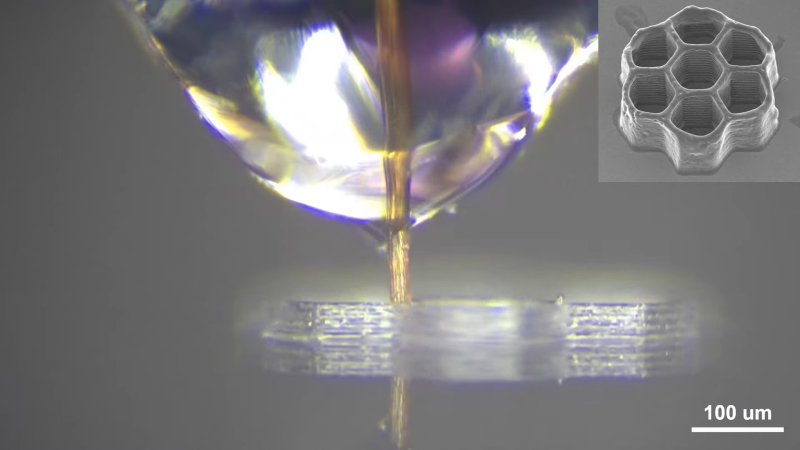
Key Takeaways
- Researchers at McGill University have discovered a unique application for mosquito proboscis in 3D printing
- The proboscis can be used as a high-resolution nozzle for 3D printing due to its fine and precise structure
- This innovative approach has the potential to improve the resolution and accuracy of 3D printing technology
- The use of biological structures in 3D printing can lead to new and exciting developments in the field
Introduction to Necroprinting
Necroprinting, a term coined by researchers, refers to the use of deceased biological structures, such as mosquito proboscis, in 3D printing technology. This innovative approach has shown promising results in achieving high-resolution prints with unprecedented precision.
The Science Behind Necroprinting
The mosquito proboscis is a highly specialized structure that allows the insect to penetrate skin and feed on blood. Its unique properties, such as a diameter of approximately 10-15 micrometers, make it an ideal candidate for use as a 3D printing nozzle. By harnessing the power of this biological structure, researchers have been able to achieve print resolutions of up to 10 micrometers, significantly higher than traditional 3D printing methods.
Comparison of 3D Printing Nozzles
| Nozzle Type | Resolution | Diameter |
|---|---|---|
| Traditional Nozzle | 100-500 micrometers | 0.5-1.5 mm |
| Mosquito Proboscis Nozzle | 10 micrometers | 10-15 micrometers |
| Metal Nozzle | 50-100 micrometers | 0.2-0.5 mm |
Advantages and Limitations of Necroprinting
The use of mosquito proboscis in 3D printing offers several advantages, including high-resolution prints and increased precision. However, there are also limitations to this approach, such as the need for a reliable source of deceased mosquitoes and the potential for contamination.
Future Developments
As researchers continue to explore the possibilities of necroprinting, we can expect to see new and exciting developments in the field of 3D printing. With the potential to improve the resolution and accuracy of prints, necroprinting may revolutionize the way we approach 3D printing technology.
Bottom Line
The use of mosquito proboscis in 3D printing, or necroprinting, is a promising new approach that has the potential to improve the resolution and accuracy of prints. With its unique properties and high-resolution capabilities, necroprinting may become a game-changer in the field of 3D printing technology. As researchers continue to develop and refine this innovative approach, we can expect to see new and exciting developments in the years to come.


