Key Takeaways
- NAMIC’s 2026 Global Additive Manufacturing Summit (GAMS) in Singapore put AI at the core of every agenda item.
- Dr. Chaw Sing Ho highlighted Apple’s large‑scale 3‑D‑printed hinge cover as a benchmark for consumer‑electronics AM.
- Senior Parliamentary Secretary Shawn Huang warned that post‑COVID supply‑chain shocks demand a rapid expansion of Singapore’s AM capacity.
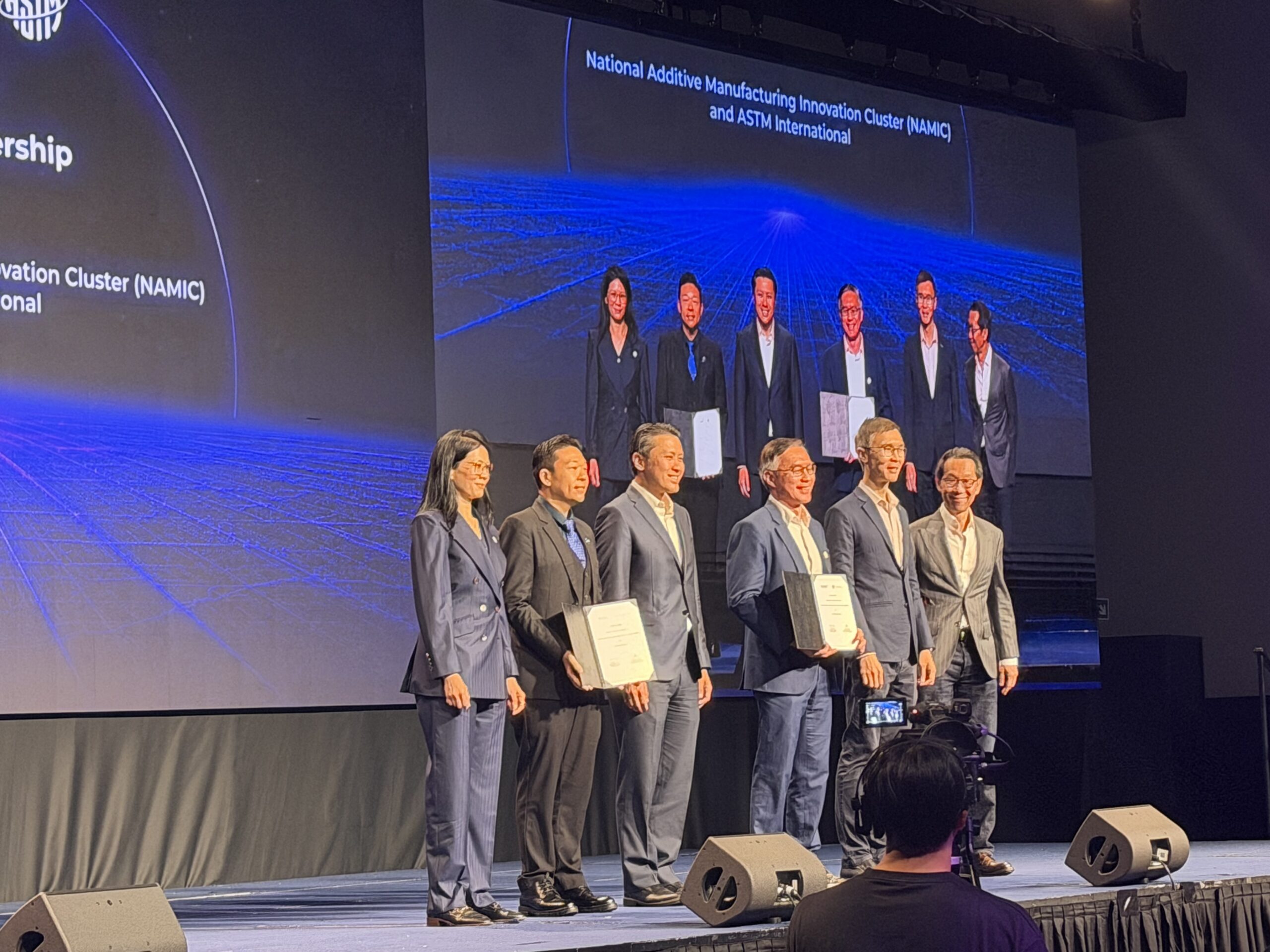
- A new ASTM‑NAMIC partnership will produce the first joint standards covering Additive Manufacturing (AM), AI, and robotics.
- A four‑party MoU links NAMIC’s Additive Innovation Center with ATC Globe Holdings, Forefront AM, and GD Precision to accelerate industrial‑grade AM deployment.
2026 GAMS: AI‑Driven Additive Manufacturing Takes Center Stage
The National Additive Manufacturing Innovation Cluster (NAMIC) returned to Singapore for its Global Additive Manufacturing Summit (GAMS), this time under the banner “Building resilient industries with additive manufacturing and AI.” More than half of the 45 panel sessions featured AI‑focused topics, ranging from generative design to real‑time process monitoring.
Opening Remarks – Dr. Chaw Sing Ho
Dr. Chaw Sing Ho opened the summit by citing Apple’s mass‑production of 3‑D‑printed hinge covers (≈ 2 million units per year) as proof that large‑scale additive manufacturing is now viable for consumer electronics. He stressed two imperatives:
- Real‑world outcomes – moving beyond prototypes to volume‑ready parts.
- Standards development – a prerequisite for cross‑border certification and liability management.
Ho also praised Singapore’s $45 billion manufacturing base (≈ 20 % of GDP) and its ability to marshal public‑private‑research collaborations quickly.
Government Perspective – Shawn Huang
Senior Parliamentary Secretary for Finance and Manpower, Shawn Huang, reflected on the pandemic‑induced supply‑chain disruptions that forced Singapore to import ≈ 65 % of critical components. His key points:
| Issue | Current Situation | Target by 2028 |
|---|---|---|
| Domestic AM capacity | 150 kW of laser‑based printers (≈ 0.5 % of total manufacturing output) | 1 MW (≈ 2 % of output) |
| Skilled workforce | 4,200 AM‑trained technicians | 8,500 technicians & engineers |
| AI integration | 12 % of AM lines equipped with AI monitoring | 45 % of lines with predictive AI controls |
Huang argued that AI‑enabled AM can shrink lead times by 30 % and cut material waste by up to 25 %, giving a small nation a strategic edge against larger competitors.
Standards Collaboration: ASTM + NAMIC
During the summit, NAMIC announced a strategic partnership with ASTM International to draft the first global standards suite covering AM, AI, and robotics. The initiative will:
- Define data‑exchange protocols for AI‑driven process control.
- Establish performance benchmarks for robotic part handling (e.g., repeatability ≤ ±0.02 mm).
- Align with ISO/ASTM 52900 to ensure compatibility with existing AM terminology.
The first draft, ASTM F3822 – AI‑Enhanced Additive Manufacturing, is slated for public review in Q2 2027.
Industry MoU: Building an End‑to‑End Ecosystem
A memorandum of understanding was signed among four key players:
| Partner | Core Capability | 2026‑2028 Investment |
|---|---|---|
| NAMIC Additive Innovation Center | R&D, pilot‑line scaling | SGD 25 M |
| ATC Globe Holdings | Metal‑powder production (Ti‑6Al‑4V, 10 t/yr) | SGD 12 M |
| Forefront AM | Large‑format polymer printers (up to 1 m³ build volume) | SGD 8 M |
| GD Precision | Post‑process automation (laser sintering, CNC finishing) | SGD 6 M |
The consortium aims to deliver 50 industrial‑grade AM parts per month by 2028, with AI‑based quality assurance integrated at every stage.
AI vs. Conventional Additive Manufacturing: A Quick Comparison
| Metric | Conventional AM | AI‑Enhanced AM |
|---|---|---|
| Build speed | 30 mm/h (typical laser sintering) | 40 mm/h (+ 33 % with AI‑optimized scan strategy) |
| Dimensional accuracy | ± 0.10 mm | ± 0.02 mm (predictive compensation) |
| Material waste | 12 % of powder | 9 % (real‑time melt‑pool control) |
| Downtime | 4 h per 100 h run (maintenance) | 2 h per 100 h run (AI‑driven predictive maintenance) |
| Cost per part | US 12–18 (mid‑volume) | US 9–14 (30 % reduction) |
Data compiled from pilot projects presented at GAMS and recent ASTM drafts.
Bottom Line
NAMIC’s 2026 GAMS demonstrated that AI is no longer a peripheral add‑on but a core enabler for additive manufacturing in Singapore. With government backing, a new ASTM standards framework, and a robust industry consortium, the island nation is poised to **double its AM capacity,


