Key Takeaways
- UWE Bristol’s Centre for Print Research (CFPR) combines a Meltio Engine metal‑wire printer with a 5‑axis HAAS CNC to grow rubies inside solid platinum components.
- The hybrid workflow pauses the build, inserts a crystal seed, then resumes printing, enabling true “in‑situ” gemstone growth.
- The technique can be extended to embed sensors, RFID tags, or functional inserts in aerospace, medical and high‑performance tooling parts.
- The first demonstration—a ruby grown inside a platinum ring—used recycled ruby waste as a seed, eliminating mining and setting steps.
Introduction
The Centre for Print Research at the University of the West of England (UWE Bristol) has turned metal additive manufacturing into a crystal‑growth platform. By marrying Meltio’s Engine wire‑feed 3‑D printer with a HAAS five‑axis CNC, the team can fabricate dense platinum structures, pause the process, place a gemstone seed, and then resume deposition. The result is a monolithic platinum part that contains a fully formed ruby (or sapphire) grown from the inside out.
How the Hybrid System Works
| Feature | Meltio Engine (Hybrid) | Conventional Metal‑Wire 3‑D Printing | Conventional CNC Machining |
|---|---|---|---|
| Build Material | Platinum wire (0.3–0.8 mm Ø) | Stainless steel, titanium, Inconel | Bulk billet or bar stock |
| Maximum Build Volume | 200 mm × 200 mm × 200 mm | 300 mm × 300 mm × 300 mm | Limited by machine travel (≈ 500 mm) |
| Deposition Rate | 12 g/min (≈ 0.9 cm³/min) | 8–10 g/min | N/A (subtractive) |
| Axis Capability | 5‑axis simultaneous motion | 3‑axis (X‑Y‑Z) | 5‑axis (HAAS) |
| In‑Process Interruption | Pause, insert seed, resume (≤ 2 min) | Not supported | Not applicable |
| Typical Accuracy | ±0.05 mm (positional) | ±0.1 mm | ±0.02 mm |
| Surface Finish | Ra ≈ 3.5 µm (as‑built) | Ra ≈ 5 µm | Ra ≈ 1.5 µm (post‑machined) |
The Meltio Engine delivers a continuous melt pool by feeding platinum wire through a high‑current (≈ 200 A) plasma arc. The HAAS 5‑axis robot controls the torch and workpiece, allowing complex geometries and internal cavities to be printed layer‑by‑layer. When the desired cavity is reached, the controller halts the wire feed, the operator inserts a pre‑selected crystal seed (≈ 0.5 mm ruby fragment), and the system restarts. The surrounding platinum solidifies around the seed, providing a pressure‑free environment for crystal growth.
Growing the Gem, Not Setting It
Dr. Sofie Boons, Associate Professor of Craft and Design, leads the Neo‑Gemstones project. Her approach diverges from traditional lab‑grown gemstone methods that rely on high‑temperature furnaces and hydrothermal vats. Instead, Boons recycles sub‑millimetre ruby waste—often a by‑product of jewelry polishing—and uses it as a nucleation point.
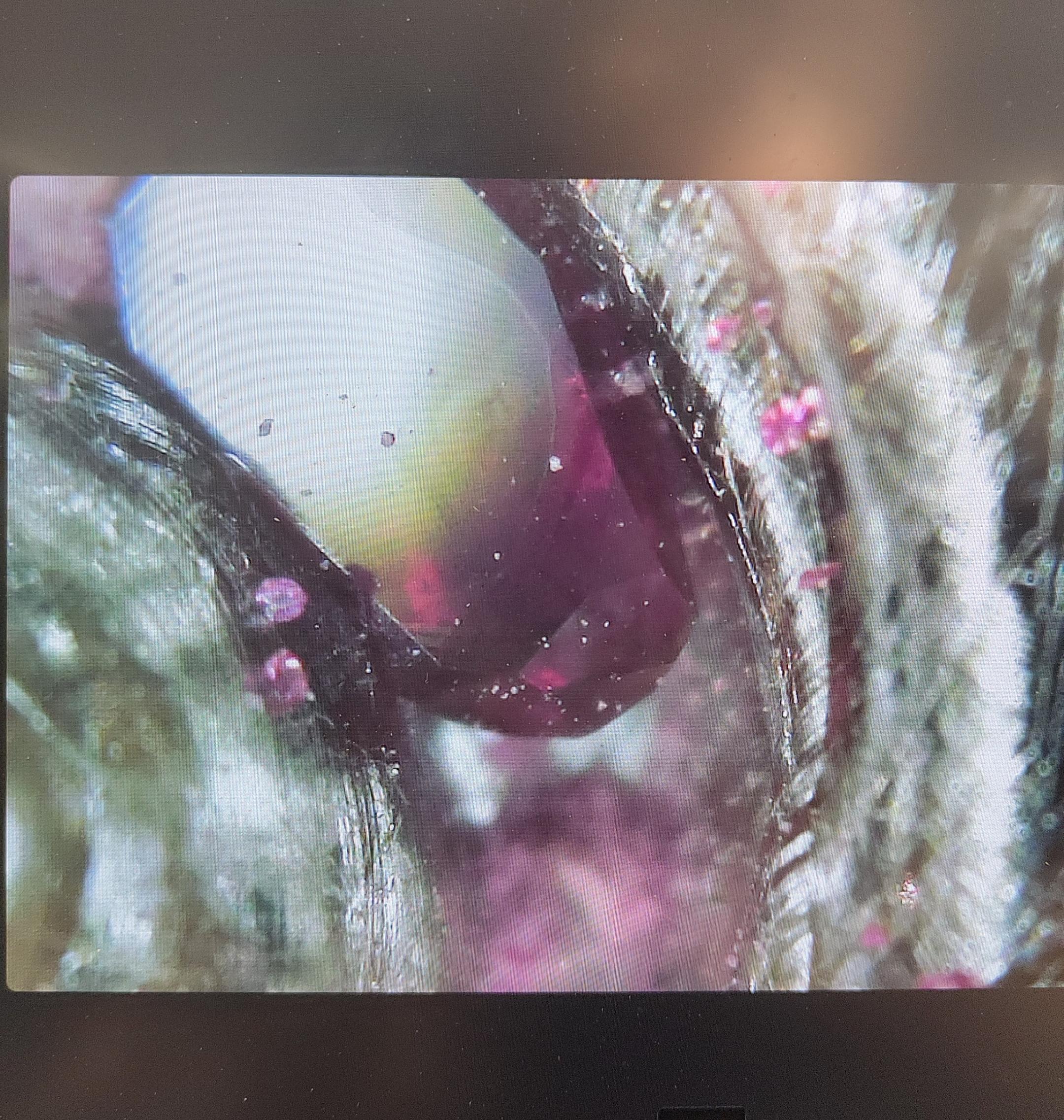
In 2024, the team demonstrated a world‑first: a ruby cultivated directly inside a platinum wedding band. The final gemstone exhibited the same corundum crystal lattice (α‑Al₂O₃) and optical properties (Mohs hardness 9, refractive index 1.76) as a mined ruby, but its provenance is entirely synthetic and waste‑derived.
Beyond Jewellery: Industrial Implications
The ability to pause a metal build and embed an object opens several non‑jewellery avenues:
- Embedded Sensors: Miniature temperature or strain gauges can be placed during printing, creating “smart” aerospace brackets with built‑in health monitoring.
- RFID / Security Tags: Low‑cost passive tags can be sealed within medical implants, preventing tampering.
- Functional Inserts: Heat‑sink fins, fluidic channels, or magnetic cores can be positioned precisely where traditional machining would be impossible.
Because the platinum matrix remains fully dense (porosity < 0.2 %), the mechanical integrity of the final part meets aerospace‑grade standards (tensile strength ≈ 850 MPa for annealed platinum).
Process Advantages
- Material Efficiency: Wire feed reduces powder waste by > 95 % compared with laser‑powder bed fusion.
- Design Freedom: 5‑axis motion enables internal cavities that would require multi‑step drilling or EDM.
- Sustainability: Using gemstone waste as seeds cuts mining demand and lowers carbon footprint (estimated 30 % reduction per part).
Challenges & Future Work
- Thermal Management: Platinum’s high melting point (1,768 °C) demands precise arc control; any overshoot can fracture the seed.
- Scale‑Up: Current build volume limits large‑scale jewellery or aerospace components; larger Meltio heads are under development.
- Certification: For medical or aerospace applications, the embedded inserts must meet ISO 10993 and AS9100 standards, requiring further testing.
Bottom Line
UWE Bristol’s hybrid Meltio‑Engine/HAAS CNC system transforms metal additive manufacturing from a purely structural process into a platform for in‑situ material integration. By pausing a platinum print, inserting a recycled ruby seed, and resuming deposition, the team has proved that gemstones can be grown inside metal rather than set afterward. The same workflow promises to embed functional devices—sensors, tags, or structural inserts—directly into dense metal parts, offering a compelling route to smarter, greener, and more complex components across jewellery, aerospace, and medical sectors.


