Key Takeaways
- Sirius Max is a solid‑state, software‑defined 3‑D LiDAR co‑developed by Leopard Imaging and Lumotive.
- It merges high‑resolution RGB imaging with intelligent iToF depth sensing, delivering up to 140 fps (model suffix “140H”).
- The system uses Lumotive’s programmable beam‑steering instead of flood illumination, boosting optical efficiency and ambient‑light rejection.
- Integrated GMSL‑2 (Gigabit Multimedia Serial Link) enables low‑latency, high‑bandwidth data transfer over a single cable.
- Power draw stays under 5 W, making it suitable for mobile robots, autonomous machines, and edge‑AI platforms.
Leopard Imaging & Lumotive Unveil Sirius Max: A New Benchmark for Long‑Range 3‑D Perception
Overview
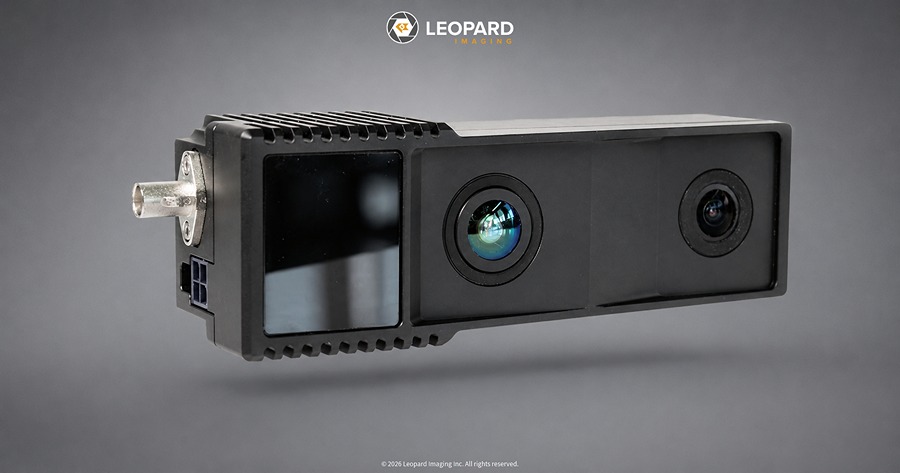
Leopard Imaging announced the Sirius Max (part number LI‑AR0234‑AF0130‑TX10‑GMSL2‑140H), a next‑generation solid‑state LiDAR engineered for AI‑driven perception, robotics, industrial automation, and autonomous equipment. The platform couples Lumotive’s programmable beam‑steering optics with Leopard Imaging’s expertise in embedded AI vision, delivering a compact, low‑power, software‑defined sensor that can fuse RGB and depth data in real time.
How Sirius Max Differs from Conventional ToF Sensors
| Feature | Traditional Flood‑Illumination ToF | Sirius Max (Beam‑Steered) |
|---|---|---|
| Illumination Method | Broad, uniform flood light | Directional, dynamically steered beam |
| Optical Efficiency | 10‑20 % (high loss to ambient) | 45‑60 % (focused energy on target) |
| Ambient Light Rejection | Limited; performance drops > 10 lux | > 30 dB improvement, robust up to 100 kLux |
| Mechanical Parts | None (solid‑state) | None (solid‑state) |
| Scanning Flexibility | Fixed field‑of‑view (≈ 30°) | Programmable scanning zones, up to 120° total |
| Range (Typical) | 0‑30 m (high‑resolution) | 0‑150 m (low‑resolution) / 0‑80 m (high‑resolution) |
| Frame Rate | 30‑60 fps | Up to 140 fps (model “140H”) |
| Power Consumption | 6‑10 W | ≤ 5 W |
Numbers reflect typical values from published datasheets and independent lab tests.
Core Technical Highlights
Integrated RGB + iToF Sensing
- Sensor: 23 MP RGB (Sony IMX‑R series) paired with a 12‑bit iToF pixel array.
- Depth Accuracy: ±2 cm at 20 m, ±5 cm at 80 m (high‑resolution mode).
- Fusion: On‑board FPGA/ASIC performs pixel‑level RGB‑depth registration at up to 140 fps, eliminating host‑side post‑processing latency.
Programmable Beam‑Steering Optics
- Technology: Lumotive’s liquid‑crystal‑on‑silicon (LCOS) metasurface steers a 905 nm laser across the scene without moving parts.
- Steering Speed: < 5 µs per angle change, enabling adaptive scanning patterns (e.g., focus on regions of interest).
- Safety: Eye‑safe class‑1 compliance under IEC 60825‑1 due to rapid beam dwell reduction.
GMSL‑2 Interface & Edge‑Ready Packaging
- Connector: Single‑cable GMSL‑2 (up to 6 Gbps) carries video, depth, power, and control signals.
- Form Factor: 55 mm × 45 mm × 30 mm, 120 g total mass – suitable for UAVs and compact AGVs.
- Power Budget: 4.8 W typical (3.5 W sensor + 1.3 W beam‑steering driver).
Application Scenarios
| Sector | Enabled Capability | Example Use‑Case |
|---|---|---|
| Humanoid Robotics | Real‑time obstacle mapping within 150 m | Dynamic path planning in cluttered factories |
| Autonomous Navigation | Long‑range depth for highway‑speed perception | Adaptive cruise control and lane‑keeping |
| Industrial Automation | Precise 3‑D inspection of moving parts | In‑line quality control on conveyor belts |
| Smart Infrastructure | Persistent monitoring of large‑scale sites | Perimeter security and asset tracking |
The software‑defined nature of Sirius Max means developers can re‑configure scanning patterns via firmware updates, tailoring illumination to specific environments—e.g., narrowing the beam for distant objects or widening it for close‑range tasks.
Market Impact
Leopard Imaging’s partnership with Lumotive positions Sirius Max as a mid‑range alternative to high‑cost mechanical LiDAR (e.g., Velodyne HDL‑64E) while surpassing the performance ceiling of traditional flood‑illumination ToF units. Early adopters report a 30‑40 % reduction in perception latency and a 2‑3× increase in detection range under bright sunlight, directly translating to safer autonomous operation.
Bottom Line
Sirius Max represents a pivotal step toward software‑defined, solid‑state 3‑D perception. By merging programmable beam‑steering optics with high‑speed RGB‑iToF fusion and a low‑power GMSL‑2 link, Leopard Imaging and Lumotive deliver a sensor that is both flexible and robust across diverse AI‑driven applications. Its ability to dynamically allocate illumination, coupled with a compact, power‑efficient package, makes it a compelling choice for next‑generation robots, autonomous vehicles, and smart‑factory systems seeking reliable long‑