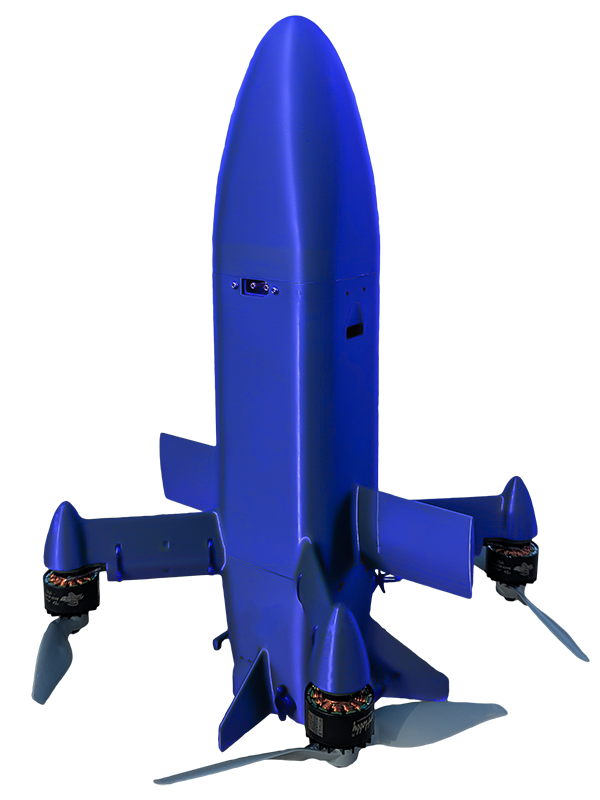
Key Takeaways
- Terra Drone’s B1 is set for mass production under Japan’s Interceptor Drone Early Acquisition Program, targeting low‑cost UAV threats such as Shahed loitering munitions.
- The B1 costs roughly ¥2–3 million ($15‑20 k) per unit, a fraction of the ¥100 million+ price tag of traditional interceptor missiles.
- With a 30 km detection radius, 45‑minute endurance, and 5 kg payload, the B1 can be deployed in swarms to protect critical airspace.
- Japan’s rapid shift—from a prototype demo in early 2024 to serial production in three months—signals a strategic pivot toward affordable, high‑volume counter‑UAV solutions.
Japan’s 3‑D‑Printing Renaissance
A Quiet Past, a Loud Return
For decades Japan’s manufacturing giants—Teijin Seiki (now Nabtesco), Mitsubishi, NTT Data, Mitsui Zosen, Kira, and Sony—dabbled in additive manufacturing but never sustained a national push. The country’s first commercial printer, the CMET SOUP (1998), faded into obscurity as other markets surged ahead.
Recent corporate moves suggest a revival:
| Company | Recent Additive‑Manufacturing Action | Year |
|---|---|---|
| TDK | Acquired Fabric8Labs (AI‑enabled 3‑D printing) | 2023 |
| Sodick | Purchased Prima Additive, re‑branded as Altform | 2023 |
| Terra Drone | Developed the B1 interceptor drone for ATLA | 2024 |
These investments underline a renewed belief that 3‑D printing can deliver lightweight, high‑performance airframes at scale.
The B1 Interceptor Drone: Specs & Mission Profile
| Parameter | Terra B1 (official data) | Conventional Missile Interceptor* |
|---|---|---|
| Unit Cost | ¥2–3 million ($15‑20 k) | ¥100 million+ ($750 k) |
| Maximum Range | 30 km (detect‑and‑engage) | 70 km (missile flight) |
| Endurance | 45 min (continuous loiter) | < 5 min (flight time) |
| Payload | 5 kg (kinetic interceptor) | 1 kg (warhead) |
| Launch Platform | Ground‑based pneumatic catapult or vehicle‑mounted rail | Fixed‑site launchers |
| Operational Altitude | 200 m – 3 km | 500 m – 10 km |
| Response Time | < 30 s from detection to launch | 1–2 min (missile prep) |
| Re‑usability | Recoverable for up to 10 sorties | Single‑use |
*Figures for missiles such as the MICA or Patriot are representative averages from publicly released defense data.
Why Low‑Cost Drones Matter
- Cost‑Effectiveness: In the Middle East, cheap Shahed‑type drones (≈ $5 k per unit) have forced defenders to expend missiles worth $500 k–$1 M each, creating a 100‑to‑1 cost imbalance.
- High Intercept Rates: Ukraine’s fielding of low‑cost interceptor drones has achieved > 80 % kill rates against similar threats, according to NATO after‑action reports.
- Scalable Defense: Multiple B1 units can be coordinated via a single ground control station, enabling swarm interception without proportional cost growth.
Program Timeline & Government Commitment
- RFP Issued (Jan 2024): Japan’s Acquisition, Technology & Logistics Agency (ATLA) released the Interceptor Drone Early Acquisition Program, targeting 200‑unit initial batch.
- Selection (Mar 2024): Terra Drone beat 38 competitors, winning the contract based on price, range, and rapid‑production capability.
- Prototype Demo (Apr 2024): Live‑fire tests demonstrated successful neutralization of a Shahed‑type target at 28 km.
- Mass Production Start (Jul 2024): Serial production lines in Shizuoka and Nagoya are slated to deliver ≈ 70 units per month.
The government has earmarked ¥30 billion ($225 M) for the first two years, covering procurement, training, and integration with existing air‑defense networks.
Bottom Line
Japan’s Terra Drone B1 marks a decisive shift from expensive missile‑centric air defense to affordable, high‑volume drone interception. Leveraging advances in additive manufacturing, the B1 offers a 30 km reach, 45‑minute loiter time, and a unit price under $20 k—metrics that make it competitive against both legacy missiles and emerging swarm‑counter UAV platforms. The rapid move from prototype to mass production underscores Japan’s strategic intent to neutralize low‑cost aerial threats without draining defense budgets. As other nations grapple with similar cost‑asymmetry challenges, the B1 could become a benchmark for next‑generation, cost‑effective air‑space protection.