Key Takeaways
- Large‑format 3D printing is moving from prototype‑only to production‑ready at Formnext 2026.
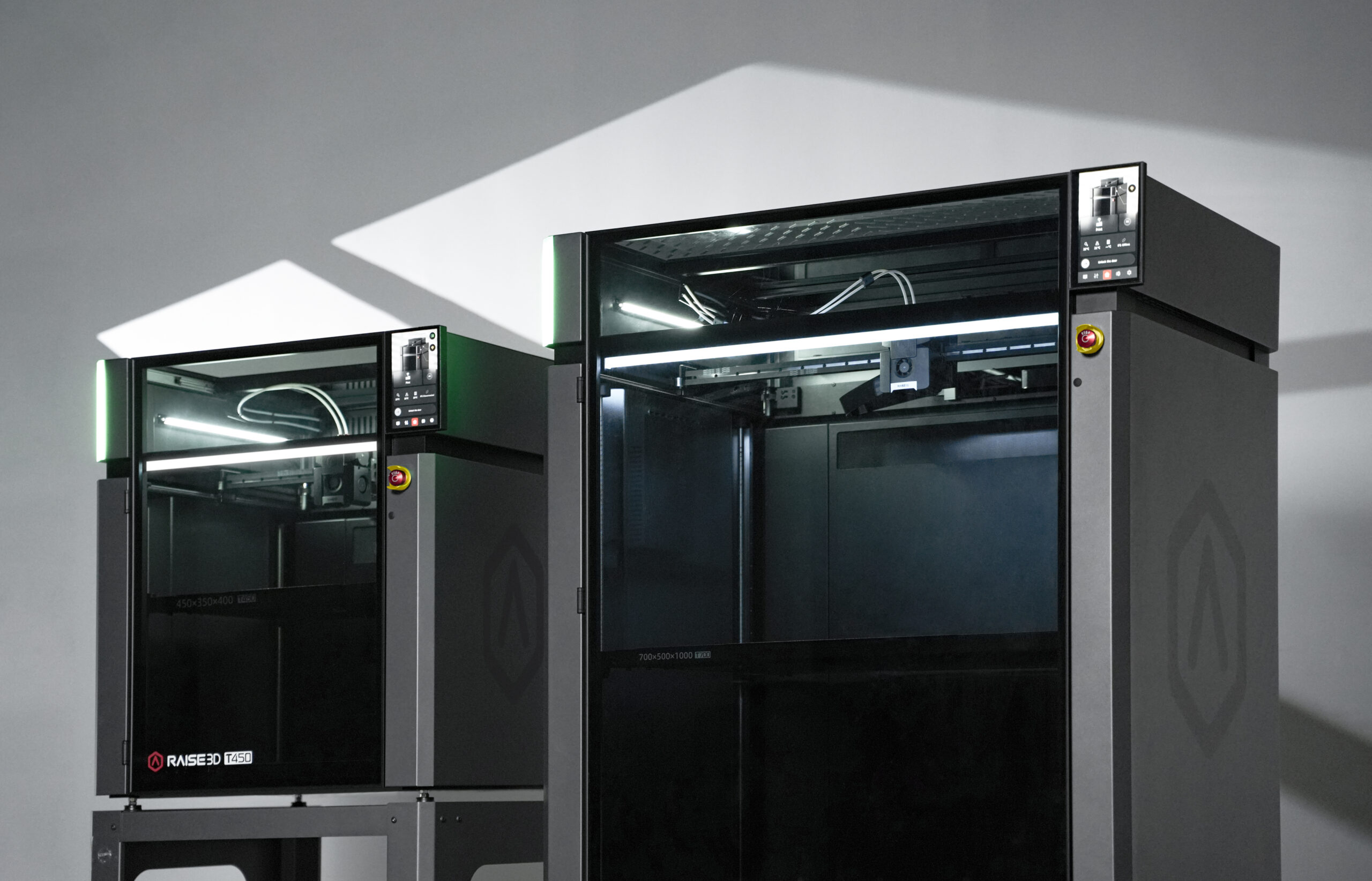
- Raise3D’s new T Series offers meter‑tall builds for under $16 k, the most cost‑effective entry to industrial‑scale additive manufacturing.
- T450 vs. T700: the former targets small‑batch tooling, the latter can replace conventional machining for parts up to 1 m high.
- Real‑world data shows a 75 % reduction in build time and 75 % weight savings for battery‑cell transport trays.
- Other exhibitors (CMS, AltForm, WASP, BigRep, Farsoon) are also scaling build volumes, but Raise3D is the only one delivering sub‑$20 k machines with engineering‑grade material compatibility.
Formnext 2026 Highlights: Scaling Up Large‑Format Additive Manufacturing
The Frankfurt trade fair once again proved that the “bigger‑is‑better” mantra is now tied to production economics, not just headline dimensions. While several vendors displayed printers exceeding 1.2 m in XY, the real market shift is toward affordability, material reliability, and workflow integration.
Raise3D’s T Series: Industrial Capacity at a Mid‑Market Price
| Specification | Raise3D T450 | Raise3D T700 |
|---|---|---|
| Build envelope (mm) | 450 × 450 × 450 | 700 × 700 × 1000 |
| Nozzle diameter | 0.4 mm (standard) | 0.4 mm (standard) |
| Maximum print speed | 300 mm/s | 300 mm/s |
| Material range | PLA, PETG, ABS, Nylon, TPU, Polycarbonate, carbon‑filled composites | Same as T450 + high‑temperature PEI, PEEK |
| Layer resolution | 0.05–0.4 mm | 0.05–0.4 mm |
| Price (USD) | $4,999 | $15,999 |
| Target market | Small‑batch tooling, education, prototyping | Large‑scale functional parts, low‑volume production |
| Release date | Dec 2026 (shipping) | Q1 2027 (shipping) |
Both models employ dual extruders with independent temperature control, enabling simultaneous printing of support and build material. The machines also integrate closed‑loop filament detection and real‑time bed leveling, reducing downtime by up to 30 % compared with legacy open‑loop systems.
Production Impact: A Battery‑Tray Case Study
Raise3D cited a partner that replaced a conventional CNC‑machined aluminum tray (8 kg, 40 days lead time) with a single‑piece 3D‑printed polymer tray (2 kg, 10 days) using the T700. The switch delivered:
- 75 % weight reduction, cutting shipping costs and handling effort.
- 75 % faster time‑to‑part, enabling tighter supply‑chain windows.
- Material cost drop from $120 per tray (machined Al) to $22 per tray (PETG‑filled).
These figures illustrate how a meter‑scale printer can eliminate part‑splitting and post‑assembly, a common bottleneck in large‑format CNC workflows.
How the Rest of the Floor Stacks Up
| Company | Printer Model (2026) | Build Volume (mm) | Core Technology | Approx. Price (USD) | Notable Feature |
|---|---|---|---|---|---|
| CMS | CMS‑X5 | 500 × 500 × 500 | FFF (high‑temp) | $22,000 | Integrated laser scanner for in‑process inspection |
| AltForm | AltForm 3D‑MAX | 600 × 600 × 800 | LFS (laser‑fusion) | $45,000 | Multi‑laser array for faster cure |
| WASP | WASP‑XL | 1000 × 1000 × 1000 | FFF (large‑area) | $30,000 | Open‑source firmware, modular extruder |
| BigRep | BigRep ONE | 1000 × 1000 × 1000 | FFF (industrial) | $75,000 | Automated material handling robot |
| Farsoon | FS‑M500 | 500 × 500 × 500 | DLP (photopolymer) | $60,000 | Sub‑50 µm resolution for functional prototypes |
While these machines push the envelope in volume and specialty, their price points remain above $20 k, positioning them for larger enterprises. Raise3D’s T Series therefore fills a mid‑tier gap for midsize manufacturers seeking to transition from CNC‑centric production to hybrid additive workflows.
Trends Shaping Large‑Format Additive Manufacturing
- Material Engineering – More vendors now certify PEEK, PEI, and carbon‑filled composites, allowing parts to replace metal in high‑temperature or high‑strength applications.
- Smart Automation – Integrated sensors (filament run‑out, bed‑temperature drift) and AI‑driven slicers reduce human error and improve repeatability.
- Hybrid Production Cells – Combining a large‑format printer with a CNC mill in a single cell is gaining traction, especially for post‑print machining of critical tolerances.
- Energy Efficiency – New heated‑chamber designs cut power consumption by up to 20 % versus older FFF platforms, aligning with sustainability mandates.
Bottom Line
Formnext 2026 confirms that large‑format 3D printing is no longer a niche prototyping tool but an emerging production workhorse. Raise3D’s T450 and T700 deliver the most compelling value proposition—meter‑scale build capacity, engineering‑grade material support, and sub‑$20 k pricing—making them the logical entry point for manufacturers ready to augment or replace CNC‑


