Key Takeaways
- EOS is partnering with Brazil’s BIZU Space to embed additive‑manufacturing (AM) expertise into the country’s emerging micro‑launcher program.
- BIZU engineers will enroll in EOS’s Additive Minds Academy, receiving Design‑for‑Additive‑Manufacturing (DfAM) training and on‑site consultancy.
- The collaboration targets high‑performance propulsion components such as combustion chambers, closed‑cycle turbopumps, and injector heads, where AM can cut weight by 30‑45 % and reduce part count by up to 80 %.
- EOS metal‑laser‑powder‑bed fusion (LPBF) systems can produce 100 mm‑scale aerospace parts in 24‑48 h, compared with 2‑4 weeks for traditional CNC machining and welding.
- The partnership strengthens Brazil’s strategic autonomy in Low‑Earth‑Orbit (LEO) access and creates a skilled AM workforce for the broader Latin‑American space sector.
EOS and BIZU Space: A Strategic Alliance
Background
BIZU Space, headquartered in São Paulo, is the primary contractor for Brazil’s MLBR (Microlauncher) program, a privately funded effort to deliver 100‑kg payloads to LEO on a sub‑100 kg launch vehicle. The company’s roadmap includes a series‑burn liquid‑propellant engine delivering 10 kN thrust, with an anticipated first flight in 2028.
What EOS Brings to the Table
EOS, the German pioneer of industrial metal 3‑D printing, is delivering two core assets:
- Additive Minds Academy – a curriculum of eight intensive DfAM modules covering topology optimization, support‑structure design, and post‑processing for high‑temperature alloys (e.g., Inconel 718, Ti‑6Al‑4V).
- On‑site consultancy – senior EOS engineers will work alongside BIZU’s design team for a 12‑month period, providing rapid‑iteration feedback on part geometry, powder selection, and build‑parameter tuning.
“The most successful additive manufacturing programs combine technology with education,” says Michael Wohlfart, EOS Business Development Team Manager. “Our aim is to equip engineers with the depth of DfAM knowledge required for demanding space‑propulsion applications.”
Expected Technical Gains
| Metric | Traditional CNC & Welding | EOS LPBF (e.g., EOS M 400) |
|---|---|---|
| Build volume (mm³) | Limited by fixture size; typically ≤ 200 × 200 × 200 | 400 × 400 × 400 |
| Layer thickness | N/A (subtractive) | 20–40 µm |
| Material palette | Primarily Al, Ti, stainless steel | > 70 alloys, including Inconel 718, Maraging 300, Ti‑6Al‑4V |
| Lead time (prototype) | 2–4 weeks (machining + heat‑treat) | 24–48 h (build + stress‑relief) |
| Part count reduction | 4–6 separate components (welded) | 1‑2 monolithic parts |
| Weight savings | Baseline | 30‑45 % (lattice & topology‑optimized) |
| Cost per 100 mm part | $1,200 – $1,800 | $850 – $1,200 (including powder reuse) |
Source: EOS internal benchmark data, 2025.
By consolidating multiple machined sub‑assemblies into a single printed component, BIZU can lower assembly‑error rates and improve thermal‑stress distribution—critical for combustion‑chamber longevity.
Training Roadmap: From Theory to Flight‑Ready Parts
- Foundations of DfAM (Weeks 1‑2) – Principles of lattice design, surface‑finish trade‑offs, and build orientation.
- Material Science Deep Dive (Weeks 3‑4) – Metallurgical behavior of high‑temperature alloys under rapid solidification.
- Process Parameter Optimization (Weeks 5‑6) – Laser power, scan speed, and hatch spacing tuning for minimal porosity (< 0.5 %).
- Post‑Processing & Qualification (Weeks 7‑8) – Hot isostatic pressing (HIP) cycles, non‑destructive testing (ultrasonic & X‑ray), and certification pathways (NASA‑PP‑2000).
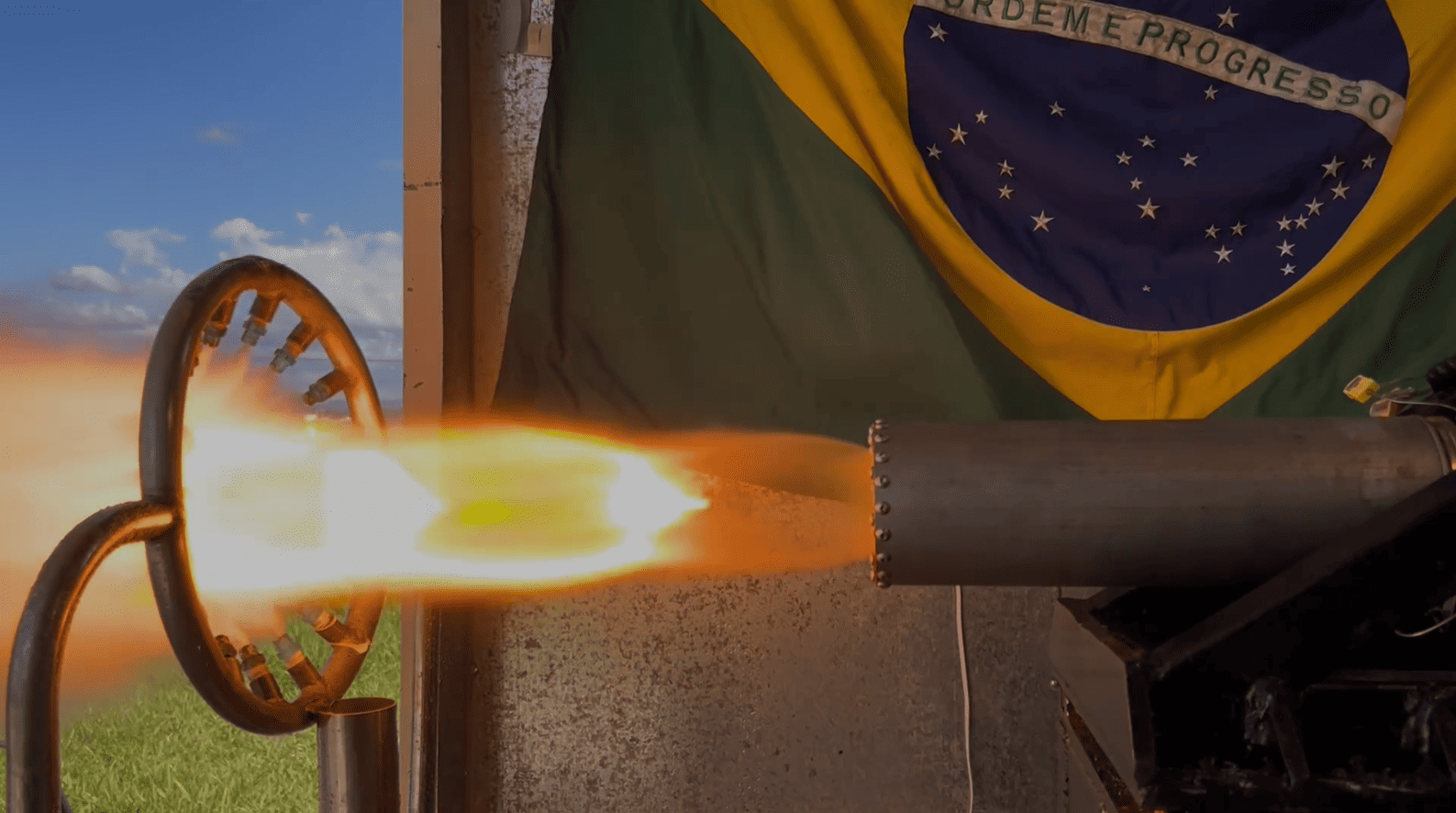
After the classroom phase, BIZU engineers will apply the lessons to a combustion‑chamber demonstrator scheduled for hot‑fire testing in early 2027. EOS consultants will verify that the printed chamber meets the target maximum operating temperature of 2,300 °C and pressure rating of 15 MPa.
Impact on Brazil’s Space Ecosystem
- Talent Development: The Additive Minds Academy will certify at least 15 Brazilian engineers as DfAM specialists, creating a regional talent pool that can support other aerospace firms (e.g., Embraer, Visiona).
- Supply‑Chain Localization: By sourcing EOS metal powders (produced in Europe) through a new Brazilian distribution hub, material lead times are expected to drop from 6 weeks to under 2 weeks.
- Strategic Autonomy: Indigenous capability to print propulsion hardware reduces reliance on imported machined parts, aligning with Brazil’s “Space Sovereignty 2030” policy.
Bottom Line
EOS’s partnership with BIZU Space injects world‑class additive‑manufacturing know‑how into Brazil’s nascent micro‑launcher sector. Through rigorous DfAM training and hands‑on consulting, BIZU can accelerate the design‑to‑flight cycle for critical propulsion components, achieving up to 45 % weight reduction and cutting prototype lead times from weeks to days. The collaboration not only strengthens Brazil’s LEO launch ambitions but also cultivates a skilled AM workforce that can serve the broader Latin‑American aerospace market.


