Key Takeaways
- COMSOL Multiphysics 2027 ships in Fall 2027 with a brand‑new COMSOL Systems environment for hierarchical system‑level modeling.
- The release adds an MCP Server that lets external AI agents drive simulations in real time.
- A dedicated Electric Motor Module enables 2‑D/3‑D motor and generator design, while Application Builder now runs on macOS 12+ and Linux Ubuntu 22.04+.
- A time‑periodic solver expands capability for plasma, high‑frequency electromagnetics, and MEMS analyses.
- Over 200 upgrades to solvers, geometry tools, meshing algorithms, and productivity shortcuts round out the package.
Overview of COMSOL Multiphysics 2027
COMSOL announced that version 2027 will be available later this autumn for Windows, macOS, and Linux platforms. The update focuses on bridging the gap between component‑level physics and full‑system behavior, a move that aligns with the growing demand for digital twins in aerospace, automotive, and power‑electronics industries.
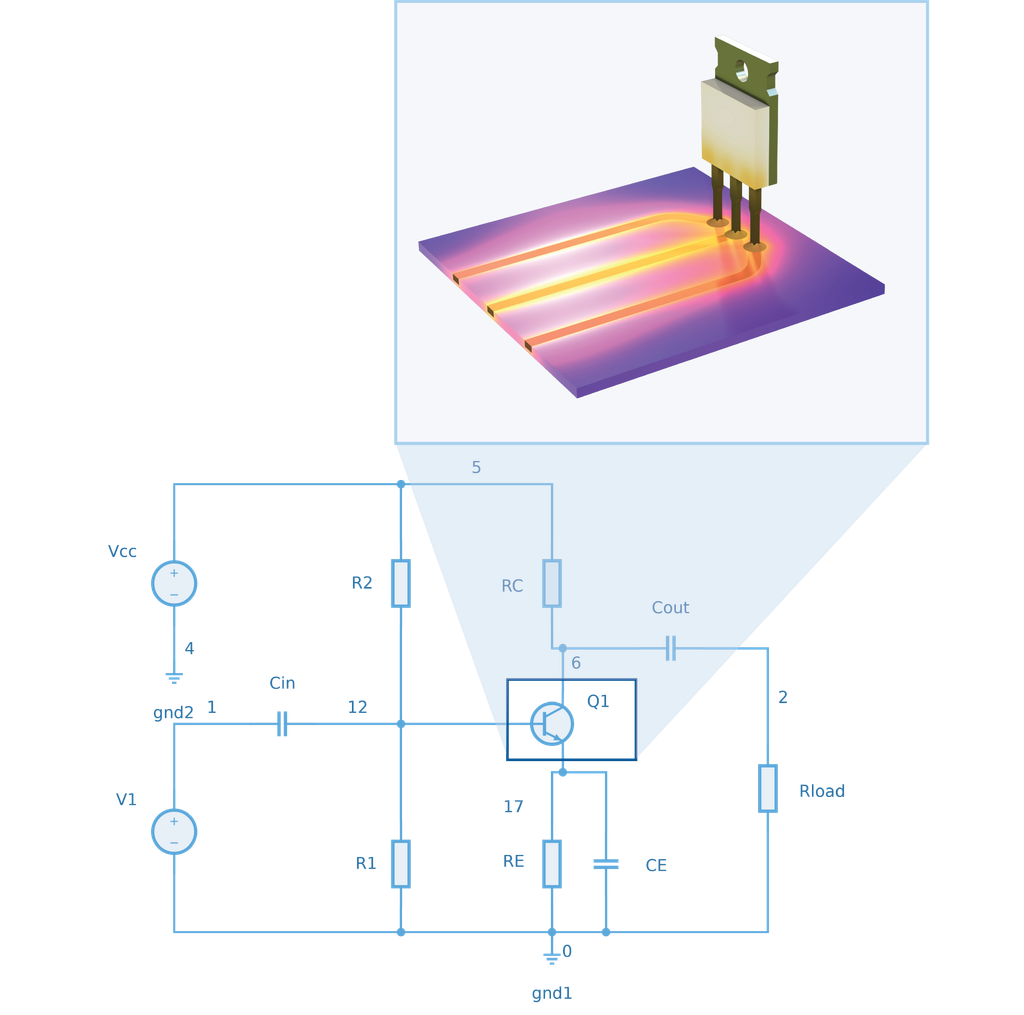
COMSOL Systems – A Hierarchical Modeling Platform
What It Is
COMSOL Systems introduces a drag‑and‑drop canvas where users can assemble electrical circuits, process flowsheets, and equation‑based system blocks from a library of ≈ 5 000 pre‑validated components. Each block can represent a simple resistor, a custom‑coded sub‑system, or an entire 3‑D multiphysics model.
How It Works
- Block‑level connectivity: Signals, mass flow, and energy links are defined graphically, allowing instantaneous propagation of boundary conditions.
- Hybrid coupling: When a block requires high‑resolution physics (e.g., thermal hotspots in a power transistor), the user can embed a detailed 3‑D COMSOL Multiphysics model directly inside the system diagram.
- Performance tracking: System‑level results (efficiency, power balance, etc.) are computed alongside localized field solutions, enabling trade‑off studies without rebuilding the entire model hierarchy.
MCP Server – AI‑Ready Simulation Engine
The Multiphysics Computing Platform (MCP) Server now exposes a RESTful API that external AI agents can query. Typical use cases include:
| Scenario | AI Interaction | Benefit |
|---|---|---|
| Real‑time process optimization | AI adjusts feed‑stock rates via API calls | Reduces iteration time from hours to seconds |
| Predictive maintenance | AI reads stress‑field outputs to forecast failure | Extends component life by 15‑20 % |
The server supports concurrent sessions for up to 64 simultaneous users, a 30 % increase over the 2026 release.
Electric Motor Module – From Concept to Prototype
The new module supplies:
- 2‑D winding‑level electromagnetic analysis (up to 10 000 mesh elements)
- 3‑D rotor‑stator thermal coupling with built‑in coolant channel modeling
- Performance maps (torque, efficiency, cogging torque) generated automatically across speed‑torque grids of up to 500 × 500 points
These tools target designers of BLDC, PMSM, and induction machines seeking integrated electromagnetic‑thermal‑structural simulations.
Time‑Periodic Solver – Tackling Oscillatory Phenomena
A dedicated time‑periodic (harmonic) solver is now part of the core suite. It handles:
- Plasma discharge cycles up to 1 GHz frequency resolution
- High‑frequency RF components with up to 10 000 harmonic terms
- MEMS resonators with quality factors (Q) exceeding 10 000
The solver reduces simulation time by up to 45 % compared with conventional time‑stepping for periodic problems.
Additional Enhancements
- Geometry: New Boolean operations and parametric sweep of CAD imports.
- Meshing: Adaptive mesh refinement with a target element size down to 0.5 µm for nano‑scale features.
- Productivity: Customizable keyboard shortcuts, batch job scripting, and a refreshed Application Builder UI now compatible with macOS 12 Monterey and Ubuntu 22.04 LTS.
Feature‑by‑Feature Comparison
| Feature | COMSOL 2026 | COMSOL 2027 |
|---|---|---|
| System‑level modeling (COMSOL Systems) | No dedicated environment | Full library of ~5 000 blocks, hybrid coupling |
| MCP Server API | Basic batch control | RESTful API, AI‑ready, 64 concurrent users |
| Electric Motor Module | Limited 2‑D only | 2‑D + 3‑D thermal, 500 × 500 performance maps |
| Time‑periodic solver | Manual Fourier post‑process | Native solver, up to 10 k harmonics |
| macOS / Linux support for App Builder | Windows only | macOS 12+, Linux Ubuntu 22.04 |
| Mesh element minimum size | 1 µm | 0.5 µm adaptive refinement |
| Solver speed improvement | Baseline | Up to 45 % faster for periodic cases |
Bottom Line
COMSOL Multiphysics 2027 marks a strategic shift toward system‑centric simulation, empowering engineers to couple detailed field physics with high‑level circuit and process models without sacrificing fidelity. The addition of an AI‑compatible MCP Server, a comprehensive electric motor toolbox, and a robust time‑periodic solver positions COMSOL as a one‑stop platform for next‑generation digital twins. Early adopters can expect shorter development cycles, deeper insight into cross‑domain interactions, and a smoother workflow across Windows, macOS, and Linux environments.