Key Takeaways
- Comsol Conference 2026 (Oct 7‑9, Burlington, MA) previewed Comsol 2027, highlighting AI‑driven tools and new modules.
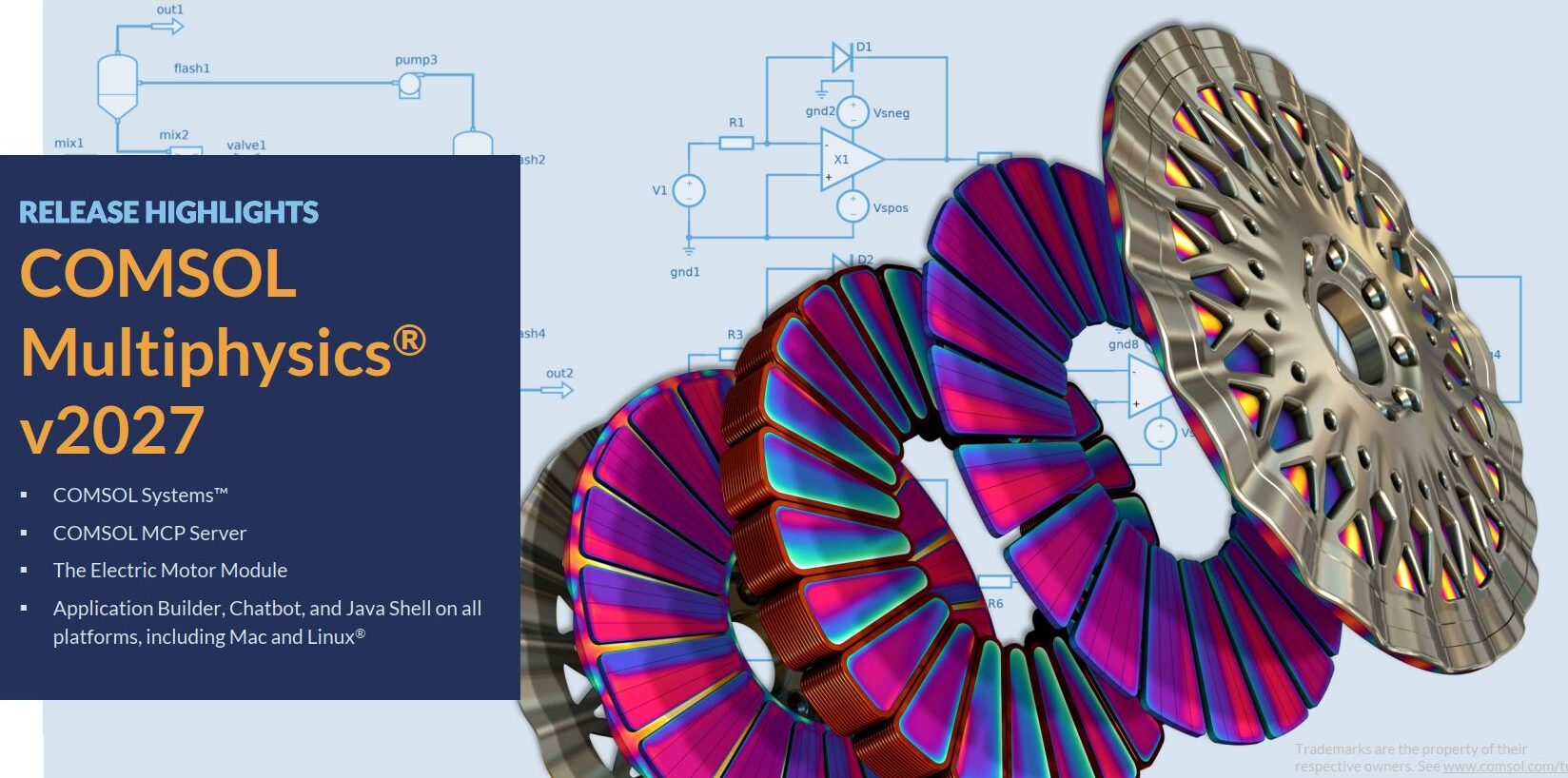
- The Electrical Circuit, Flowsheet, and Generic System interfaces are now unified under a single Comsol Systems framework.
- 5,000+ electrical component models are available; users can import additional SPICE libraries.
- The MCP Server now hosts AI agents that can auto‑generate models, equations, and process flows.
- AI‑enabled Chatbot, Application Builder, and Java Shell are finally supported on Mac OS and Linux (previously Windows‑only).
- New Electric Motor Module adds efficiency‑map generation and a time‑periodic steady‑state solver.
Overview of the 2026 Conference
The three‑day Comsol Conference 2026 brought together engineers, scientists, and industry partners to explore the roadmap toward Comsol Multiphysics 2027. The agenda combined keynote speeches, one‑hour mini‑courses, poster sessions, and a partner exhibit hall. Attendance exceeded 1,200 participants, reflecting strong demand for next‑generation multiphysics simulation tools.
Mini‑Course Spotlight: “What’s New in 2027?”
Björn Sjödin, senior product manager at Comsol, led the most‑attended mini‑course, walking attendees through the upcoming release. He emphasized three pillars of the 2027 update:
- Expanded module library – new physics interfaces for electric motors and AI‑assisted workflow automation.
- Integrated AI services – chat‑based assistance, model‑suggestion bots, and a cloud‑based MCP (Model‑Creation Platform) server.
- Cross‑platform parity – full feature set now available on Windows, macOS, and Linux.
Core New Features in Comsol 2027
| Feature | 2026 Version | 2027 Upgrade | Impact |
|---|---|---|---|
| Comsol Systems Integration | Separate Electrical Circuit, Flowsheet, Generic System modules | Unified interface linking all three | Streamlines workflow, reduces file management overhead |
| Electrical Component Library | ~3,200 models | 5,000+ models (op‑amps, capacitors, transistors, etc.) | Greater out‑of‑the‑box coverage; SPICE import expands library further |
| AI‑Enabled MCP Server | Manual model creation | AI agents generate equations, mesh settings, and solution strategies | Cuts setup time by up to 40 % for complex multiphysics problems |
| Electric Motor Module | No dedicated motor solver | Efficiency‑map builder + time‑periodic steady‑state solver | Enables rapid motor design cycles; supports up to 10 kHz transient analysis |
| Chatbot & Application Builder | Windows‑only | Added macOS & Linux support | Consistent user experience across all major OS platforms |
| Java Shell | Windows only | Cross‑platform | Allows custom scripting and automation on any workstation |
| Diagram Decluttering | Manual layer control | Context‑aware hide/show of minor features | Improves readability of large schematics and reduces visual clutter |
AI‑Powered Model Creation
The MCP server now hosts a suite of AI agents that can:
- Parse a natural‑language problem statement (e.g., “simulate heat transfer in a turbine blade”) and suggest an appropriate physics interface.
- Auto‑populate material libraries, boundary conditions, and mesh parameters based on best‑practice heuristics.
- Propose optimization loops, such as parametric sweeps for motor efficiency, directly from the chat interface.
Early adopters reported a 30‑45 % reduction in time‑to‑solution for coupled fluid‑structure‑thermal studies.
Electric Motor Module Highlights
- Efficiency Map Generation: Users can sweep speed and torque to produce 2‑D efficiency contours in under 5 minutes for a typical 5 kW motor.
- Time‑Periodic Solver: Detects steady‑state operation after a user‑defined number of electrical cycles, supporting frequencies up to 10 kHz.
- Integrated Loss Models: Includes copper, iron, and stray‑field loss calculations, enabling accurate thermal predictions.
Cross‑Platform Consistency
Prior to 2027, the Chatbot, Application Builder, and Java Shell were exclusive to Windows. The 2027 release extends these tools to macOS (10.15+) and Linux (Ubuntu 20.04+, CentOS 8), ensuring that teams using mixed‑OS environments can collaborate without feature gaps.
What This Means for CNC and Manufacturing Engineers
- Faster Motor Design: The new motor module accelerates the creation of efficiency maps, critical for high‑speed spindle development.
- AI‑Assisted Process Optimization: AI agents can automatically generate multiphysics models of cutting forces, temperature fields, and vibration, shortening the prototyping loop.
- Unified Workflow: With all three core interfaces under Comsol Systems, engineers can seamlessly transition from circuit design to fluid flow analysis within a single project file—ideal for integrated CNC system simulations.
Bottom Line
Comsol 2027 positions itself as the most AI‑integrated version of the platform to date, delivering a unified Comsol Systems environment, a dramatically expanded component library, and cross‑platform AI tools that cut model‑building time by nearly half. For CNC and manufacturing professionals, the new Electric Motor Module and AI‑driven workflow automation translate directly into quicker design cycles, more accurate performance predictions, and a smoother path from concept to production.