Key Takeaways
- Circuit protection shields equipment, prevents fires, and guarantees uptime from residential appliances to 345‑kV transmission grids.
- Overloads (≥ 80 % of rating) cause gradual heating, while short‑circuits can deliver > 10 kA in a few milliseconds.
- Devices differ by operating principle and application: fuses (fast‑acting), thermal‑magnetic breakers, GFCIs (5 mA trip), AFCIs (0.1 s arc detection), SPDs (clamp ≈ 400 V), and medium‑voltage digital relays.
- Coordinated protection and smart‑grid automation reduce fault clearing times by 30‑50 % and improve overall system resilience.
Learning Objectives
Understand Why Protection Matters
- Recognize how overloads, short circuits, ground faults, and voltage surges jeopardize wiring, motors, and control electronics.
- See how protective devices interrupt fault currents before damage escalates.
Distinguish Core Technologies
- Compare fuses, circuit breakers, ground‑fault circuit interrupters (GFCIs), arc‑fault circuit interrupters (AFCIs), surge‑protective devices (SPDs), and medium‑voltage (MV) relays.
Appreciate Coordinated, Smart Protection
- Learn how hierarchical settings and digital communication (IEC 61850) enable selective tripping and rapid restoration in complex MV networks.
Electrical Insights
- Fundamental components: meltable‑element fuses, thermal‑magnetic breakers, motor starters, and electromechanical/solid‑state relays.
- Modern safety gear: GFCIs (trip at 5 mA ground‑fault current), AFCIs (detect arcing within 0.1 s), and SPDs (limit transient over‑voltages to ≤ 400 V).
- Trend: Integration of IoT‑ready relays and cloud‑based analytics to predict failures before they occur.
Why Electrical Protection Is Essential
Electricity behaves like water in a pipe: current is the flow, voltage is the pressure, and impedance is the pipe’s resistance. When the balance is disturbed, faults arise.
| Fault Type | Typical Cause | Current Level | Typical Damage |
|---|---|---|---|
| Overload | Excessive load (e.g., too many devices on one branch) | 80‑100 % of rated current, sustained | Insulation breakdown, fire risk |
| Short‑Circuit | Conductors touch, damaged insulation | 5 kA‑10 kA (utility‑grade) in < 5 ms | Arc flash, equipment destruction |
| Ground Fault | Current leaks to earth (wet locations) | 5‑30 mA (human‑safety threshold) | Shock hazard, equipment failure |
| Voltage Surge | Lightning, switching transients | Up to 2 × system voltage | Dielectric breakdown, data loss |
Protection Technologies – A Quick Comparison
| Device | Operating Principle | Typical Rating | Trip Time | Ideal Application |
|---|---|---|---|---|
| Fuse (Class H) | Melts when I²t exceeds design | 5 A‑600 A (low‑voltage) | 0.01‑0.2 s | Motor circuits, UPS |
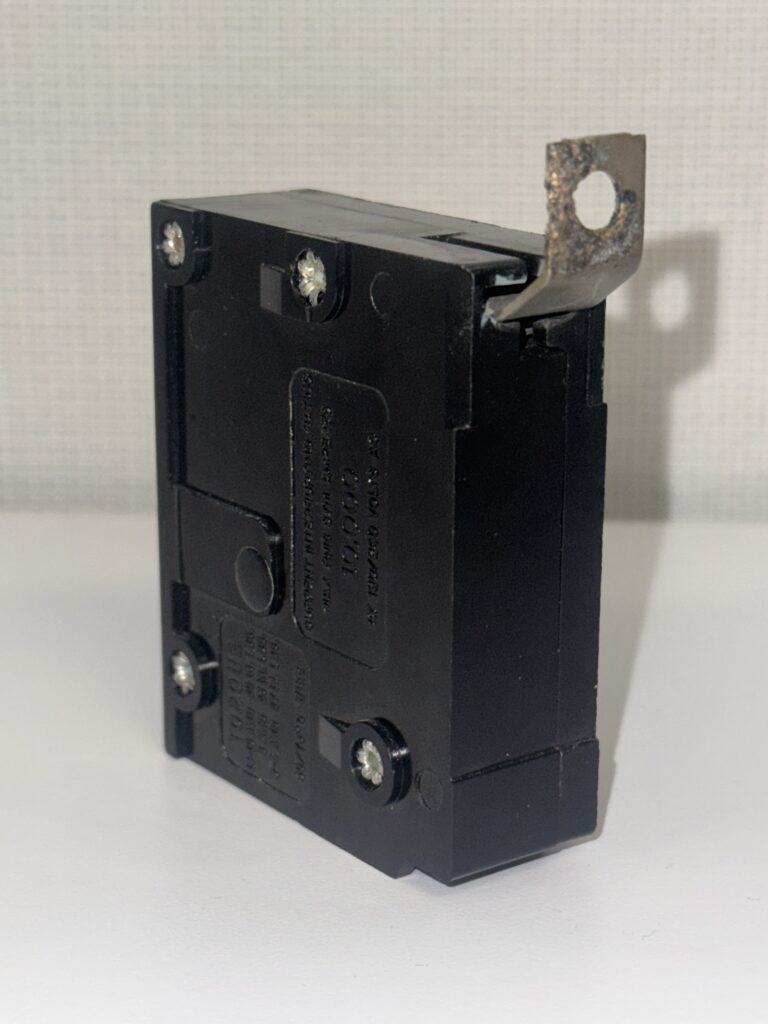
| Thermal‑Magnetic Breaker | Bimetal snap + magnetic latch | 15 A‑400 A | 0.1‑2 s (thermal) / < 0.02 s (magnetic) | Residential & commercial panels |
| GFCI | Detects 5 mA imbalance | 15 A‑20 A | ≤ 0.04 s | Wet locations, kitchens |
| AFCI | Analyzes waveform for arcing signatures | 15 A‑20 A | ≤ 0.1 s | Bedrooms, living rooms |
| SPD (Type 2) | Clamps transient to ≤ 400 V | 10 kA‑40 kA surge current | < 1 µs | Service entrance, data centers |
| Digital MV Relay | Microprocessor‑based logic, IEC 61850 comms | 2.3 kV‑38 kV | < 0.02 s (instantaneous) | Substations, industrial plants |
Coordinated Protection & Smart Grids
- Selectivity – By grading time‑current curves (e.g., upstream breaker set 1.5× downstream), only the nearest device trips, preserving downstream loads.
- Digital Relaying – Modern IEC 61850 relays log fault energy, communicate with SCADA, and support auto‑reclose sequences, cutting average outage from 12 min to ≈ 6 min.
- Predictive Analytics – Machine‑learning models ingest relay event logs to forecast insulation aging, extending equipment life by up to 20 %.
Bottom Line
Circuit protection is the silent workhorse that keeps electrical systems—from a single countertop outlet to a 345‑kV transmission substation—operating safely and reliably. By matching the right device to the fault type, coordinating settings across the network, and leveraging digital relays for real‑time insight, engineers can dramatically reduce fire risk, equipment downtime, and maintenance costs. Investing in a layered, smart protection strategy is no longer optional; it’s a cornerstone of modern power system resilience.


