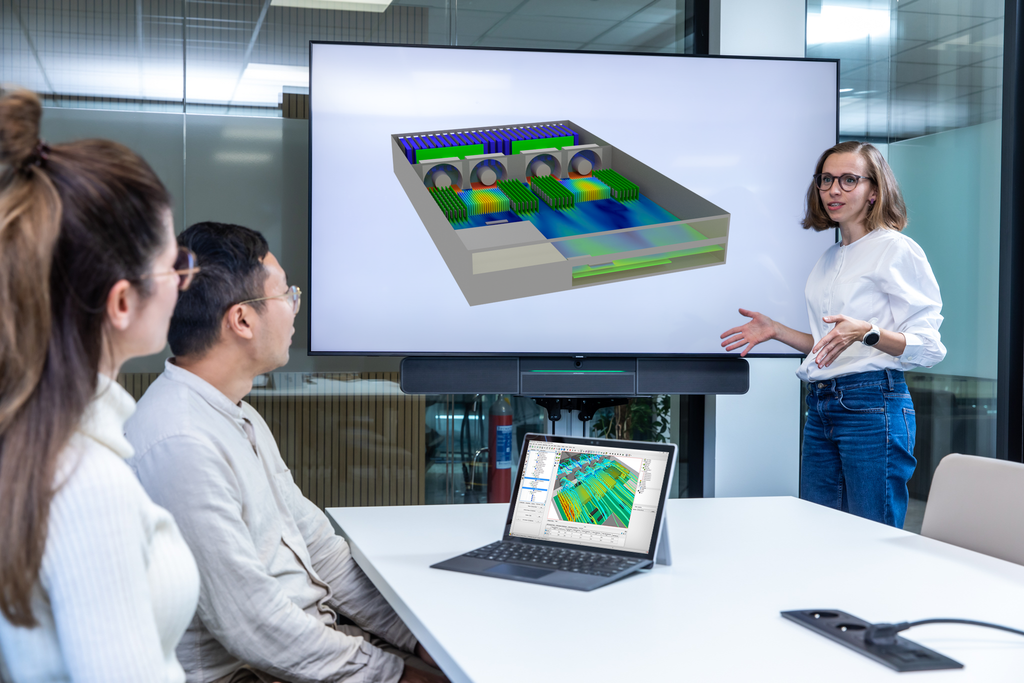
Key Takeaways
- Siemens’ latest Simcenter suite cuts pre‑simulation preparation time by up to 70 %.
- Integrated digital‑twin, AI‑driven geometry cleanup, and HPC‑scaled solvers enable 10‑15× faster design‑iteration cycles.
- Early‑stage simulation reduces late‑stage rework costs by an estimated 15–20 % on complex electromechanical products.
- The approach replaces “post‑hoc” validation with a continuous, data‑rich decision loop.
Why Simulation Has Become a Bottleneck
Modern products now blend mechanics, thermals, electromagnetics, and fluid dynamics. Ravi Shankar, Director of Solutions & Technical Marketing at Siemens, notes that multi‑physics complexity forces engineers to run dozens of analyses per design. The primary delay stems from model preparation—cleaning CAD geometry, repairing gaps, and generating high‑quality meshes. In legacy workflows, this can consume 4–6 hours per iteration, throttling the speed at which teams can explore alternatives.
When tools cannot keep pace with design decisions, engineers fall back on intuition or defer simulation until the final validation stage. Late‑discovered issues trigger costly redesigns, schedule slips, and erode product profitability.
Three Pillars That Move Simulation Forward
1. Digital Twin as a Live Design Backbone
Siemens treats the digital twin as a single source of truth that evolves with every CAD change. The twin stores:
| Feature | Traditional Approach | Siemens Digital‑Twin Workflow |
|---|---|---|
| Data versioning | Manual file copies, limited traceability | Automated metadata linking to CAD, CAE, and PLM |
| Cross‑discipline sharing | Separate thermal/structural models | Unified model variants accessed by all teams |
| Update latency | Hours‑to‑days after geometry change | Seconds to minutes via real‑time sync |
Because all analyses reference the same underlying geometry, a change in a cooling channel instantly propagates to structural stress, vibration, and electromagnetic models—eliminating the “old‑version” review problem.
2. AI‑Assisted Geometry Cleanup & Mesh Generation
Siemens’ AI‑Clean module leverages convolutional neural networks trained on millions of CAD parts. Reported outcomes include:
- 70 % reduction in manual cleanup time (from ~30 min to ~9 min per part).
- 30 % higher mesh quality measured by element skewness and aspect‑ratio metrics, which translates to faster convergence in solvers.
The AI engine also predicts optimal mesh densities based on local physics gradients, allowing engineers to skip trial‑and‑error meshing cycles.
3. High‑Performance Computing (HPC) at Scale
The newest Simcenter release integrates with Siemens’ Xcelerate HPC cloud, offering:
- Up to 1,024 CPU cores or 256 GPU accelerators per simulation job.
- 10–15× speed‑up for coupled thermal‑structural analyses compared with on‑premise workstation runs.
- Elastic scaling that matches the number of design variants, keeping total wall‑clock time under 2 hours for a full parametric sweep.
Together, AI‑cleaned geometry and HPC‑scaled solvers compress a typical design‑iteration loop from 48 hours (traditional) to 3–4 hours.
Implementing Early‑Stage Simulation in Practice
- Create the baseline digital twin in Siemens Teamcenter, linking CAD assemblies to metadata tags.
- Run AI‑Clean on incoming geometry; the tool flags and repairs non‑manifold edges, duplicate faces, and ambiguous constraints.
- Generate physics‑aware meshes automatically; set target element size based on heat‑flux gradients or stress concentrations.
- Dispatch the simulation to Xcelerate HPC; monitor convergence via the Simcenter web portal.
- Review results in the same twin environment; any design change triggers an automatic re‑run of affected analyses.
This closed loop enables design teams to evaluate 10–12 alternatives per day, a pace previously reserved for concept sketching.
Bottom Line
Siemens is reshaping product development by front‑loading simulation through a tightly coupled trio of digital twins, AI‑driven model preparation, and on‑demand high‑performance computing. The result is a dramatic acceleration of design‑iteration cycles, reduced reliance on late‑stage validation, and measurable cost savings on complex, multi‑physics products. Companies that adopt this workflow can expect faster time‑to‑market and a stronger competitive edge in an era where engineering speed is as critical as engineering excellence.