Key Takeaways
- VMP secures CNY 100 million Series C+ funding to expand its metal‑powder park, targeting 3 000 t/yr Ti, 5 000 t/yr Cu, 2 000 t/yr Al output.
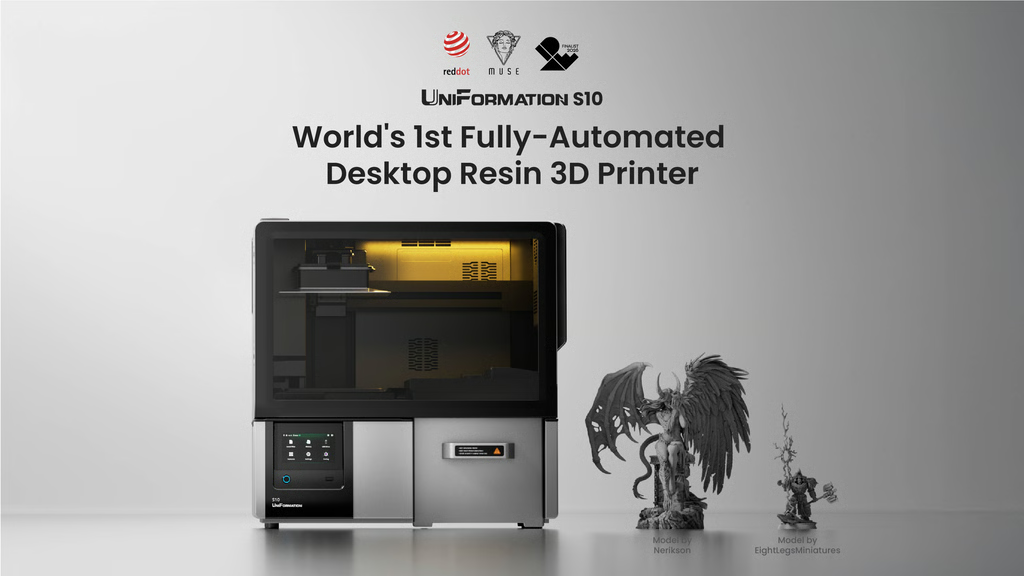
- UniFormation’s S10 desktop resin printer integrates printing, washing and warm‑air drying in one unit; 16K LCD, 223 × 126 × 200 mm build volume, Kickstarter launch at US$999 (delivery Mar 2027).
- Snapmaker + Phaetus introduce a high‑flow hot‑end for the Snapmaker U1, boosting melt‑rate and extrusion stability for demanding filament prints.
- Australia grants regulatory clearance for 3‑D‑printed helicopter components, signaling a new compliance pathway for aerospace additive manufacturing in the region.
AMPulse Asia: Funding, New Machines and Regulatory Wins Redefine APAC Additive Manufacturing
The latest AMPulse Asia briefing spotlights three pivotal developments across the Asia‑Pacific: a capital injection that fuels China’s metal‑powder capacity, a Japanese‑engineered desktop resin printer that automates post‑processing, and Australia’s historic approval of 3‑D‑printed helicopter parts. Together, these moves tighten the link between material supply, machine innovation, and end‑use certification.
China’s Metal‑Powder Push
VMP Raises CNY 100 M to Accelerate Phase IV Expansion
On 11 Oct, VMP announced the close of a CNY 100 million (≈ US$14 M) Series C+ round led by Jiangsu State‑owned Capital Investment and Suneng. The capital will finance Phase IV of VMP’s industrial park, adding:
| Material | Planned Annual Capacity (tonnes) |
|---|---|
| Titanium | 3 000 |
| Copper | 5 000 |
| Aluminum | 2 000 |
The upgrade will lift VMP’s total output to roughly 10 000 t/yr, positioning it among the top five powder suppliers in mainland China and narrowing the gap with global leaders such as Höganäs (≈ 12 000 t/yr) and LPW (≈ 9 500 t/yr).
Why It Matters for CNC Milling
Higher‑volume, high‑purity powders enable more consistent feedstock for laser‑based powder bed fusion (PBF) and direct energy deposition (DED) processes that produce near‑net‑shape metal blanks for subsequent CNC milling. The expanded supply chain reduces lead times for aerospace and medical OEMs that rely on hybrid additive‑subtractive workflows.
Japan’s Integrated Resin Printer
UniFormation S10: Automation Meets Desktop Footprint
UniFormation unveiled the S10 on 10 Oct, a desktop SLA system that bundles three stages—printing, solvent washing, and warm‑air drying—into a single chassis. Key specifications:
- LCD resolution: 16 K (3840 × 2160)
- Build envelope: 223 × 126 × 200 mm (L × W × H)
- Layer thickness: 25–100 µm (adjustable)
- Material compatibility: Standard 405 nm UV resins, up to 1.2 g cm⁻³
The unit will launch on Kickstarter 22 Oct with a US$999 pledge tier; estimated shipping is Mar 2027. Users still perform manual support removal and a final UV cure, but the integrated wash/dry cycle cuts post‑processing time by ≈ 40 % compared with conventional desktop SLA rigs.
Comparison: S10 vs Typical Desktop SLA
| Feature | UniFormation S10 | Standard Desktop SLA |
|---|---|---|
| Build volume (mm) | 223 × 126 × 200 | 140 × 79 × 150 |
| LCD resolution | 16 K (3840 × 2160) | 8 K (1920 × 1080) |
| Integrated wash/dry | Yes (auto) | No (manual) |
| Price (US$) | 999 (Kickstarter) | 1 200–1 500 |
| Delivery | Mar 2027 | 3–4 months after order |
The S10’s larger envelope and higher pixel density make it attractive for low‑volume functional prototypes that will later undergo CNC milling for tight tolerances.
Snapmaker & Phaetus: High‑Flow Hot‑End for the U1
Snapmaker partnered with filament‑specialist Phaetus to release a high‑flow hot‑end compatible with the Snapmaker U1. The new nozzle features a 0.8 mm orifice and a re‑engineered thermal block that sustains melt temperatures up to 260 °C without thermal lag. Reported extrusion rates climb from 5 mm³/s (stock) to 12 mm³/s, enabling faster prints of high‑strength PETG, NylonX, and carbon‑filled PLA—materials often used for pre‑machined blanks before CNC finishing.
Australia’s Regulatory Green Light
The Civil Aviation Safety Authority (CASA) granted the first-ever approval for 3‑D‑printed helicopter components (a titanium rotor hub) to enter service on a commercial aircraft. The decision follows a risk‑based assessment that validated the additive process (EBM) against AS9100 and ISO 9001 standards. This milestone opens the door for Australian OEMs to certify additive‑manufact


