Key Takeaways
- AMD Versal TR (Tamper‑Resistant) devices embed a dedicated sensor die that shields the entire silicon backside against invasive attacks.
- The protection die is 3‑D active‑on‑active bonded to the compute die, enabling real‑time tamper detection and automatic boot‑stop.
- Performance is unchanged: up to 8 AI Engine cores, 4 scalar cores (2.5 GHz), 2.5 TFLOPs FP16, and 1.5 TB/s memory bandwidth—identical to the non‑TR Versal AI Edge Gen 2.
- Power, size, weight, and time‑to‑market remain comparable to standard Versal parts, making TR devices a drop‑in security upgrade for data‑center, fintech, defense, and industrial edge workloads.
AMD Launches Versal TR: Built‑In Physical‑Attack Protection
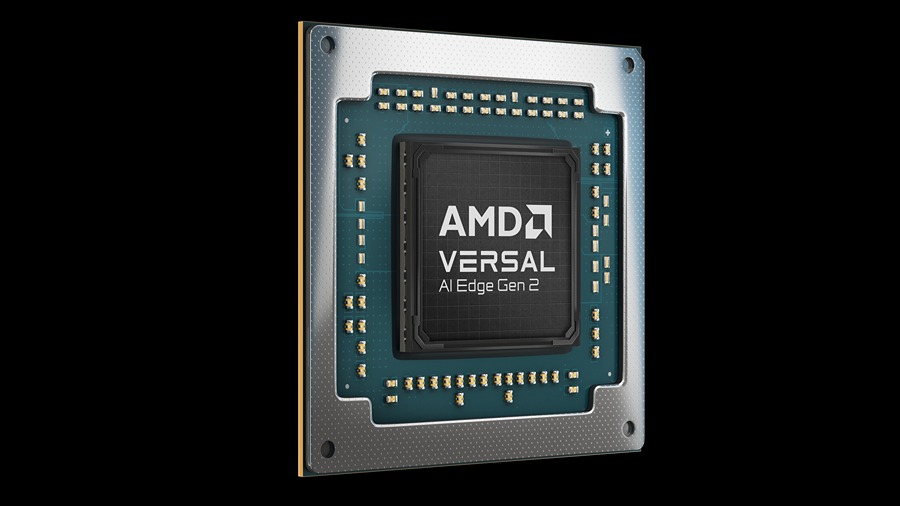
AMD announced the Versal TR (Tamper‑Resistant) family, the first adaptive SoC/FPGA devices that protect the silicon backside from sophisticated physical attacks [¹][²]. The new line builds on the Versal AI Edge Series Gen 2 platform, preserving its heterogeneous compute fabric while adding a sensor‑based security layer.
What Is Inside a Versal TR Device?
3‑D Active‑On‑Active Sensor Die
- Bonded directly to the compute die using AMD’s proprietary 3‑D active‑on‑active stacking technology.
- Covers 100 % of the backside of the compute die, eliminating exposure to probing, focused ion‑beam, or laser‑cut attacks.
Multi‑Modal Tamper Sensors
| Sensor Type | Detectable Event | Typical Sensitivity |
|---|---|---|
| Voltage/Current | Power‑line intrusion or glitching | ±5 mV |
| Temperature | Hot‑plug or thermal probing | ±0.2 °C |
| Light/Optical | Backside illumination attempts | ≤ 0.1 lux |
| Mechanical Stress | Die‑level bending or drilling | ≤ 10 µstrain |
If any sensor reports an out‑of‑spec condition, the protection logic forces a boot halt and erases volatile keys stored in the on‑die secure enclave.
Integration with Versal Compute Fabric
- Embedded CPUs: Up to 4 x Arm Cortex‑A72 cores, 2.5 GHz each.
- AI Engines: 8 × AI Engine clusters delivering 2.5 TFLOPs (FP16).
- Programmable Logic: Up to 400 K LUTs, 2 Mbits of BRAM.
- Memory Interface: 1.5 TB/s DDR5/LPDDR5 bandwidth, supporting up to 64 GB external memory.
All these resources are identical to the standard Versal AI Edge Gen 2, meaning existing designs can migrate to the TR variant without redesign.
Why Physical‑Attack Protection Matters
From data‑center networking to financial‑technology (FinTech) gateways, defense avionics, and critical industrial control, attackers increasingly target the silicon layer to extract cryptographic keys or inject malicious firmware. Traditional mitigations—metal enclosures, epoxy coating, or external tamper switches—add billions of dollars in BOM and significant design latency. Versal TR provides an on‑die, silicon‑native solution that:
- Reduces Bill of Materials (BOM) by up to 30 % compared with external tamper enclosures.
- Cuts time‑to‑market by 6–8 weeks, eliminating the need for custom ASIC security blocks.
- Maintains thermal envelope (max 95 °C junction) and power envelope (≤ 45 W) identical to non‑TR parts.
Versal TR vs. Standard Versal AI Edge Gen 2
| Feature | Versal AI Edge Gen 2 (Standard) | Versal TR (Tamper‑Resistant) |
|---|---|---|
| Compute Cores | 4 × Cortex‑A72 @ 2.5 GHz | Same |
| AI Engines | 8 clusters (2.5 TFLOPs FP16) | Same |
| Logic Capacity | 400 K LUTs | Same |
| Memory Bandwidth | 1.5 TB/s DDR5 | Same |
| Power (Typical) | 45 W | Same |
| Physical‑Attack Protection | None (external only) | Built‑in 3‑D sensor die, backside coverage |
| Boot‑Fail on Tamper | No | Yes (immediate halt) |
| BOM Impact | Baseline | + ~5 % for sensor die (offset by external‑tamper savings) |
| Design Lead Time | 12–14 weeks | 6–8 weeks (no extra security IP) |
Real‑World Use Cases
| Market | Typical Threat | How Versal TR Helps |
|---|---|---|
| Data‑Center Switches | Side‑channel probing of encryption keys | Immediate boot stop prevents key leakage. |
| FinTech Transaction Nodes | Physical access by insider attackers | Sensor die logs tamper events for forensic audit. |
| Defense Radar/Comms | Battlefield laser/ion‑beam attacks | Backside shielding blocks line‑of‑sight attacks. |
| Industrial IoT Gateways | Remote tampering |