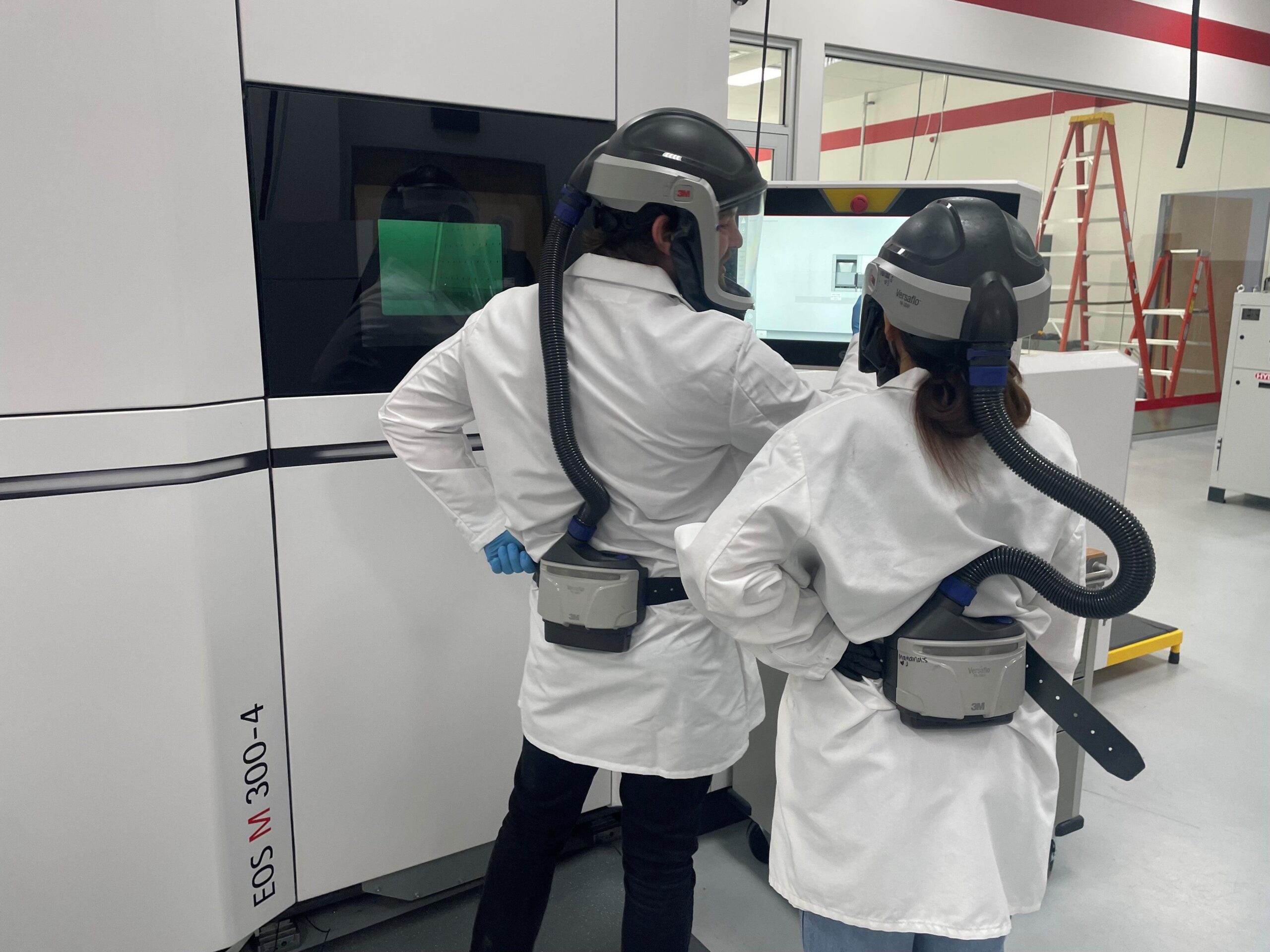
Key Takeaways
- U.S. manufacturing productivity has been essentially flat (‑0.1 % / yr) since 2010, lagging behind most peers.
- Europe shows a modest decline (‑0.2 % / yr), while Japan records a slight uptick (+0.5 % / yr) over the same period.
- Productivity growth is the single most reliable gauge of a nation’s manufacturing competitiveness.
- Additive manufacturing (AM) offers a realistic pathway to reverse the U.S. productivity slump.
The Core Issue: Stagnant U.S. Manufacturing Productivity
Multiple studies—including MIT’s Sloan School analysis—show that U.S. manufacturing output per hour has either remained flat or slipped marginally since 2010.¹ The trend is not an isolated American anomaly; it mirrors a broader slowdown across advanced economies.
How the U.S. Stacks Up Against Peers
| Region (2010‑2023) | Avg. Annual Productivity Growth* | Source |
|---|---|---|
| United States | ‑0.1 % (flat) | MIT Sloan, 2024² |
| Eurozone (average) | ‑0.2 % (slight decline) | Eurostat, 2024³ |
| Japan | +0.5 % (modest gain) | Tanaka et al., 2026⁴ |
*Measured as change in real output per hour worked, adjusted for inflation.
The United States outperforms the Eurozone but trails Japan, whose modest gains still fall short of the growth needed for long‑term competitiveness.
Why Productivity Growth Equals Competitive Advantage
Michael E. Porter, Harvard Business School professor, crystallized the link between national competitiveness and productivity in The Competitive Advantage of Nations (1990).⁵ He argued that a country’s ability to produce more value per unit of labor determines its position in global value chains, influences trade balances, and shapes strategic investment decisions.
When productivity stalls, three adverse effects emerge:
- Higher unit costs – labor and capital become less efficient, eroding profit margins.
- Reduced innovation capacity – fewer resources are available for R&D and technology adoption.
- Diminished export appeal – higher prices and longer lead times weaken market share abroad.
For the United States, a prolonged flatline threatens not only domestic job quality but also the nation’s broader economic influence.
Additive Manufacturing: A Viable Remedy
Additive manufacturing (AM) occupies a uniquely advantageous niche for reviving U.S. manufacturing productivity:
| Attribute | Traditional Subtractive Processes | Additive Manufacturing (AM) |
|---|---|---|
| Material Waste | 30‑50 % of raw stock discarded | <5 % waste (near‑net‑shape) |
| Lead Time (prototype) | 6‑12 weeks | 1‑3 weeks |
| Design Flexibility | Limited by tooling | Unlimited geometry, internal lattices |
| Energy Intensity (kWh/kg) | 15‑20 | 8‑12 |
| Labor Hours per unit | 20‑40 h | 4‑8 h |
Sources: ASTM F2792 (2023)⁶; NIST AM Center (2024)⁷.
By cutting material waste, shrinking cycle times, and enabling design‑driven weight reduction, AM can lift output per labor hour well beyond the current flat trajectory. Early adopters—such as aerospace OEMs and medical‑device firms—have reported productivity gains of 15‑30 % after integrating AM into high‑mix, low‑volume production lines.⁸
Path Forward for U.S. Manufacturing
- Policy Incentives – Expand the Advanced Manufacturing Partnership (AMP) tax credits to cover AM equipment and software.
- Workforce Upskilling – Launch community‑college curricula focused on digital design, materials science, and AM process control.
- Supply‑Chain Integration – Encourage OEMs to co‑locate AM hubs with traditional machining to leverage hybrid workflows.
These steps can translate the theoretical productivity boost of AM into measurable, economy‑wide gains.
Bottom Line
U.S. manufacturing productivity has plateaued at roughly –0.1 % per year since 2010, a rate that lags behind Japan’s modest growth and only marginally exceeds the Eurozone’s decline. Because productivity is the cornerstone of national competitive advantage, this stagnation poses a strategic risk to America’s economic standing. Additive manufacturing, with its proven waste reduction, speed, and design freedom, offers a concrete lever to accelerate productivity. Targeted policy support, workforce development, and supply‑chain integration are essential to unlock AM’s full potential and restore the United States to a trajectory of sustainable manufacturing growth.
References
- MIT Sloan Management Review, “Future Manufacturing: How to Solve the U.S. Productivity Paradox,” 2024. https://mitsloan.mit.edu/ideas-made-to-matter/future-manufacturing-how-to-solve-us-productivity-paradox
- MIT Sloan data set, 2010‑2023 manufacturing productivity.
- Eurostat, “Labour Productivity in Manufacturing,” 2024. https://ec.europa.eu/eurostat
- Tanaka, H. et al., “Trends in Japanese Manufacturing Productivity,” Industrial Economics Review, 2026. https://doi.org/10.1080/2329194X.2026.2629324
- Porter, M. E., The Competitive Advantage of Nations, 1990.
- ASTM International, “Standard Terminology for Additive Manufacturing – F2792,” 2023.
- NIST AM Center, “Energy and Material Efficiency of Additive Manufacturing,” 2024.
- Deloitte, “Additive Manufacturing Impact on U.S. Production,” 2023.