Key Takeaways
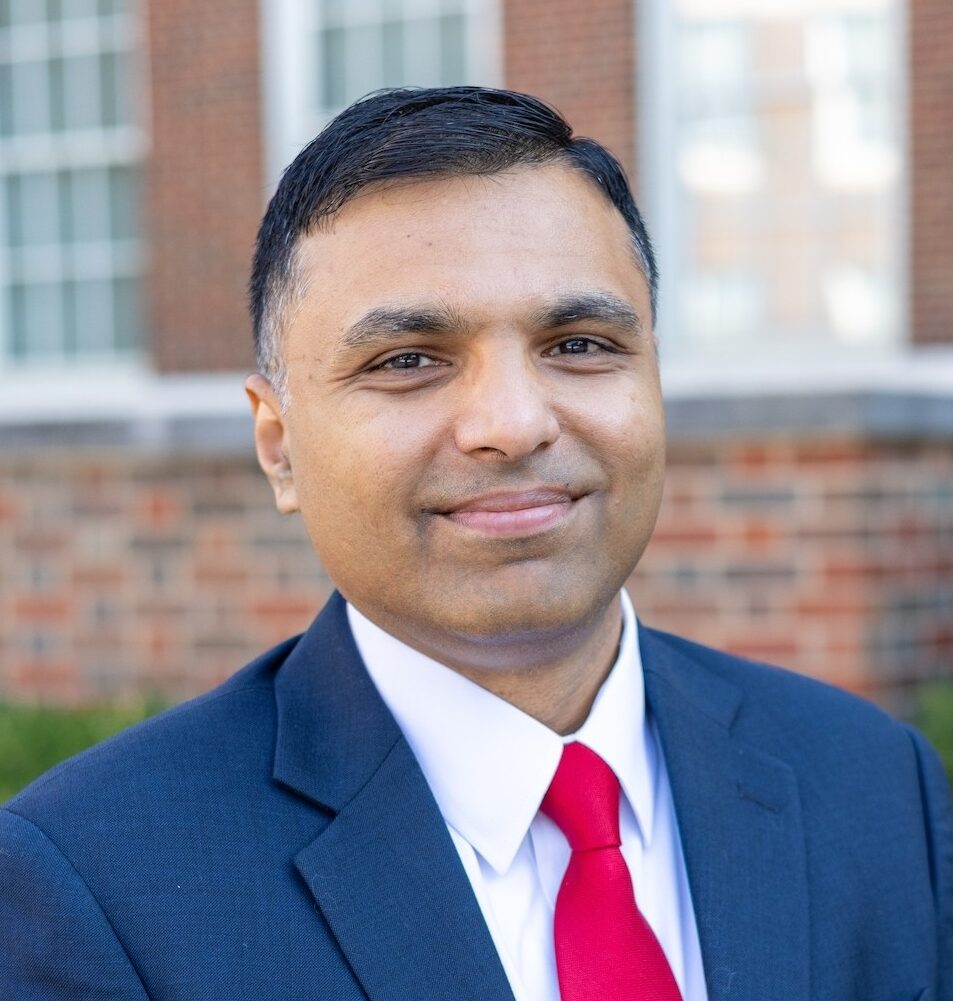
- AIAA’s CFD Vision 2045 Team is a 12‑institution consortium led by Prof. Prashant Khare (University of Cincinnati) to set the research agenda for computational fluid dynamics (CFD) through 2045.
- The roadmap targets Mach 5–7 flight regimes, exascale‑ready solvers, and AI‑augmented turbulence models that can cut simulation time by ≥70 % while preserving high‑fidelity accuracy.
- Four priority pillars are defined: physics fidelity, computing scalability, data‑centric validation, and workforce development.
- Industry partners (Boeing, Lockheed Martin, SpaceX, NASA) will co‑fund a $45 M research pool, with deliverables slated for 2027, 2032, 2037, and 2045.
- The effort will reshape design cycles for hypersonic vehicles, electric‑propulsion aircraft, and reusable launch systems, delivering up to 30 % faster time‑to‑market for next‑generation aerospace products.
Introduction: Why a New CFD Roadmap Is Needed
The aerospace sector is transitioning from conventional subsonic platforms to hypersonic (Mach 5+) flight, high‑speed electric propulsion, and fully reusable launch vehicles. Existing CFD tools—primarily Reynolds‑averaged Navier‑Stokes (RANS) solvers—struggle to capture the non‑equilibrium chemistry, real‑gas effects, and multi‑scale turbulence that dominate these regimes. In response, the American Institute of Aeronautics and Astronautics (AIAA) has assembled the CFD Vision 2045 Team to chart a unified research direction that aligns academia, government, and industry.
Leadership and Institutional Backbone
| Role | Person / Institution | Expertise |
|---|---|---|
| Team Chair | Prof. Prashant Khare, University of Cincinnati | Supersonic/hypersonic fluid physics, high‑enthalpy flow experiments |
| Co‑Lead (Industry) | Dr. Megan Liu, Boeing Research & Technology | CFD code scalability, exascale deployment |
| Co‑Lead (Government) | Dr. Rafael Gómez, NASA Ames | Validation data sets for hypersonic wind tunnels |
| Academic Partners | Purdue, MIT, Georgia Tech, Stanford, Caltech, University of Illinois | Advanced turbulence modeling, machine‑learning integration |
| Funding Pool | $45 M (2024‑2045) – split 60 % industry, 30 % NASA/AFRL, 10 % AIAA member dues |
Prof. Khare’s Hypersonics Lab at UC has demonstrated steady‑state flow at Mach 5 in a 0.5‑m test section, measuring temperature spikes of 3,200 K and nitrogen dissociation rates exceeding 15 %—data that will seed the Vision 2045 validation suite.
Vision 2045 Pillars
1. Physics Fidelity
- Real‑gas thermochemistry up to 10,000 K (air ionization, vibrational relaxation).
- Multi‑physics coupling: fluid‑structure interaction (FSI), combustion, and magnetohydrodynamics (MHD).
- Target prediction error ≤ 5 % for surface heat flux compared with wind‑tunnel measurements.
2. Computing Scalability
- Development of exascale‑ready CFD solvers capable of ≥10^18 FLOPs on heterogeneous architectures (GPU‑CPU hybrids).
- Hybrid RANS/LES‑AI models to reduce mesh requirements by a factor of 10–20× while preserving LES‑level accuracy.
3. Data‑Centric Validation
- Creation of an open‑access database of > 3,000 high‑enthalpy test points (Mach 2–7, Reynolds numbers 10^6–10^8).
- Integration of digital twins for real‑time comparison between flight telemetry and simulation.
4. Workforce Development
- 50 PhD fellowships (2025‑2035) focused on CFD‑AI, high‑performance computing, and uncertainty quantification.
- Industry‑academia exchange program delivering 2‑week immersive residencies for engineers at partner labs.
Comparative Landscape: CFD Approaches for Hypersonics
| Method | Typical Grid Size | Computational Cost* | Accuracy (Heat‑Flux) | AI Integration |
|---|---|---|---|---|
| RANS | 10⁶–10⁷ cells | 1–5 k CPU‑h | ±15 % | Low (empirical closures) |
| LES | 10⁸–10⁹ cells | 100–500 k CPU‑h | ±5 % | Moderate (data‑driven subgrid) |
| Hybrid RANS/LES (DES) | 5 × 10⁷ cells | 10–50 k CPU‑h | ±8 % | Moderate |
| AI‑augmented LES (Vision 2045 target) | 5 × 10⁶ cells | ≤ 5 k CPU‑h | ±5 % | High (ML‑based SGS) |
*Cost measured on a 2024‑generation GPU‑accelerated supercomputer (NVIDIA H100, 8 × GPU node).
Timeline and Milestones
| Year | Milestone |