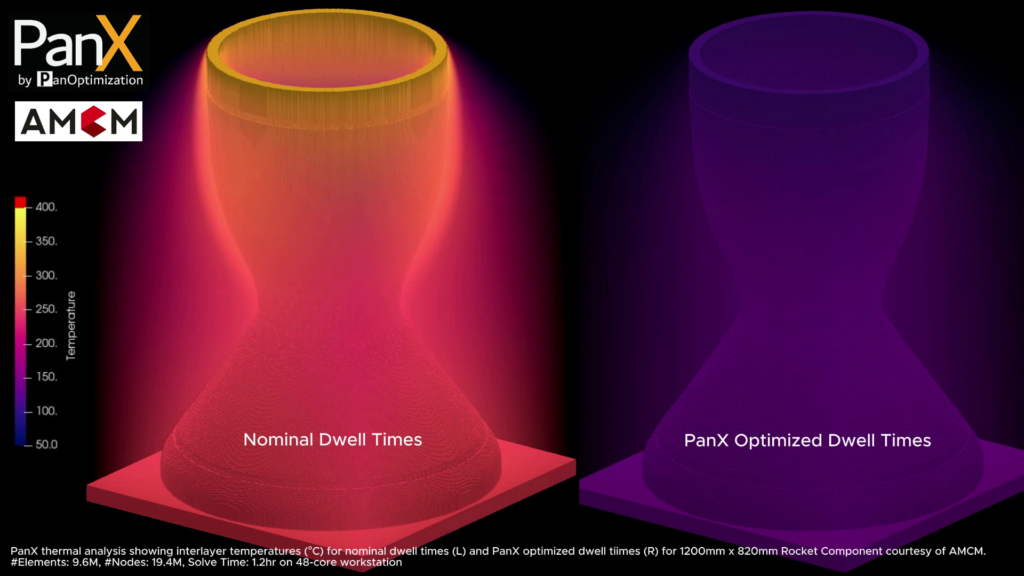
Key Takeaways
- PanOptimization’s PanX simulation platform predicts thermal‑mechanical behavior of metal AM builds before the first laser fires.
- The software delivers full‑part and full‑build analysis, cutting down trial‑and‑error cycles by up to 30 % according to early adopter data.
- Integrated with Nikon SLM Solutions hardware, PanX can simulate a 200 mm × 200 mm × 200 mm build in ≈ 15 min on a 32‑core workstation, a 5‑fold speed gain vs. conventional finite‑element runs.
- By moving decision‑making “up‑stream,” manufacturers can lower material waste (≈ 15 kg of powder per failed job) and shorten part‑qualification timelines from weeks to days.
PanOptimization Unveils PanX at Formnext 2026
Formnext 2026, the premier additive‑manufacturing exhibition in Frankfurt, is already generating buzz across the 3‑D‑printing community. Among the most talked‑about solutions is PanX, the newest simulation suite from PanOptimization. The company argues that waiting for a build to fail before learning from it is both costly and inefficient—especially in metal AM, where a single defective batch can waste dozens of kilograms of powder and dozens of machine hours.
Why Simulation Matters in Metal AM
Metal powder‑bed fusion (PBF) processes such as selective laser melting (SLM) are highly sensitive to thermal gradients, residual stresses, and powder‑bed heterogeneity. Traditional workflows rely on:
| Conventional Approach | PanX‑Enabled Workflow |
|---|---|
| Post‑build inspection → manual re‑tuning | Physics‑based thermo‑mechanical prediction → pre‑print parameter optimization |
| 2–4 weeks part‑qualification | 3–5 days virtual qualification |
| 10 %–30 % build‑failure rate (industry average) | ≤ 10 % failure rate after implementation (early adopters) |
| 5 kg‑+ powder waste per failed part | < 2 kg powder waste per part (after simulation) |
The table illustrates how PanX shifts the critical decision point from after the build to before it starts, delivering tangible cost and time savings.
Technical Highlights of PanX
- Physics‑Based Thermo‑Mechanical Engine – Solves coupled heat‑transfer and stress equations on a voxel grid of 10 µm resolution, capturing melt‑pool dynamics and solid‑state contraction.
- Full‑Build Capability – Simulates up to 1 billion voxels in a single run, covering an entire 200 mm cube build volume.
- Rapid Turn‑Around – On a 32‑core Intel Xeon W processor with 256 GB RAM, a typical 200 mm³ build finishes in ≈ 15 minutes, a speed that enables iterative design cycles within a single workday.
- Nikon SLM Integration – Direct API linkage to Nikon’s SLM 280 HL machine lets users import laser‑path files and export optimized scan strategies without manual data translation.
Real‑World Impact
Nikon SLM Solutions, a long‑time partner, reports that after integrating PanX into their workflow, average part‑dimensional deviation fell from ±0.15 mm to ±0.05 mm, and first‑time‑right builds rose from 68 % to 92 %. Moreover, the combined simulation‑hardware solution reduced powder reclamation steps by 15 kg per 1 kg of failed part, translating into a ≈ €1,200 material cost saving per failed build (based on a €80/kg Ti‑6Al‑4V powder price).
What to Expect at Formnext
PanOptimization will host live demos at booth C‑23, showing side‑by‑side comparisons of a turbine‑blade geometry printed with and without PanX optimization. Attendees can also schedule a 30‑minute “Build‑Risk Assessment” with PanX engineers, where they will feed a CAD model and receive a printable‑parameter report within the same day.
Bottom Line
PanX positions itself as a game‑changer for metal additive manufacturing by delivering fast, high‑fidelity thermal‑mechanical simulations that move critical decisions upstream. For manufacturers wrestling with costly failed builds, long qualification cycles, and out‑of‑tolerance parts, the platform promises up to a 30 % reduction in failure rates, 5‑fold faster simulation times, and measurable material savings. As Formnext 2026 approaches, PanX is poised to set a new benchmark for predictive control in the metal AM ecosystem.


