Key Takeaways
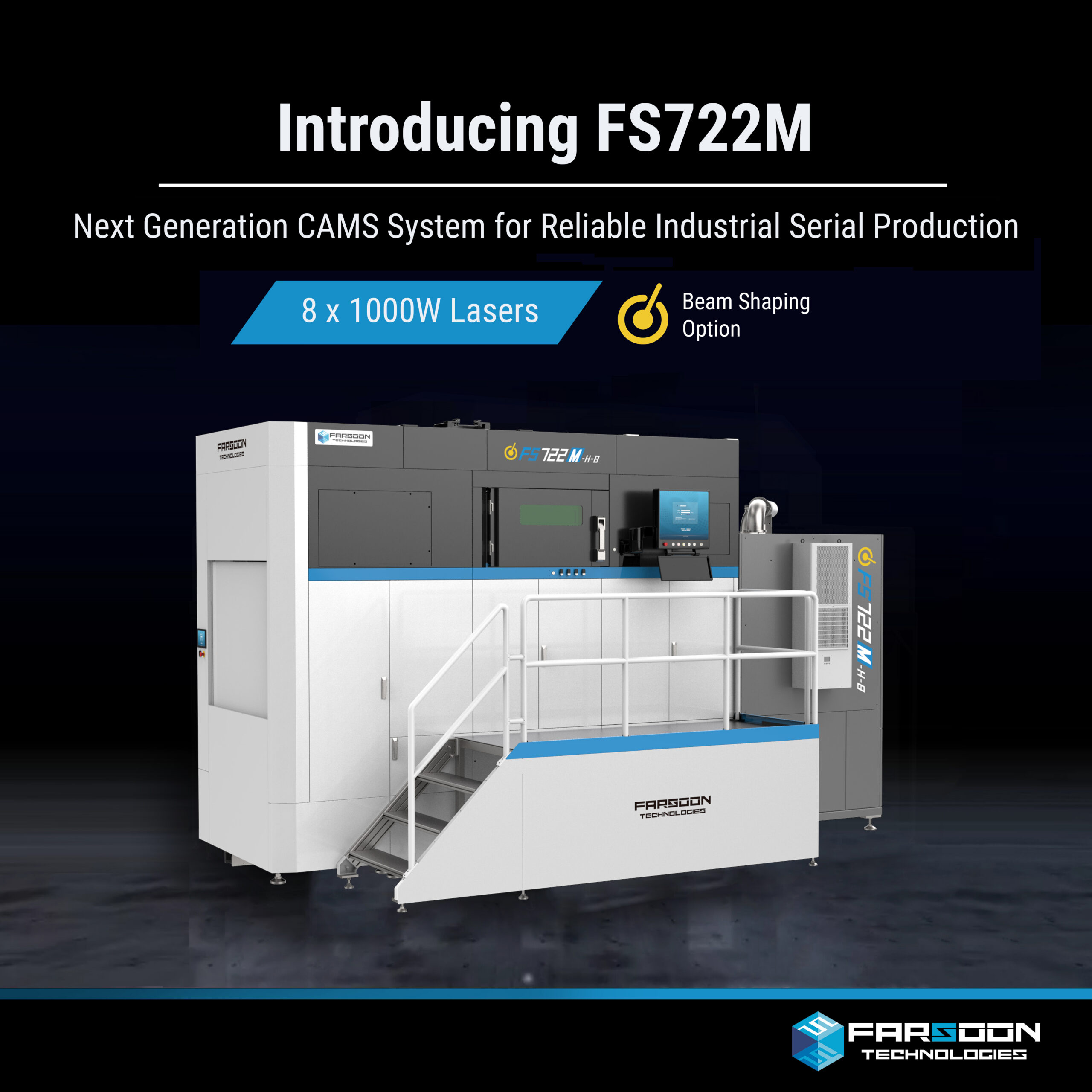
- Farsoon unveiled two production‑grade machines at Formnext 2024: the FS722M (metal) and HT1002P (polymer).
- Both models incorporate tighter tolerances, faster build rates, and software hooks for Industry 4.0‑style data collection.
- The launches underline a broader shift in China’s AM sector: service bureaus and material suppliers are now on equal footing with OEMs in driving industrial adoption.
- Comparable initiatives from Eplus3D and Jingye Group show the trend is not isolated—large‑scale metal‑AM facilities (> $700 M) are being built to meet AI‑hardware and aerospace demand.
Introduction: A Maturing Chinese AM Landscape
China’s additive‑manufacturing (AM) ecosystem has moved beyond prototype‑only offerings. Recent announcements from Eplus3D, backed by Jingye Group’s $700 million metal‑AM service plant, illustrate how service providers and material vendors are now co‑creating value with equipment manufacturers. Farsoon, a leading Chinese OEM, reinforced this narrative with two new machines designed expressly for high‑volume, repeatable production rather than one‑off parts.
Farsoon’s Formnext 2024 Debut
FS722M – Metal Production System
- Build envelope: 300 mm × 300 mm × 400 mm
- Laser source: 1 kW fiber laser (continuous wave) with 10 µm spot size
- Layer thickness range: 20–80 µm (auto‑adjust based on material)
- Materials supported: Ti‑6Al‑4V, Inconel 718, 316L stainless steel, AlSi10Mg powders (≤ 15 µm)
- Throughput: Up to 1.2 kg h⁻¹ for Ti‑6Al‑4V, 1.8 kg h⁻¹ for AlSi10Mg
- Industrial features: Real‑time melt‑pool monitoring, closed‑loop oxygen control (< 10 ppm), API for MES integration
HT1002P – Polymer Production System
- Build envelope: 250 mm × 250 mm × 350 mm
- Laser source: 400 W diode‑pumped solid‑state (DPSS) laser
- Layer thickness range: 25–100 µm, with adaptive slicing for geometry‑driven speed gains
- Materials supported: PA12, PA11, PEEK, PETG, TPU (filament Ø 1.75 mm)
- Throughput: Up to 3 kg h⁻¹ of PA12 (≈ 30 % faster than previous Farsoon models)
- Industrial features: In‑process infrared temperature mapping, automated part‑orientation optimizer, OTA firmware updates
Both machines are positioned as “production‑ready”—they ship calibrated, with pre‑installed quality‑control dashboards, and are qualified for ISO 9001 and AS9100 audit trails.
Comparison at a Glance
| Feature | FS722M (Metal) | HT1002P (Polymer) |
|---|---|---|
| Build volume (mm) | 300 × 300 × 400 | 250 × 250 × 350 |
| Laser power | 1 kW fiber | 400 W DPSS |
| Typical layer thickness | 20–80 µm | 25–100 µm |
| Supported materials | Ti‑6Al‑4V, Inconel 718, 316L, AlSi10Mg | PA12, PA11, PEEK, PETG, TPU |
| Max build rate* | 1.2 kg h⁻¹ (Ti) | 3 kg h⁻¹ (PA12) |
| Process monitoring | Melt‑pool + O₂ sensor | IR temperature + filament flow |
| Target industries | Aerospace, AI‑hardware, automotive | Medical devices, consumer electronics, tooling |
| Approx. price (USD) | $550 k – $650 k | $210 k – $260 k |
| *Measured under standard material conditions |
Why the Shift Matters
Industrial‑scale demand – Companies such as Jingye Group are investing hundreds of millions to build dedicated AM fabs for AI‑chip cooling plates and aerospace brackets. Their reliance on Farsoon‑class machines validates the need for repeatable, high‑throughput hardware.
Supply‑chain integration – Both FS722M and HT1002P expose RESTful APIs that feed build data into ERP/MES systems, enabling real‑time cost accounting and predictive maintenance—a prerequisite for “lights‑out” factories.
Material ecosystem growth – With service bureaus now offering certified metal powders and polymer filaments, OEMs must deliver machines that can verify material traceability (e.g., batch‑level laser‑absorption curves).
Competitive pressure – European and North‑American vendors (e.g., EOS, Stratasys) are accelerating their own production‑line releases, but Farsoon’s price‑to‑performance ratio remains compelling for cost‑sensitive manufacturers in the Asia‑Pacific region.
Bottom Line
Farsoon’s FS722M and HT1002P illustrate how Chinese AM OEMs are re‑engineering their product portfolios to serve true production environments. By embedding advanced monitoring, tighter tolerances, and seamless IT integration, the two machines give manufacturers the data fidelity and repeatability required for series production. Coupled with parallel moves by Eplus3D and massive service‑plant investments, the Chinese AM market is rapidly evolving from a fragmented prototyping hub into a full‑stack industrial manufacturing ecosystem. For companies looking to scale additive processes—whether


