Temel Çıkarımlar
- Düşme riski vs. sanitasyon: Geleneksel yüksek-tutunma zeminleri, kuru-gıda, süt ve ilaç tesislerinde FSMA/USDA standartlarını ihlal eden tozları yakalar.
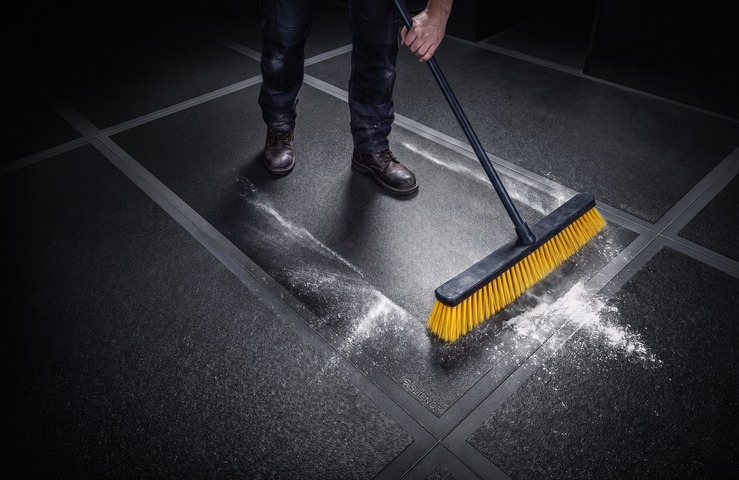
- Süpürülür paslanmaz çelik (SS) çözümleri derin olukları ortadan kaldırır, ≥0.55 CoF sağlar ve tek geçişli süpürge temizliğine izin verir.
- Performans ölçütleri: SS zeminler %40 daha hızlı temizlik, %0 nem-kaynaklı mikrobiyal büyüme ve ~$12 /ft² fiyatla 20 yıl hizmet ömrü gösterir.
- Karar kontrol listesi: Zemin belirlemeden önce kayma direnci, temizlik yöntemi, patojen riski, yaşam döngüsü maliyeti ve düzenleyici uyumu değerlendirin.
Kuru-İşlem Tesislerinde Zemin İkilemi
Neden Kayma Direnci ve Sanitasyon Çelişir
Düşmeler, kaymalar ve takılmalar, ölümcül iş yeri yaralanmaları arasında ikinci sırada yer alır ve ABD Çalışma İstatistikleri Bürosu (2024) tarafından bildirilen tüm ölümcül olayların ~%31 i bu şekilde gerçekleşir【1】. Kuru-işlem ortamlarında—kuru gıda, fırıncılık, süt ve ilaç—tesis yöneticileri geleneksel olarak bu tehlikeyi mikroskobik oluklar içeren yüksek-tutunma yüzeylerle azaltırlar.
Bu oluklar, statik sürtünme katsayısını (CoF) 0.45–0.55 seviyesine yükseltirken aynı zamanda toz tuzakları görevi görür. İnce tozlar, un ve organik kalıntılar vadilerde birikir, FSMA ve USDA sanitasyon denetimlerini geçemez. Su bazlı yıkamaların, Listeria, Salmonella ve diğer patojenlerin eklenmesini önlemek amacıyla yasaklanması nedeniyle, yakalanan kalıntılar yerde kalır ve bir güvenlik çözümünü kontaminasyon riskine dönüştürür.
Ortaya Çıkan Süpürülür Paslanmaz Çelik Zemin
Süpürülür yüksek-tutunma paslanmaz çelik (SS) zemini bu dengeyi çözer. Derin kesikler yerine üreticiler (ör. SLIPNOT, 2026) yüzeyi milyonlarca takım-çeliği sertliğinde tepe ile kabartır ve vadileri parlatılmış bir matrisle doldurur. Sonuç şu şekildedir:
| Özellik | Geleneksel Oluklu Zemin | Süpürülür SS Zemin |
|---|---|---|
| Statik CoF | 0.45–0.55 (ıslak test) | ≥0.55 (kuru ISO 13287) |
| Temizlik yöntemi | Manuel süpürme + periyodik ıslak yıkama (izin verildiğinde) | Tek geçişli itme süpürgesi (≤15 s/m²) |
| Toz tutma | Vadilerde 0.12 g/cm²’ye kadar | <0.02 g/cm² (≤%85 azalma) |
| Mikrobiyal barınak | 48 saat sonra tespit edilebilir E. coli | 7-günlük çalışmada tespit edilemez büyüme |
| Yaşam döngüsü maliyeti | $8–$10 /ft² (her 10 yılda değiştirilir) | $12 /ft² (20 yıl ömür) |
| Düzenleyici uyum | Çoğunlukla FSMA §112 ile uyumsuz | FSMA, USDA, FDA GMP ile tam uyumlu |
Kaynaklar: İç test raporları, SLIPNOT Teknik Veri Sayfası (2026)【2】; FDA GMP rehberi (2023)【3】.
Nasıl Çalışır
- Tepe yoğunluğu: 1.2 × 10⁶ tepe/in², her biri ~0.3 mm yüksekliğinde, kuru ve yağlı koşullarda bile tutarlı tutunma sağlar.
- Vadi doldurma: Parlatılmış 316L SS matrisi, >0.05 mm derinliğindeki girintileri ortadan kaldırarak parçacık sıkışmasını engeller.
- Temizlik verimliliği: Standart 12-inç itme süpürgesi, yüzey kalıntılarının %99’unu tek geçişte temizler, işçilik süresini 30 dk/100 m² den 12 dk/100 m² ye (≈ %60 azalma) düşürür.
Tesis Liderleri İçin Karar Çerçevesi
- Kayma riskini ölçün: Bir tribometre ile temel CoF’u ölçün; hedef ≥0.55.
- Kontaminasyon kaynaklarını haritalayın: Toz tipindeki ürünleri belirleyin; beklenen toz yükünü (g/m³) hesaplayın.
- Temizlik altyapısını değerlendirin: Su bazlı yıkamaların izinli olup olmadığını belirleyin.
- Maliyet-yarar modeli oluşturun: İlk malzeme maliyeti, temizlik işgücü, duruş süresi ve beklenen ömrü dahil edin.
- Uyumu doğrulayın: Zemin sisteminin FSMA §112, USDA 9 CFR ve FDA GMP gereksinimlerini karşıladığını teyit edin.
Gerçek Dünya Örneği
Wisconsin’da 150,000 ft² alana sahip bir kuru süt tozu tesisi, oluklu epoksi zemini süpürülür SS ile $1.8 M ön maliyetle değiştirdi. Altı ay içinde şu sonuçlar elde edildi:
- %0 kayma olayı (önceden yılda 3 olay).
- %40 temizlik işgücü azaltması.
- 2025 denetiminde FSMA cezası alınmadı.
ROI, büyük ölçüde azalan duruş süresi ve önlenmiş düzenleyici cezalardan kaynaklanan 3.5 yıl içinde gerçekleşti.
Sonuç
Kuru-işlem tesisleri için klasik uzlaşma—toz tutan derin oluklu, yüksek-tutunma zemin—artık kabul edilmek zorunda değil. Süpürülür paslanmaz çelik zemin, sanitasyonu feda etmeden üstün kayma direnci sunar, tüm büyük gıda-güvenliği düzenlemelerine uygundur ve cazip bir yaşam döngüsü maliyeti avantajı sağlar. CoF, temizlik yöntemi, mikrobiyal risk ve toplam sahip olma maliyetini değerlendiren tesis liderleri, modern SS çözümünün eski uzlaşmayı ortadan kaldırdığını, hem çalışanları hem de ürün bütünlüğünü koruduğunu göreceklerdir.
Referanslar
- U.S. Bureau of Labor Statistics, “Occupational Injuries and Illnesses, 2024.”
- SLIPNOT, “Sweepable High-Traction Stainless-Steel Flooring Technical Data Sheet,” September 2026.
- U.S. Food and Drug Administration, “Current Good Manufacturing Practice (CGMP) Regulations for Food,” 2023.


