Temel Çıkarımlar
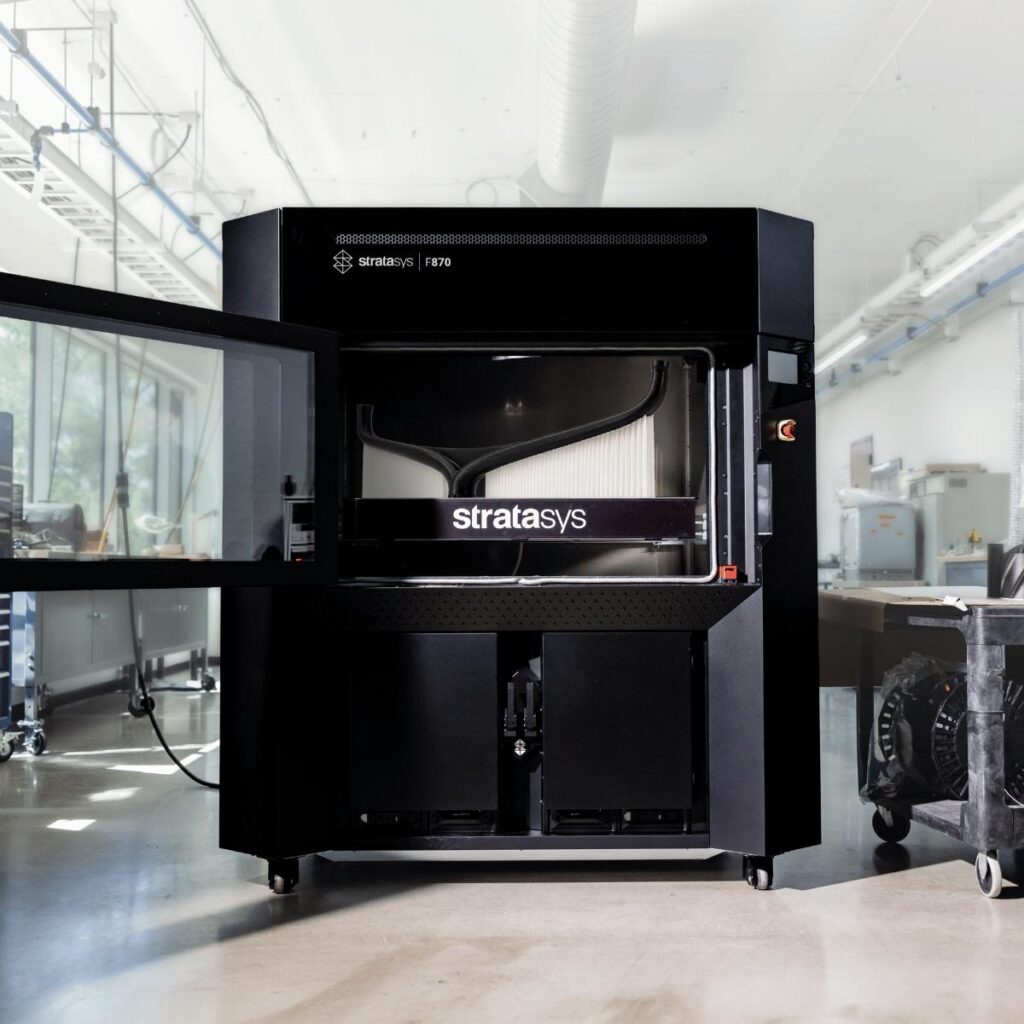
- Stratasys F870, 1 m³ yapı hacmine (1000 × 610 × 610 mm) sahip yeni büyük-format, üretim-ağırlığı FDM yazıcıdır.
- Yüksek hacimli otomotiv, havacılık ve savunma parçaları için tasarlanmış olup, 72 saate kadar kesintisiz çalışabilir ve ±0.1 mm tekrarlanabilirliğe sahiptir.
- Erken benimseyenler arasında Rivian (Michigan) ve Toyota Production Engineering (Kentucky) bulunmakta; makine burada kalıp, takım ve düşük hacimli son-kullanım bileşenleri üretiminde kullanılmaktadır.
- F870, yüksek sıcaklık ULTEM 1010 (250 °C’ye kadar) ve karbon-fiber takviyeli Nylon dahil 400’ün üzerinde malzeme sınıfını destekler.
- Stratasys’in önceki amiral gemisi F850’ye kıyasla, F870 %30 daha hızlı baskı hızı ve %20 daha büyük yapı hacmi sunarken benzer doğruluk seviyesini korur.
Stratasys, IMTS 2026’da F870’i Tanıttı
Chicago’daki Uluslararası Üretim Teknolojileri Fuarı (IMTS) öncesinde, Stratasys en yeni FDM platformu F870’i tanıttı. “Büyük-format, üretim-ağırlığı” sistem olarak pazarlanan bu yazıcı, eklemeli üretimi doğrudan fabrika katına entegre etmesi gereken üreticileri hedefliyor. Şirket, F870’in Rivian’ın Michigan tesisinde ve Toyota’nın Kentucky üretim mühendisliği merkezinde zaten çalıştığını ve burada kalıp, takoz ve düşük hacimli fonksiyonel parçaların teslim süresini hızlandırdığını vurguluyor.
Neden Büyük-Format Önemli
Endüstriyel kullanıcılar, çoklu yapı döngüleri veya son işlem montajına başvurmadan araç alt-montajı büyüklüğünde parçalar üretebilen makineler talep ediyor. F870’in 1 m³ yapı hacmi (1000 × 610 × 610 mm) bu ihtiyacı karşılayarak tek bir baskının birkaç küçük yapıyı yerine geçmesini sağlıyor. 120 °C’ye kadar ısıtılmış odası ve çift ekstruder sistemi, otomotiv ve havacılık uygulamaları için kritik olan yüksek sıcaklık polimerleri ve kompozit malzemelerin kullanılmasına olanak tanıyor; bu uygulamalarda termal stabilite ve mekanik dayanıklılık vazgeçilmez.
Performans Özetleri
| Specification | Stratasys F870 | Stratasys F850 (predecessor) | Typical Competitor (e.g., EOS P 770) |
|---|---|---|---|
| Build Volume | 1000 × 610 × 610 mm | 800 × 600 × 600 mm | 800 × 800 × 800 mm |
| Layer Resolution | 0.08 – 0.30 mm | 0.09 – 0.30 mm | 0.06 – 0.20 mm |
| Print Speed* | Up to 300 mm/s | Up to 230 mm/s | Up to 250 mm/s |
| Material Portfolio | 400+ grades (ULTEM, Nylon, PC, carbon-fiber) | 350+ grades | 200+ grades |
| Continuous Run Time | 72 h (auto-cooling) | 48 h | 48 h |
| Repeatability | ±0.1 mm | ±0.15 mm | ±0.12 mm |
| Approx. Price (USD) | $1.2 M | $950 k | $1.5 M |
*Print speed reflects typical nozzle travel; actual throughput depends on part geometry and material.
Tablo, F870’in sadece baskı alanını genişletmekle kalmayıp hız ve tekrarlanabilirliği de artırarak yüksek-uçlu toz-yatak sistemleriyle performans farkını daralttığını, aynı zamanda FDM’in malzeme çok yönlülüğünü koruduğunu gösteriyor.
Gerçek-Dünya Uygulamaları
- Rivian (Michigan): F870’i batarya paket braketleri ve özel takımlar üretmek için kullanıyor; CNC-işlenmiş haftalar süren teslim süresini günlere indiriyor. İlk raporlar, bu düşük hacimli ürünlerde %45 maliyet azalması gösteriyor.
- Toyota Production Engineering (Kentucky): Yazıcıyı “dijital ikiz” iş akışına entegre ederek, intake manifoltlarının fonksiyonel prototiplerini iç kaynak olarak üretiyor. Sistem, yüksek sıcaklık ULTEM 1010 baskı yeteneği sayesinde ikincil ısı-tedavi adımlarına ihtiyaç duymuyor.
Her iki lokasyon da yazıcının fabrika-katı ayak izini (≈2 × 2 × 2 m) ve ERP sistemlerine doğrudan bağlanan plug-and-play yazılımını vurguluyor; bu da talep üzerine parça siparişini mümkün kılıyor.
Otomotiv Tedarik Zinciri İçin Sonuçlar
F870’in büyük, yüksek sıcaklık parçalarını talep üzerine üretebilme yeteneği, sektörün “mikro-fabrika” ve yerelleştirilmiş üretim yönündeki kaymasına destek sağlıyor. Uzaktaki takım tedarikçilerine bağımlılığı azaltarak, üreticiler daha kısa döngü süreleri, düşük stok ve daha yüksek tasarım esnekliği elde ediyor; bu avantajlar araç mimarileri modüler ve elektrifikasyon odaklı hale geldikçe kritik öneme sahip.
Sonuç
Stratasys’in F870’i, metre ölçeğinde parçalar, yüksek sıcaklık malzeme performansı ve fabrika katında kesintisiz, güvenilir çalışma gerektiren üreticiler için tercih edilen FDM çözümü olarak konumlandırıyor. Rivian ve Toyota tarafından erken benimsenmesi, otomotiv takımları ve düşük hacimli bileşenler için teslim sürelerini kısaltma ve maliyetleri düşürme vaadini doğruluyor. Öncekine göre %30 daha hızlı ve rekabetçi fiyatıyla, F870 otomotiv, havacılık ve savunma sektörlerinde eklemeli üretim stratejilerinin temel taşı olmaya hazırlanıyor.